Skip to content

Astromania H-alpha narrowband 1.25 in (ZF1HNS) review

A narrowband hydrogen-alpha filter whose bandwidth — the one figure that defines a narrowband filter — is never published.

A narrowband filter with no band

Hydrogen-alpha sits at 656 nanometers. Filters cut for it are sold at twelve nanometers wide, at seven, at five and at three.

Twelve is cheap, tolerant of a fast telescope, and leaves a good deal of sky glow. Three is expensive, exacting about focal ratio, and gives a background close to black.

They are different products, at different prices, for different skies — and all four are called H-alpha narrowband.

This page publishes no figure. So which of them this is cannot be read off it.

H-II regions

The right term, and the only sentence here that says what the filter is for.

Clouds of ionized hydrogen: the places where stars are forming and the gas around them glows. Orion is one. The Lagoon is another.

They radiate hard at 656 nm, which is why a slice cut there lifts them off a black sky.

It says imaging, and stops

The eye is poor at 656 nanometers. A narrow slice there leaves almost nothing to see at an eyepiece, where a sensor integrating for minutes has no such problem.

One listing on the European half of this shelf claims both uses for one filter, and its published page records that a band suiting a sensor may leave little visible.

This one claims only imaging. That narrows its market and it is the correct claim.

A bullet that describes nothing

The third of five: that this filter shares the same outstanding features as all the other filters the maker sells.

It is a sentence that would be equally true, and equally empty, on any page in the range.

The fourth adds “unmatched optical quality” and “high efficiency”, neither with a number.

Hardened multi-coatings

The one claim here that is specific to the object rather than to the category.

A filter gets handled, breathed on and wiped, and a hardened coating survives that better than a soft one. It is a real property and the right one to advertise.

Multi-coating means several layers; the page does not say on how many faces. A filter has two.

Availability

American Amazon store sat at about $70 on the day of the survey.

Figures as Keepa reported them on the day this page was last updated. Stock and pricing shift without warning.

Prices quoted in this text were read on October 7, 2026. The live price is at the top of the page.
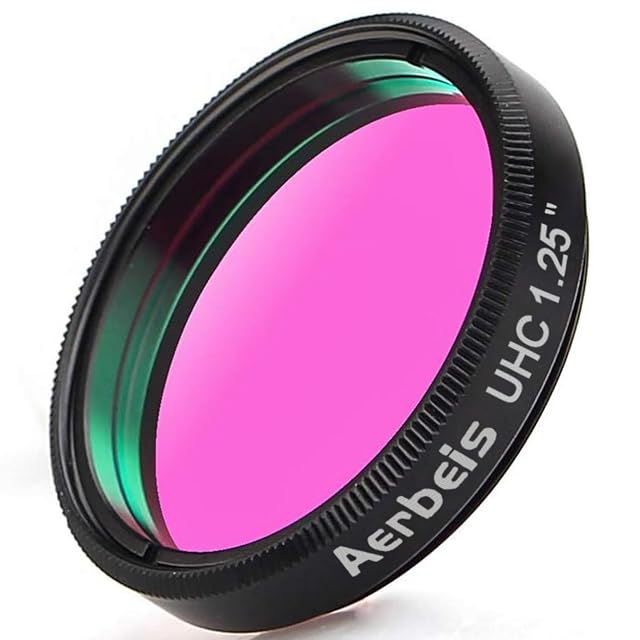
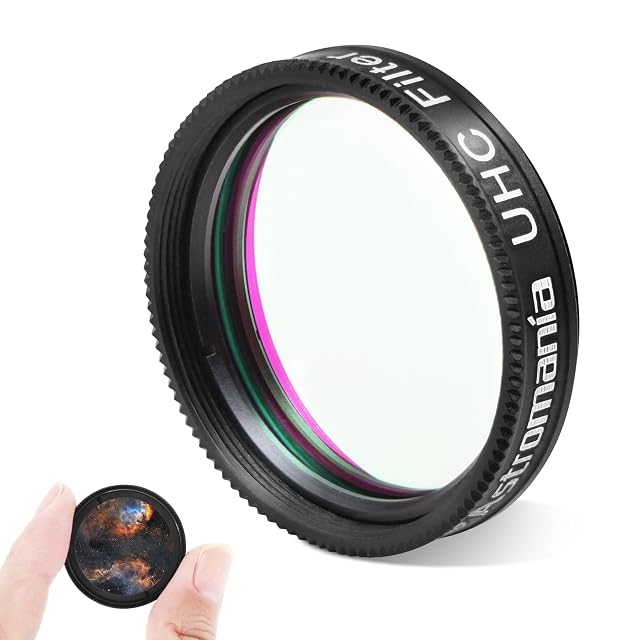
Its two nearest scopes on price

Same aisle, closest price — what the same spend else shows.

What it publishes, and what it withholds

Strengths

  • Names its line — hydrogen-alpha — and the object class it is for, H-II regions
  • Hardened coatings, which is the right claim on a filter that gets handled
  • The only hydrogen-alpha filter on this shelf
  • States plainly that it is an imaging filter rather than claiming both uses

Compromises

  • No bandwidth published, which is the single figure a narrowband filter is bought on
  • No center wavelength either, so the line is named without being located
  • “Unmatched optical quality” and “incredible” carry no figures
  • One of its five bullets says only that it resembles the maker’s other filters

Specifications

Bandpass and typeHydrogen-alpha narrowband, per the title · No bandwidth in nanometers and no center wavelength are published · Stated to enable high-contrast deep-sky images of H-II regions
Line transmissionNot published by the maker. · High efficiency is claimed without a figure
Blocking outside the bandNot published by the maker. · Stated to have incredible light pollution cut-off characteristics and to be used as an extreme anti-light-pollution filter
Thread size1.25 in
Glass flatnessNot published by the maker.
CoatingsHigh-efficiency hardened multi-coatings, as the maker words it · Stated to share the same outstanding features as all the other Astromania imaging filters
Amazon referenceB07V7B98DT
EAN6970019290881

What observers ask about this one

Why is bandwidth the figure that matters here?

Because it is what makes a narrowband filter narrowband. Hydrogen-alpha sits at 656 nm, and filters for it are sold at 12 nm, 7 nm, 5 nm and 3 nm wide. A 12 nm filter is cheap, forgiving of fast optics and leaves a good deal of sky glow; a 3 nm filter is expensive, exacting about focal ratio and produces a black background. They are different products at different prices for different skies, and they are all called H-alpha narrowband. This listing publishes no figure at all, so which of them it is cannot be determined from the page.

What are H-II regions?

Clouds of ionized hydrogen — the places where new stars are forming and the gas around them glows. The Orion nebula is one, the Lagoon is another, and they radiate strongly at 656 nm, which is why a filter cut for that line shows them against a near-black sky. The term is correct and specific, and it is the clearest sentence on this page. It is also the only one that tells a buyer what the filter is for.

Is it usable visually?

The listing says imaging, and that is the honest answer. The eye is poorly sensitive at 656 nm, so a narrow slice there leaves very little to see at an eyepiece — a sensor integrating for minutes has no such limit. One listing on the European half of this shelf claims both uses for one filter, and its published page notes that a band suiting a sensor may leave almost nothing visible. This one does not make that claim, which is the better position even though it narrows the market.

The price on Amazon.com

This model is listed on Amazon.com, at ≈ $70 at the last reading. Listed is not the same as in stock: availability changes daily, and the buy box shows the live price.

Details checked on October 7, 2026.

This one and its buyer, among astronomy instruments

Imaging hydrogen regions, by somebody who will ask the seller for the bandwidth before buying

Sources

Specifications: the manufacturer sheet for telescopes and observing optics and the matching Amazon product page. Prices and availability: Keepa. Every figure on this page names its source.

The way we judge these astronomy instruments