A camera, a lens and one motor against the rotation
The best star trackers for 2026
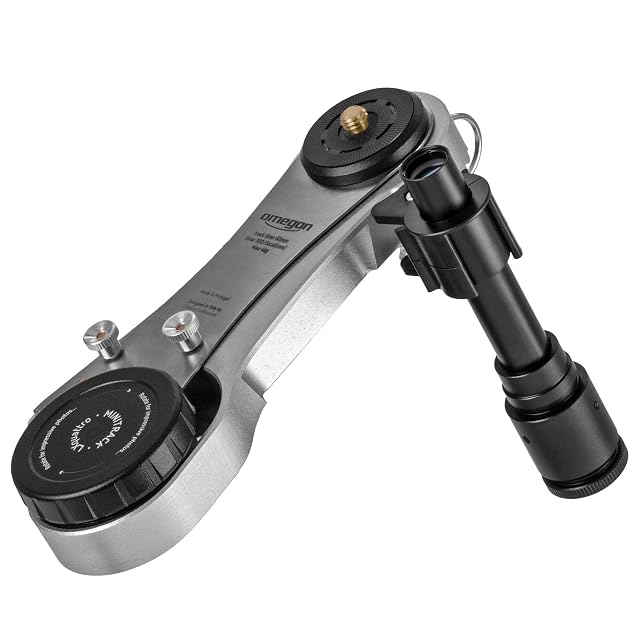
A star tracker is the smallest thing that can be called a mount: a single driven axis that turns a camera at the rate of the sky, so that a lens can be left open long enough to record what the eye cannot. It is the cheapest genuine entry into astrophotography, and it produces wide-field images — constellations, the Milky Way, large nebulae — that a telescope on a heavy mount frames too tightly to show. The figure that governs everything is payload, and here the honest number is not the one in the listing but the combination of camera, lens, ball head and, if fitted, counterweight. A tracker loaded near its limit needs a better polar alignment to reach the same exposure length than the same tracker loaded lightly. Polar alignment is the skill the whole device depends on; the methods differ, from a small polar scope to a phone application that shows where the pole sits, and how good the method is decides whether exposures of a few minutes are realistic or whether thirty seconds is the ceiling. Read the tracking rates offered — a half-sidereal rate lets a single frame compromise between sky and landscape — and read how the device is powered, because a tracker that takes USB power can run from the same bank as the camera. Weight and folded size matter, since these devices exist to be carried. We compare payload and counterweight, tracking rates, polar alignment method, power source, weight, and head fitting.