Skip to content

The best telescopes for children for 2026

The shelf of telescopes sold for children is where the largest gap sits between what is advertised and what determines the outcome. Boxes print a magnification figure — sometimes several hundred — and that figure is the least useful thing on the packaging, because magnification is a division between the telescope and the eyepiece and can be made arbitrarily large by supplying a poor eyepiece. What decides whether a child sees anything is the mount. A telescope that shakes for four seconds after being touched cannot be aimed at the Moon by a seven-year-old, and every attempt ends in the same disappointment. A modest aperture on a solid mount shows the craters of the Moon, the moons of Jupiter and the rings of Saturn, and those three sights are what turn an evening into an interest. Read the eyepiece fitting: the standard 1.25 inch barrel means the instrument can grow, a 0.965 inch barrel or a proprietary one means it cannot. Read the finder, because aiming is the hardest part for a beginner and a red-dot finder is far easier than a small optical one. Then check the honest practicalities: how much assembly the first evening needs, whether the tripod height suits a child standing, and what the box actually contains rather than what the picture implies. We compare mount steadiness, aperture, focal length, eyepiece fitting, finder type, tripod height, assembly effort and supplied contents.
The instruments here, column by column

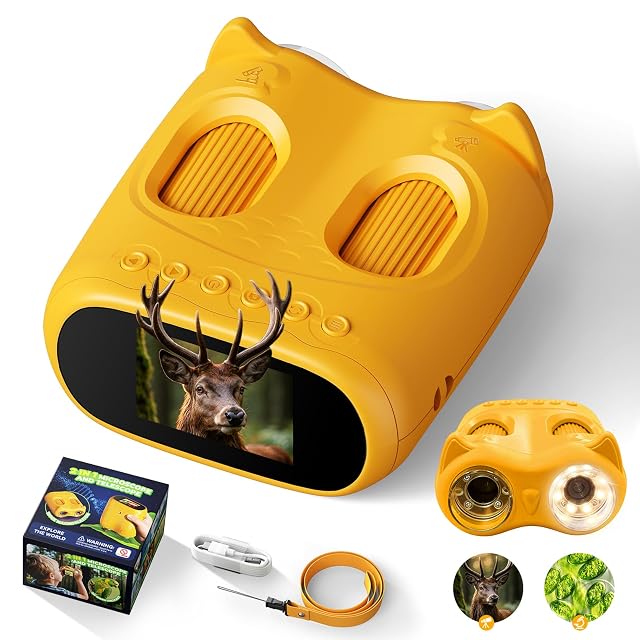
  1. ARNSSIEN inskam387

    1000x hand microscope · 10x telescope · digital, 1080p

    A two-in-one STEM device for children: a 1000x digital hand microscope and a 10x telescope attachment, recording 1080p stills and video to a memory card.

    Best for: A child interested in insects, leaves and stones, with occasional distant viewing

    ≈ £28 / €28

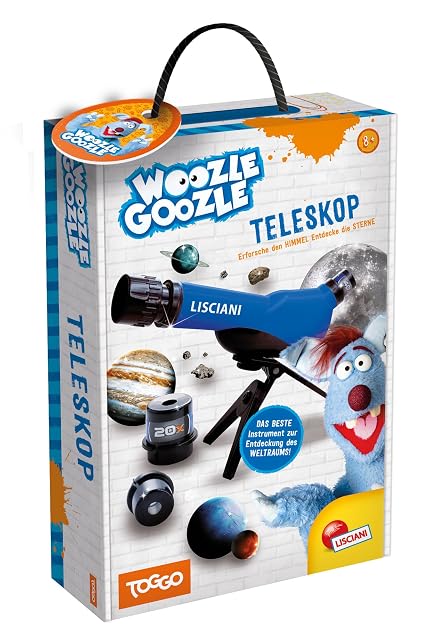
  2. Liscianigiochi Woozle Goozle

    Three fixed magnifications: 20x, 30x, 40x · from age 7

    A children’s telescope from age seven, supplied in a case with a tabletop tripod, three interchangeable magnifying lenses and an illustrated manual.

    Best for: A seven-year-old’s first look at the Moon and at the natural world

    ≈ €16

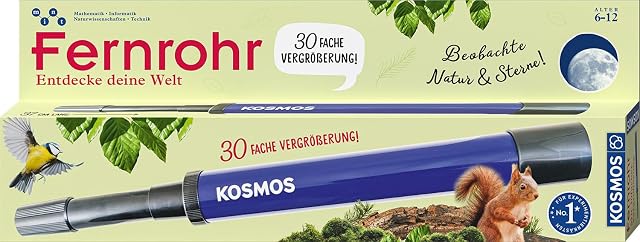
  3. Kosmos Fernrohr

    30x fixed magnification · metal tube · from age 8

    A fixed 30x spyglass-style telescope in a metal tube, sold as an experiment set for children from eight with an instruction booklet explaining how a refractor works.

    Best for: A child who wants something to carry on a walk and look at the Moon with

    ≈ £20 / €18

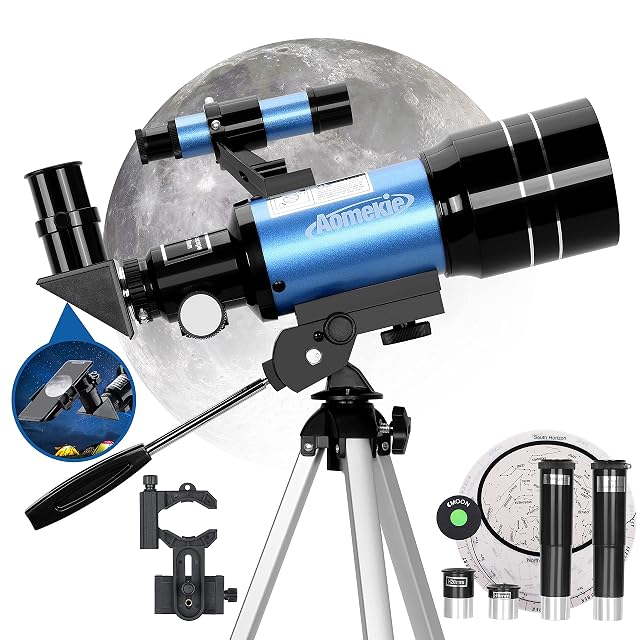
  4. AOMEKIE 30070+

    70 mm aperture · 300 mm focal length

    A 70/300 refractor for beginners with two eyepieces, a 3x Barlow, a 1.5x erecting lens, a metal Moon filter, an aluminium tripod and a phone adapter.

    Best for: A wide, bright first view of the Moon and star fields at low power

    ≈ €39

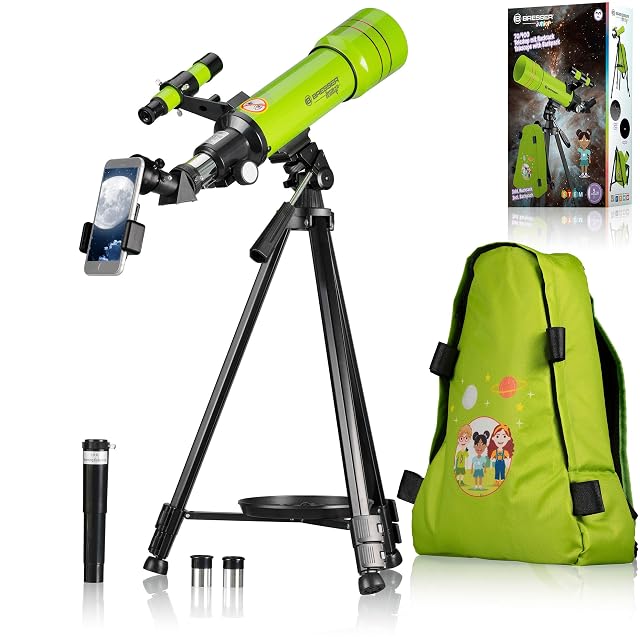
  5. Bresser JUNIOR 70/400 (backpack set)

    70 mm aperture · 400 mm focal length · from age 8

    The BRESSER JUNIOR 70/400 in its backpack version, with three 24.5 mm eyepieces, a star diagonal, a 1.5x erecting lens, a tripod and a phone holder.

    Best for: A child from about eight who will carry and set up the telescope without help

    ≈ £85 / €64

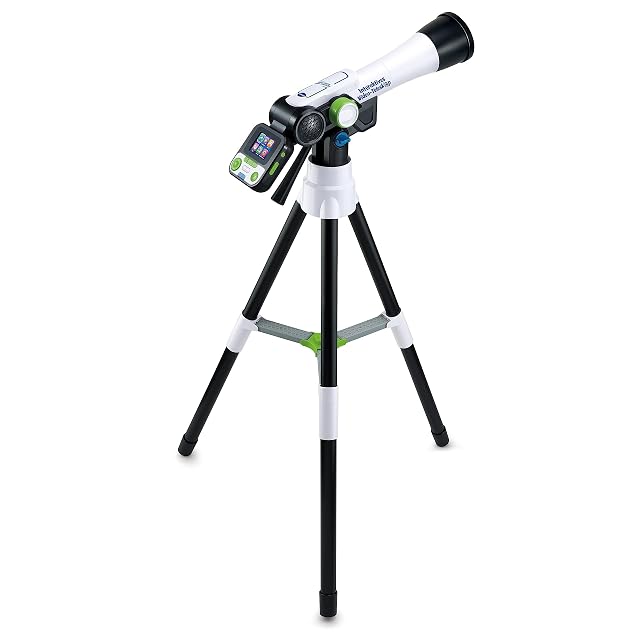
  6. VTech Video telescope with NASA content

    Digital telescope · screen instead of an eyepiece · four modes

    A digital children’s telescope on a tripod that shows the view on a screen instead of through an eyepiece, with NASA-licensed content, a quiz and a space adventure game.

    Best for: A young child who would give up on a conventional eyepiece

    ≈ £68 / €95

Any figure written into the body of this page was true on the day it was written. The amount shown next to each instrument is requested from the retailer as the page loads, and it is that amount, not the text, that stands.