Skip to content

A first telescope, and the three figures that decide it

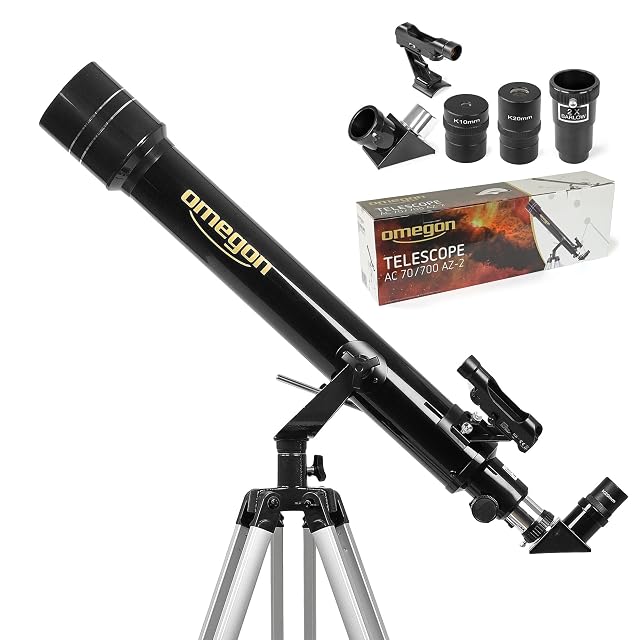
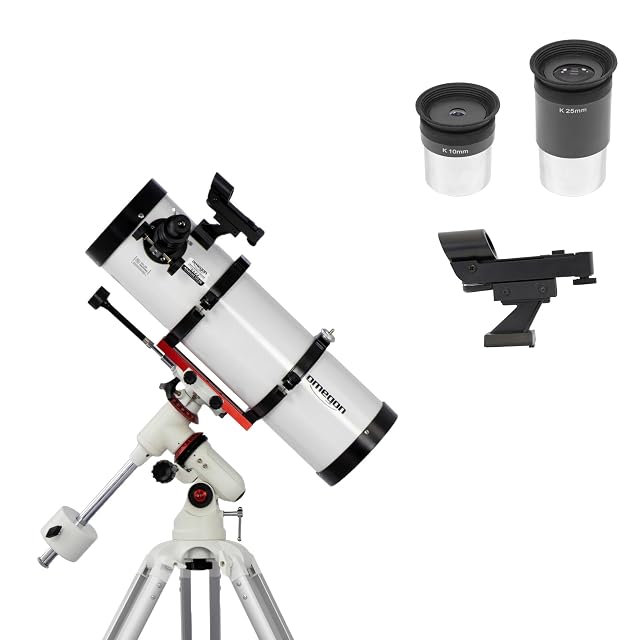
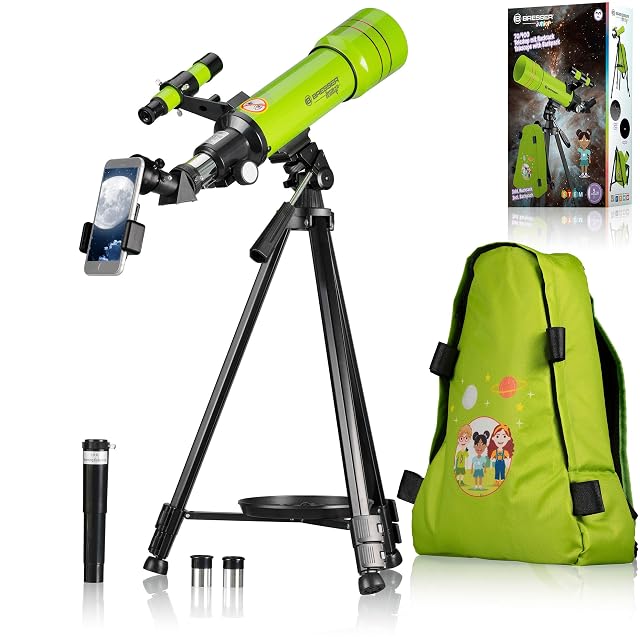
Almost every disappointing first telescope fails for one of three reasons: it does not collect enough light, it will not hold still, or nothing else fits it. Magnification is not on that list, and it is the number most often printed on the box. These five are read against aperture, mount and eyepiece fitting, in that order.

Aperture is what the telescope collects

Light-collecting area goes with the square of the aperture, so 130 mm gathers nearly twice what 90 mm does. It is the one specification that cannot be improved later, and it sets the ceiling on everything the instrument will ever show.

The mount decides whether the aperture is usable

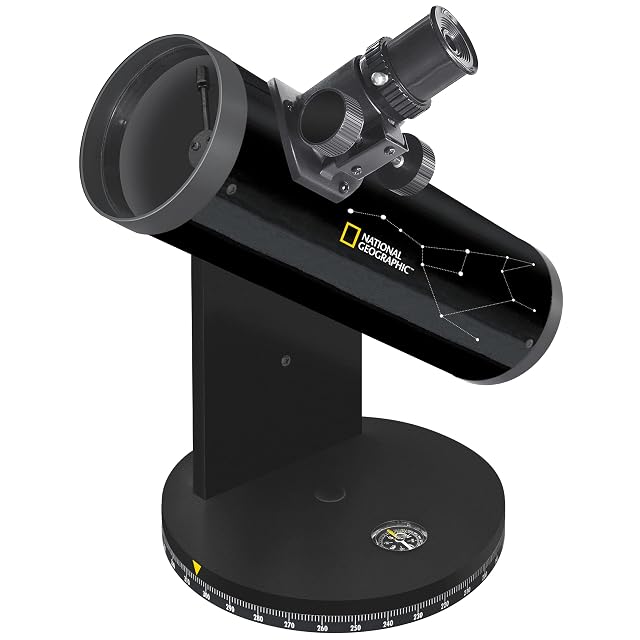
A tube that shakes for four seconds after every touch is unusable at high magnification, whatever its optics. This is why a tabletop Dobsonian on a solid table often outperforms a larger tube on a thin tripod — there is simply less to wobble.

The fitting decides whether it grows

A 1.25 in focuser opens the whole accessory catalogue: eyepieces, filters, diagonals, phone adapters. A non-standard fitting closes it. Of all three figures this is the cheapest to check and the most often overlooked.

What is not on the list

Maximum magnification. It is a number any telescope can reach and almost none can use: beyond roughly twice the aperture in millimetres, the image grows without gaining detail. A listing that leads with it is describing a calculation, not an instrument.

The five, and the reason for the order

What gets asked before buying

How much aperture is enough to start?

Enough to show the Moon’s craters, Jupiter’s moons and Saturn’s rings, which begins around 70 mm and improves steadily from there. What aperture cannot do is fix a shaking mount.

Why is the eyepiece fitting on the list?

Because 1.25 in is the size almost every eyepiece, filter and diagonal uses. A telescope with a 24.5 mm fitting can only ever use what came in its box.

Is a Dobsonian really easier?

It has nothing to align and two axes that move the way a person looks around. The trade is that it does not track, so objects drift out of the field and have to be nudged back.

Any figure written into the body of this page was true on the day it was written. The amount shown next to each instrument is requested from the retailer as the page loads, and it is that amount, not the text, that stands.

The tool we use ourselves

Chosen your instrument? Now do not pay over the odds.

Telescopes and mounts are discounted over and over through the year — hardest of all in the weeks before Christmas, which is exactly when most of them are bought — and a struck-through figure on its own says nothing whatever about what the same model was charged at four weeks ago. UniverTrack keeps a week-by-week record for each retailer, so a discount is measured against a figure somebody genuinely paid instead of one invented for the sale — and it says when the moment to buy has genuinely arrived.

Real price historyBuy-now alertsAI buying assistant
Try free for 14 days →
No commitment · Cancel in one click · 5 languages