Skip to content

What still works under a bright sky

A city sky does not dim the Moon or the planets at all — they are bright enough to ignore it. What it takes is everything faint and extended, and no filter gives all of that back. This guide is about working with what is left.

What the city takes

Extended faint objects — galaxies, most nebulae, the fainter clusters. They are dim against a bright background, and contrast, not brightness, is what has been lost.

What it leaves

The Moon, the planets, double stars, the brighter clusters, and the Sun with the appropriate equipment and the maker’s instructions. All of these are contrast-independent in a way that a galaxy is not.

What a filter actually does

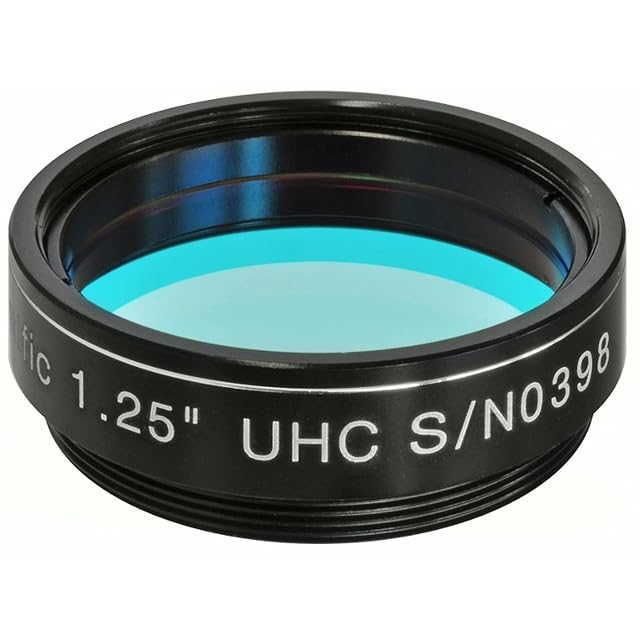
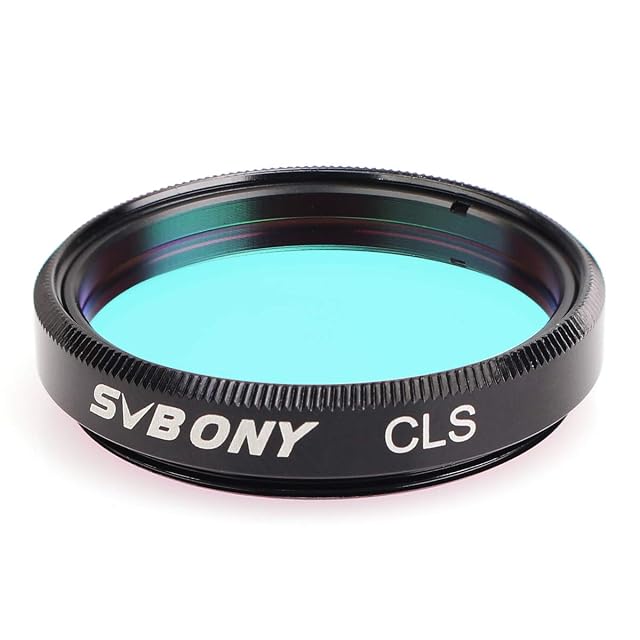
A narrowband filter passes the wavelengths where emission nebulae emit and blocks the rest. On those specific objects it works well. On a galaxy — which emits across the spectrum, like the sky glow — it removes as much object as background.

Aperture and the city

Resolution scales with aperture regardless of the sky, so planetary detail improves in a city exactly as it would elsewhere. This is why a folded catadioptric on a small mount is a good city instrument: long focal length, small footprint, and the targets that survive are the ones it is best at.
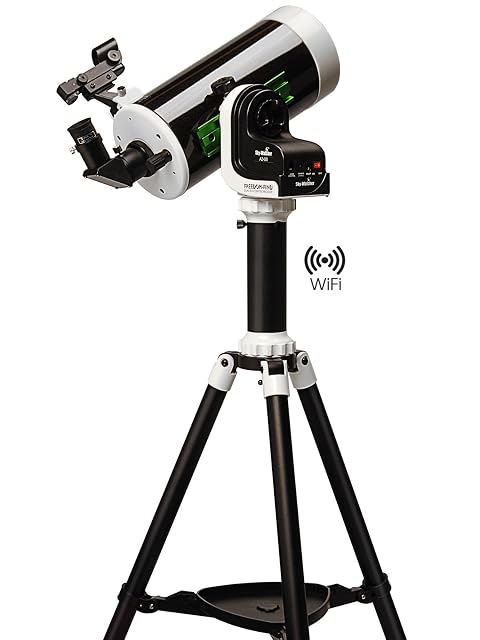
The five, and the reason for the order

What gets asked before buying

Does a light pollution filter make the sky darker?

It removes a narrow part of the spectrum where certain lamps emit, so the background falls more than the object does. Against broadband white LED lighting there is far less to remove.

Why do the Moon and planets not care?

They are far brighter than the sky glow. A city sky is a problem of contrast, and objects that are already thousands of times brighter than the background lose nothing.

Is a big aperture wasted in a city?

Not for planets, where it buys resolution. For faint extended objects it collects more sky glow along with more object, so the gain is smaller than the aperture suggests.

Any figure written into the body of this page was true on the day it was written. The amount shown next to each instrument is requested from the retailer as the page loads, and it is that amount, not the text, that stands.

The tool we use ourselves

Chosen your instrument? Now do not pay over the odds.

Telescopes and mounts are discounted over and over through the year — hardest of all in the weeks before Christmas, which is exactly when most of them are bought — and a struck-through figure on its own says nothing whatever about what the same model was charged at four weeks ago. UniverTrack keeps a week-by-week record for each retailer, so a discount is measured against a figure somebody genuinely paid instead of one invented for the sale — and it says when the moment to buy has genuinely arrived.

Real price historyBuy-now alertsAI buying assistant
Try free for 14 days →
No commitment · Cancel in one click · 5 languages