Skip to content

The one object that is never disappointing

The Moon is bright enough to ignore light pollution, large enough to find without a chart, and detailed enough to reward any aperture. It is also the object most often looked at on the wrong night, which is the one it is fullest.

The terminator is where everything is

The line between lit and unlit surface throws long shadows, and shadow is what makes a crater look like a crater. It moves across the disc through the month, so the same feature is dramatic one night and invisible a week later.

Phase, not fullness

A thin crescent low in the evening sky shows the same detail as a half Moon, in a smaller strip. Full Moon is the one phase where the shadows are gone and the view flattens.

Brightness is a real problem

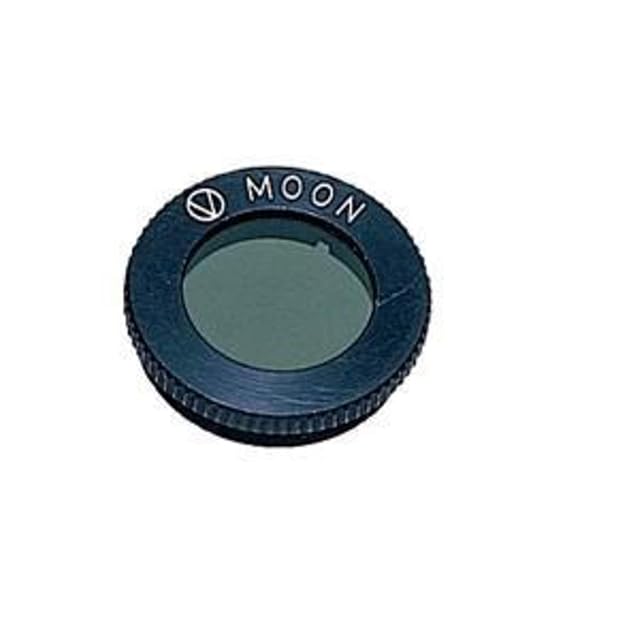
In a 200 mm telescope the Moon is uncomfortably bright, and looking at it costs the dark adaptation built for everything else. A filter, a smaller aperture or an earlier phase all solve it.

Magnification is limited by the air

The Moon rewards high power more reliably than anything else, and the ceiling is the atmosphere rather than the telescope. A Barlow is the cheapest way to reach that ceiling with eyepieces already owned.

The five, and the reason for the order

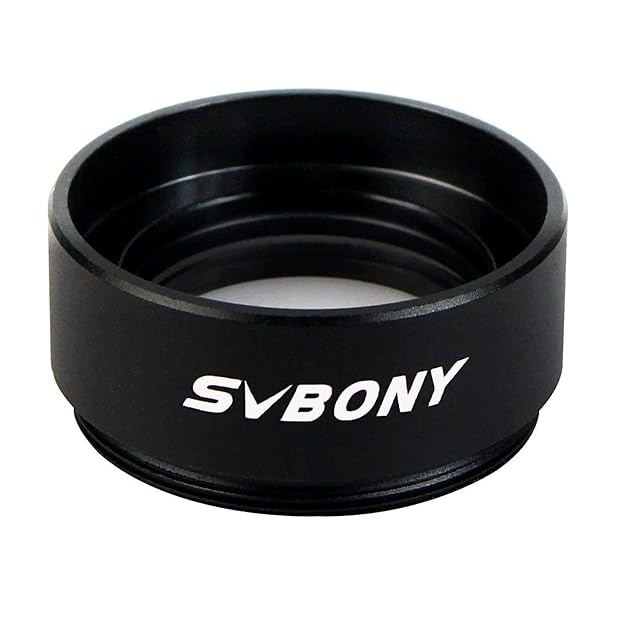
  1. SVBONY 0.5x reducer (EUF9115A)

    0.5x focal reducer · 1.25 in · sold under the name “Barlow”

    A 0.5x focal reducer in an anodised aluminium 1.25 in barrel, sold under the name “Barlow lens” while its own description correctly calls it a reducer.

    Best for: Widening the field on a long-focal-length telescope, or shortening exposures on a camera

    ≈ €13

What gets asked before buying

Why is full Moon a poor night?

Because the Sun is behind the observer and nothing casts a shadow. Craters that stand out sharply near first quarter become flat bright patches. The interesting nights are the ones either side of half.

Do I need a Moon filter?

A bright Moon in a large telescope is uncomfortable and destroys dark adaptation. A filter dims it; so does a smaller aperture, and so does waiting for a thinner phase.

What magnification suits the Moon?

Whatever the air will support. On a steady night a telescope will take its full useful magnification on the Moon; on an unsteady one the image boils above a fraction of that.

Any figure written into the body of this page was true on the day it was written. The amount shown next to each instrument is requested from the retailer as the page loads, and it is that amount, not the text, that stands.

The tool we use ourselves

Chosen your instrument? Now do not pay over the odds.

Telescopes and mounts are discounted over and over through the year — hardest of all in the weeks before Christmas, which is exactly when most of them are bought — and a struck-through figure on its own says nothing whatever about what the same model was charged at four weeks ago. UniverTrack keeps a week-by-week record for each retailer, so a discount is measured against a figure somebody genuinely paid instead of one invented for the sale — and it says when the moment to buy has genuinely arrived.

Real price historyBuy-now alertsAI buying assistant
Try free for 14 days →
No commitment · Cancel in one click · 5 languages