Skip to content

SVBONY 20 mm 66° ultra-wide review

Sixty-six degrees and sixteen millimeters of eye relief, both published — the widest field and the only relief figure on this shelf.

Sixteen millimeters, published

The only eye relief figure on this shelf of nine.

Spectacles need about fifteen millimeters. A 20 mm (0.79 in) Plössl gives thirteen or fourteen; the short Plössls here give five or six, and the published Orbinar page says plainly that glasses should come off.

Sixteen means they stay on. For an astigmatic observer that is the difference between round stars and streaks, and it cannot be fixed by focusing.

Eight of the nine listings on this shelf publish no figure — including the ninety-three-dollar six-element eyepiece on the European half, whose own published page calls the omission its main fault.

Sixty-six degrees

The widest apparent field published on this shelf, against sixty-two for the next.

On an undriven mount the field is a clock. Sixty-six degrees is longer between nudges than fifty, and the object sits in a sky rather than down a tube.

The cost of a wide design is at the edge, and this page does not mention edges. It states extra sharpness for the field and stops there.

Blackened twice

Edge-blackened optics, and internally blackened — with three effects named: light scattering eliminated, internal reflection minimized, contrast maximized.

Two things are being described. Edge blackening treats the ground rim of each element, so light entering the glass sideways does not arrive as a veil. Internal blackening treats the inside of the barrel, so light bouncing down the tube does not either.

Three listings on this shelf name the first. This is the only one to name both.

Fully multi-coated, on an unstated number of surfaces

The coating claim is the top rung: several layers on every air-to-glass surface.

It matters more here than on a Plössl, because a wide-field design has more surfaces — and how many is the figure this page never gives. “Multi-group lens combination” is as precise as it gets.

The published Bresser page on this shelf says “four elements in two groups”, and the published page beside it explains why that phrasing is worth having: it fixes the number of surfaces the coating claim has to cover.

Here it does not.

Broadband green

The color of the reflection, not a measure of transmission.

Tilt a coated lens to a light and the bloom has a color; that color is a consequence of the layer thicknesses, and sellers quote it because it is visible.

It belongs in the coatings column because the maker put it there. It carries no information about how much light reaches the eye.

Availability

American Amazon store sat at about $33 on the day of the survey.

Figures as Keepa reported them on the day this page was last updated. Stock and pricing shift without warning.

Prices quoted in this text were read on October 7, 2026. The live price is at the top of the page.
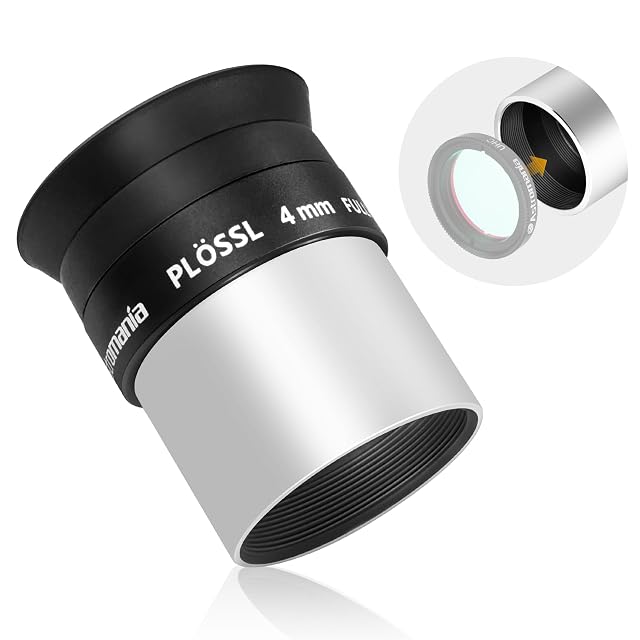
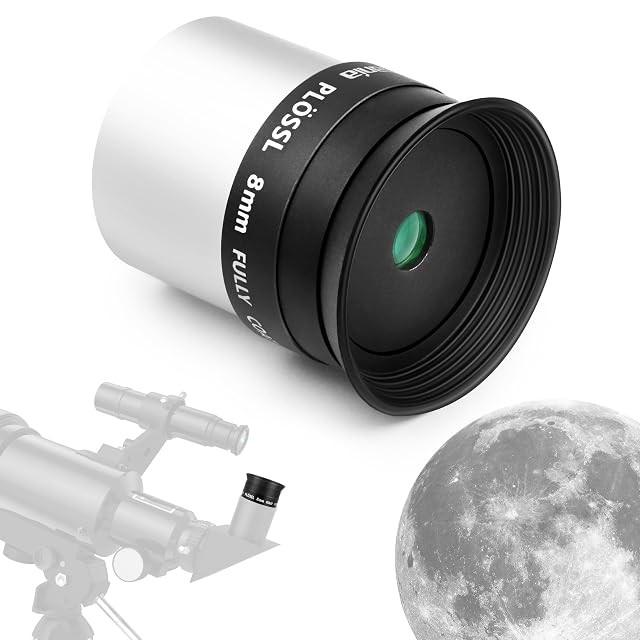
Its two nearest scopes on price

Same aisle, closest price — what the same spend else shows.

What it publishes, and what it withholds

Strengths

  • The only eye relief figure published anywhere on this shelf, at 16 mm (0.63 in)
  • The widest apparent field published here, at 66 degrees
  • Both edge blackening and internal blackening are named, with three effects given
  • Fully multi-coated, which matters more on a multi-group design than on a Plössl

Compromises

  • The number of elements is never given — “multi-group” is as precise as the page gets
  • “Broadband green” describes the look of the coating, not its performance
  • No weight, on an eyepiece that is likely to be the heaviest in a 1.25 in case
  • The most expensive American eyepiece on this shelf

Specifications

Focal length20 mm (0.79 in)
Apparent field66 degrees — the widest published on this shelf · Stated suited to broad lunar observation, medium star clusters and wide nebulae
Eye relief16 mm (0.63 in), stated generous, and stated to let spectacle wearers see the entire field — the only eye relief figure published on this shelf
Barrel size1.25 in
Optical designA multi-group lens combination, stated to improve optical performance and to give good color correction · Edge-blackened optics, internally blackened, stated to eliminate light scattering, minimize internal reflection and maximize contrast
CoatingsFully multi-coated broadband green optics, as the maker words it
WeightNot published by the maker.
Supplied accessoriesNot published by the maker.
Amazon referenceB07JWDFMZ5
EAN0602318837387

What observers ask about this one

Why is sixteen millimeters the figure to want?

Because it is the distance the eye can sit from the glass and still see the whole field, and spectacles need about fifteen. A 20 mm (0.79 in) Plössl gives roughly thirteen or fourteen, and the short Plössls on this shelf give five or six. Sixteen means the glasses stay on, which for an astigmatic observer is the difference between round stars and streaks. Eight of the nine listings on this shelf publish no relief figure at all, including the ninety-three-dollar six-element eyepiece on the European half, whose published page names the omission as its main fault.

Sixty-six degrees against fifty — what changes?

How long an object stays in view, and how it looks when it is there. On an undriven mount the field is a clock: a wider one means longer between nudges. And an object sitting in a wide field looks like part of a sky rather than something seen down a tube. The cost is at the edge, where wide designs lose sharpness first, and this listing publishes nothing about edge performance. It states extra sharpness for the field as a whole and leaves the edges unmentioned.

What is “broadband green” coating?

A description of the reflection the coating leaves when the glass is tilted to a light. It says nothing about transmission. The claim that carries weight on the same line is the one beside it — fully multi-coated, which means several layers on every air-to-glass surface. That matters more here than on a Plössl: a multi-group design has more surfaces, and every untreated one costs light and adds a reflection. How many surfaces there are is the figure this page never gives.

The price on Amazon.com

This model is listed on Amazon.com, at ≈ $33 at the last reading. Listed is not the same as in stock: availability changes daily, and the buy box shows the live price.

Details checked on October 7, 2026.

This one and its buyer, among astronomy instruments

The eyepiece that stays in the focuser — wide, long-relief, and usable with spectacles on

Sources

Specifications: the manufacturer sheet for telescopes and observing optics and the matching Amazon product page. Prices and availability: Keepa. Every figure on this page names its source.

The way we judge these astronomy instruments