Skip to content

Celestron Omni 6 mm (93317) review

A 6 mm (0.24 in) Plössl with blackened lens edges and an anodized aluminum body, at 50 degrees — and a two-year warranty published.

Blackened lens edges

Named, with both of their jobs given: contrast up, internal reflections down.

Light entering the glass from the side bounces off the ground edge of each element and reaches the eye as a veil. It is not a visible flare; it is a general loss of contrast, which is why it is hard to notice and easy to omit from a specification.

Two listings on this shelf of nine name it. This is one of them, and it is the only one to state both effects.

On an eyepiece sold for the Moon and the planets, it is the specification that counts and the one that is usually left out.

A two-step anodizing process

The body, and the process that finished it.

Matte aluminum rather than painted or plain — an anodized surface inside a focuser does not shed flakes, and a matte one does not reflect.

It is a manufacturing sentence rather than an optical one, and it is unusual on a shelf where most bodies are described as “metal” and left at that.

Fifty degrees

The classic Plössl figure.

Four elements in two cemented pairs is a well-understood layout, and fifty degrees is what it gives. The wide-field designs on this shelf publish 60, 62 and 66.

What fifty buys instead is simplicity: four air-to-glass surfaces rather than ten, and a design whose faults are known.

Multiple layers of high-transmission coatings

A wording, not a label.

The ladder runs coated, fully coated, multi-coated, fully multi-coated, and what separates the rungs is whether every air-to-glass surface is treated and whether each gets one layer or several.

This says several layers. It does not say every surface. So it is at least multi-coated and cannot be shown to be more, where the two Astromania pages on this shelf claim the top rung outright.

And no eye relief

On six millimeters, where a Plössl has least.

A Plössl’s eye relief runs roughly with its focal length. The published Orbinar page on this shelf states it, about a 10 mm (0.39 in), and says spectacle wearers should expect to remove their glasses.

This page offers folding eyecups and a warranty instead of a figure. The warranty is real — two years, published, and no other eyepiece on either half of this shelf carries one.

Availability

American Amazon store sat at about $32 on the day of the survey.

Figures as Keepa reported them on the day this page was last updated. Stock and pricing shift without warning.

Prices quoted in this text were read on October 7, 2026. The live price is at the top of the page.
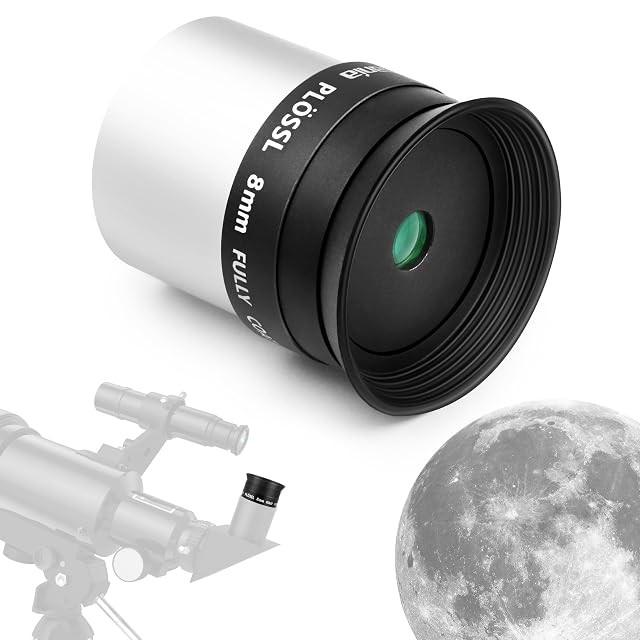
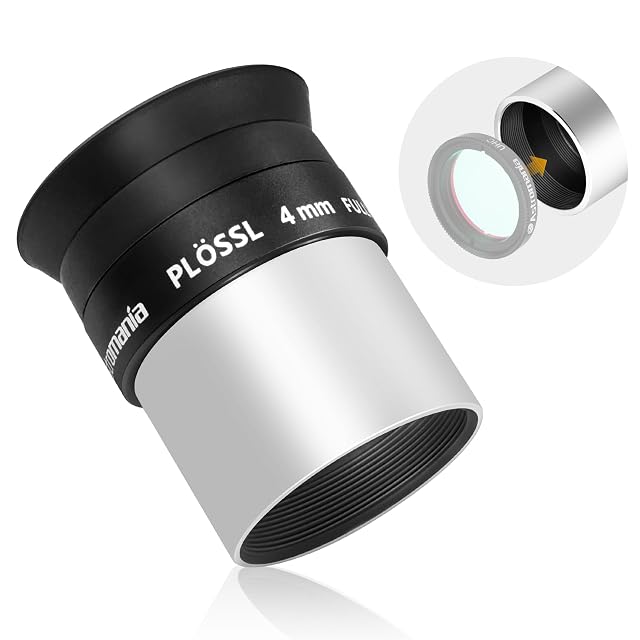
Its two nearest scopes on price

Same aisle, closest price — what the same spend else shows.

What it publishes, and what it withholds

Strengths

  • Blackened lens edges, named as a specification and with both of their jobs given
  • An anodized aluminum body, with the finishing process stated rather than implied
  • A two-year warranty published on the page, which no other eyepiece here carries
  • Rubber eyecups whose two positions are both described

Compromises

  • No eye relief figure, on a 6 mm (0.24 in) where a Plössl gives least
  • Fifty degrees is the classic Plössl field and no more
  • The coating claim is worded rather than labeled, so it sits outside the usual four rungs
  • No weight and no accessories published

Specifications

Focal length6 mm (0.24 in)
Apparent field50 degrees, stated suited to the Moon, the planets and a range of deep-sky objects
Eye reliefNo figure published. Rubber eyecups, stated to provide comfort and to increase contrast, and stated to be left up or folded down for spectacles
Barrel size1.25 in, threaded to accept filters
Optical designFour-element Plössl, with the edges of the optics blackened — stated to increase contrast and to prevent internal reflections · Matte aluminum, finished by a stated two-step anodizing process
CoatingsMultiple layers of high-transmission coatings, as the maker words it
WeightNot published by the maker.
Supplied accessoriesNot published by the maker. · A two-year US warranty and unlimited support are stated
Amazon referenceB00008Y0S8
EAN0050234933179

What observers ask about this one

What do blackened lens edges actually do?

They stop light that enters the glass from the side bouncing off the ground edge of each element and arriving at the eye as a veil. The effect is loss of contrast rather than a visible flare, which is why it is hard to notice and easy to leave out of a specification. Two listings on this shelf name it: this one and the published Astromania 8 mm (0.31 in), and this one states both consequences — contrast up, internal reflections down. On a planetary eyepiece it is the detail that matters most and gets published least.

Multiple layers of high-transmission coatings — which rung is that?

It does not map cleanly onto any of the four. The usual ladder is coated, fully coated, multi-coated, fully multi-coated, and the difference between them is whether every air-to-glass surface is treated and whether each gets one layer or several. This wording says several layers, and never says every surface. It is therefore at least multi-coated and not demonstrably fully multi-coated, which the two Astromania pages on this shelf claim outright.

How much magnification does 6 mm (0.24 in) give?

The telescope’s focal length divided by six. On a 1000 mm (39.4 in) telescope that is 167x; on a 650 mm (25.6 in) short refractor, 108x. Neither figure belongs on this page, because an eyepiece has no magnification of its own — the published pages across this shelf say the same thing in the same way. What 6 mm (0.24 in) does decide is that the exit pupil is small, so the view darkens and the eye has to be placed precisely, which is the reason the missing eye relief figure matters here.

The price on Amazon.com

This model is listed on Amazon.com, at ≈ $32 at the last reading. Listed is not the same as in stock: availability changes daily, and the buy box shows the live price.

Details checked on October 7, 2026.

This one and its buyer, among astronomy instruments

Planetary detail on a medium-focal-length telescope, from a maker that publishes a warranty

What buyers actually choose

Amazon reports what buyers took in the month before this page was last checked: at least 50.

The figure is a floor, rounded by Amazon, and read through Keepa — it says what buyers picked, not what a maker claims.

Sources

Specifications: the manufacturer sheet for telescopes and observing optics and the matching Amazon product page. Prices and availability: Keepa. Every figure on this page names its source.

The way we judge these astronomy instruments