Skip to content

The best alt-azimuth mounts for 2026

An alt-azimuth mount moves the way a person points: up and down, left and right. Nothing has to be aligned, nothing has to be leveled to a pole, and the telescope is working within a minute of being set down. For observing — as opposed to photographing — that simplicity is worth more than most buyers expect, and a great many observers who own an equatorial head use an alt-azimuth one on ordinary evenings. What it gives up is field rotation: over a long exposure the sky turns within the frame even when the object stays centered, which is why the design belongs to visual work and to short exposures. The features that separate one head from another are mechanical. Slow-motion controls, whether by cable or by knob, are what make high magnification usable; without them a nudge is the only fine adjustment, and a nudge overshoots. Clutch and tension decide whether a tube stays where it is put when a heavy eyepiece is swapped in. The dovetail fitting — the narrow Vixen-style bar or the wider Losmandy-style one — decides what can be attached at all, and a head that takes both is more useful than one that takes either. Then read the payload against the tube that will actually sit there, and read the tripod, because a good head on a thin tripod is a thin tripod. We compare payload rating, slow-motion control, clutch and tension, dovetail fitting, tripod construction, setup time and supplied optics.

The instruments here, column by column

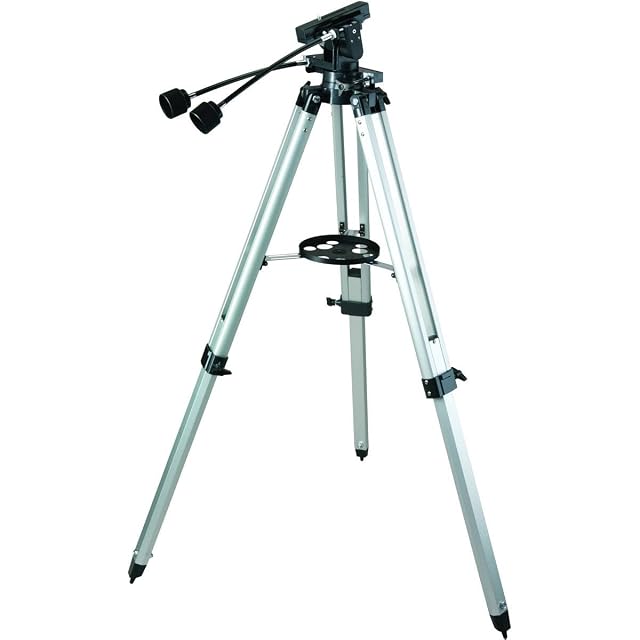
  1. Celestron Heavy-Duty Alt-Azimuth Tripod (93607)

    32 to 45 in height · two slow-motion controls · slotted 1/4-20 plate · aluminum legs · no dovetail

    A metal alt-azimuth head on two-section aluminum legs, with slow-motion controls on both axes and a slotted 1/4-20 plate for balancing a spotting scope, binocular or small telescope.

    Best for: Giant binoculars or a spotting scope that needs geared movement rather than a dovetail

    ≈ $115

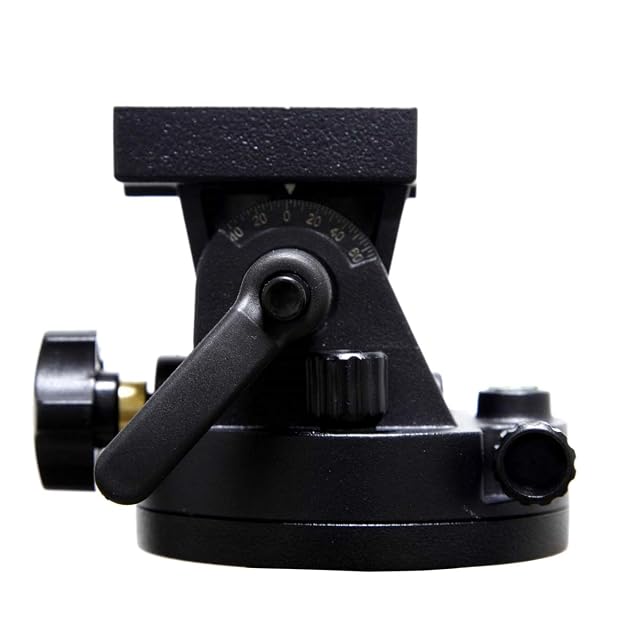
  2. iOptron Adjustable AZ Base

    −30° to +65° latitude · ±5° azimuth · Φ80 mm (3.15 in) base · Vixen bar · built-in bubble level

    An all-metal alt-azimuth base for iOptron's SkyTracker Pro and SkyGuider Pro, with −30° to 65° of latitude so the load can sit on either side, ±5° of azimuth and a bubble level.

    Best for: Polar-aligning a small camera tracker without moving the tripod legs

    ≈ $91

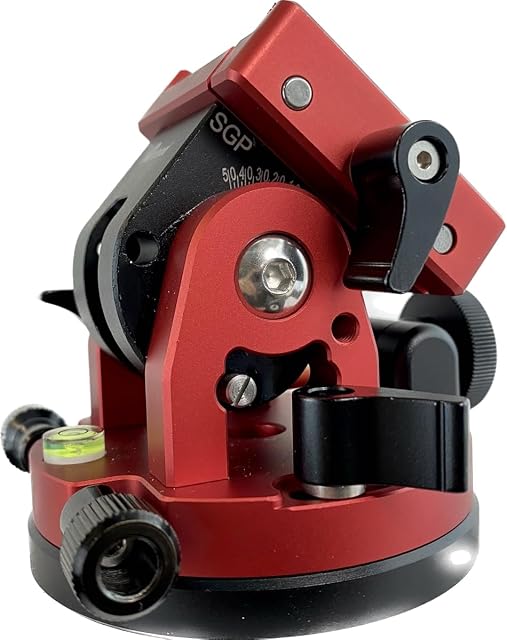
  3. iOptron Precision AZ/EQ Base (3328)

    0° to 90° latitude · ±5° azimuth · CNC-machined metal · Φ80 mm (3.15 in) base · Vixen bar · 3/8 in tripod thread

    A red CNC-machined alt-azimuth base for iOptron's SkyTracker Pro, SkyGuider Pro and SkyHunter, with 0° to 90° of latitude, ±5° of azimuth, a bubble level and a Vixen-type dovetail clamp.

    Best for: Polar-aligning a small camera tracker at any latitude, on a photo tripod

    ≈ $268

Finding your need in alt-azimuth mounts

Knowing what comes with the mount

The stated supplied optics say what the maker delivers along with the head.

iOptron Adjustable AZ Base (8050)

Standing on three legs

The stated tripod construction describes the materials and sections the maker declares.

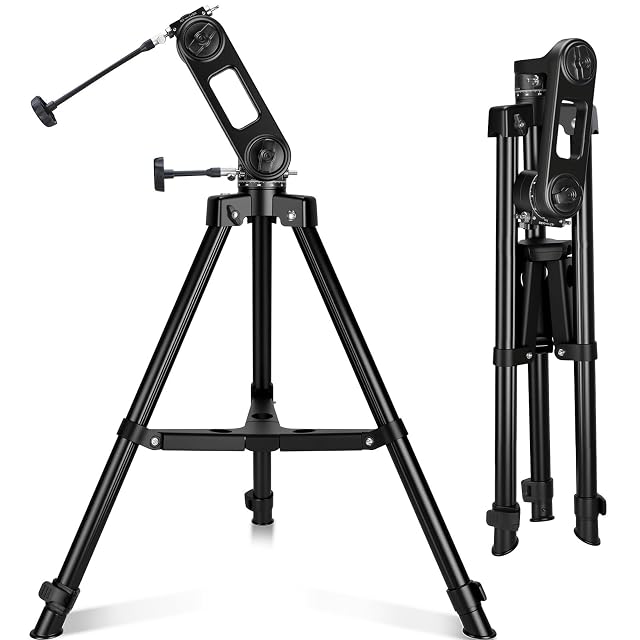
Celticbird Heavy-duty AZ mount (Tri-az)

Taking the tube you already own

The stated dovetail fitting describes the rail the maker plans on the head.

iOptron Adjustable AZ Base (8050)

The buyer behind each kind, in alt-azimuth mounts

Frequent target changes
The published clutch decides whether the tube can be swung by hand without upsetting the axes.
A heavy tube out of balance
Published tension decides the hold at rest. A head that slips under weight makes observing impossible.
An instrument already owned
The published dovetail fitting decides what attaches without an adapter. It is the first thing to check.

The downsides that come with alt-azimuth mounts

Simplicity against long exposure
An alt-azimuth sets down without alignment and does not compensate field rotation. That is this family’s founding trade.
Slow motion against price
Adding fine controls takes mechanism. Published slow-motion control says what the model offers.
Light tripod against steadiness
Published tripod construction decides how vibrations damp out. It counts as much as the head itself.

The questions people ask about alt-azimuth mounts

How does it differ from an equatorial?

An alt-azimuth moves in altitude and azimuth, with no axis aligned on the pole. It sets up faster and does not suit long exposure.

What does the payload rating cover?

The mass the maker states for the head. This site reports it without presenting it as a safe limit for a given setup.

What is the clutch for?

For swinging the tube by hand and then resuming fine motion. The arrangement is published entry by entry.

What does tension set?

The friction that holds the tube in place. It is published because it decides the behavior with a heavy instrument.

What is a dovetail?

The standardized rail joining tube to mount. The published fitting says which format is accepted.

Are optics supplied?

Supplied optics are published. Some mounts sell with a tube, others on their own.

Can an alt-azimuth be motorized?

That depends on the model and the maker’s accessories. This site publishes what is stated.

Does it suit photography?

Field rotation limits long exposure. This site publishes characteristics and describes no setup.

Worth remembering, on alt-azimuth mounts

An alt-azimuth is bought for its setup time and judged on its slow motions. Tension and clutch decide what happens when the tube is heavy and pointed high.

Alt-azimuth mounts in brief

    Comparison table for alt-azimuth mounts

    The column is shown only when four instruments in five publish the figure. Below that, it would be comparing the absence of numbers.

    ModelPriceSlow-motion controlSupplied opticsTripod construction
    iOptron Adjustable AZ Base (8050)$91Latitude adjustment −30° to 65° and azimuth adjustment ±5°, stated, for repositioning during polar alignment with the mount on the tripodNone: this is a base · Stated usable as a wedge to convert alt-azimuth to equatorial, a dovetail plate possibly needed · Listing model number 3327None: a base for a tripod · All-metal construction · Built-in bubble level
    Celestron Heavy-Duty Alt-Azimuth Tripod (93607)$115Two slow-motion control handles for small adjustments on slow-moving targets, statedNone: this is a mount and tripod · 2-year US warranty statedTwo-section aluminum legs, 32 in minimum and 45 in maximum height · Center leg brace with a metal accessory tray · Metal head
    iOptron Precision Camera Mount Base AZ/EQ (3328)$268Latitude adjustment 0° to 90° and azimuth adjustment ±5°, stated, for repositioning during polar alignment while the mount stays on the tripodNone: this is a base · Stated usable as a wedge to convert alt-azimuth to equatorial, a dovetail plate possibly neededNone: a base for a camera tripod · CNC-machined all-metal construction · Built-in bubble level · Attaches with 3/8 in or 1/4 in threads (a 3/8 to 1/4 in converter is optional and needed for 1/4 in)
    Celticbird Heavy-duty AZ mount (Tri-az)—Dual worm-gear slow motion with a 126:1 reduction ratio, statedNone: this is a mount and tripod · Built-in ALT/AZ scales stated to work with smartphone star-finding appsOne-piece die-cast aluminum mount body · Full-metal worm-gear transmission · 32 mm (1.26 in) anodized aluminum tripod legs

    The guides that discuss alt-azimuth mounts

    Where the figures are drawn from

    Specifications: manufacturer sheets for telescopes and observing optics and the matching Amazon product pages. Prices and availability: Keepa. Every figure in this table names its source.

    Most recent revision in this category: November 7, 2026.

    The way we judge alt-azimuth mounts

    Any figure written into the body of this page was true on the day it was written. The amount shown next to each instrument is requested from the retailer as the page loads, and it is that amount, not the text, that stands.