Skip to content

The best zoom eyepieces for 2026

A zoom eyepiece replaces a handful of fixed ones with a single barrel and a ring, and the convenience is real: on a planet, where the right magnification changes with the steadiness of the air from minute to minute, being able to turn a ring rather than swap glass in the dark keeps the object in the field and keeps the observer looking. The compromise is in the apparent field of view, which on almost every zoom is generous at the long-focal-length end and noticeably narrower at the short end — exactly the opposite of what is wanted, since high magnification is where a wide field helps most. Read both figures, not the average. Eye relief usually varies across the range too, and a zoom that is comfortable at one setting can push the eye uncomfortably close at another. Two features separate a good zoom from a frustrating one in practice. Parfocality — whether the focus holds as the ring is turned — decides whether the zoom is genuinely faster than swapping eyepieces. And click stops against a smooth action is a matter of taste that becomes a matter of use: stops make it possible to return to a known setting by feel. Check the barrel size and whether the zoom accepts filters at the bottom. Weight belongs in the reading, since a zoom is heavier than the fixed eyepiece it replaces. We compare focal length range, apparent field at both ends, eye relief, parfocality, action and stops, barrel size, coatings and body.

The instruments here, column by column

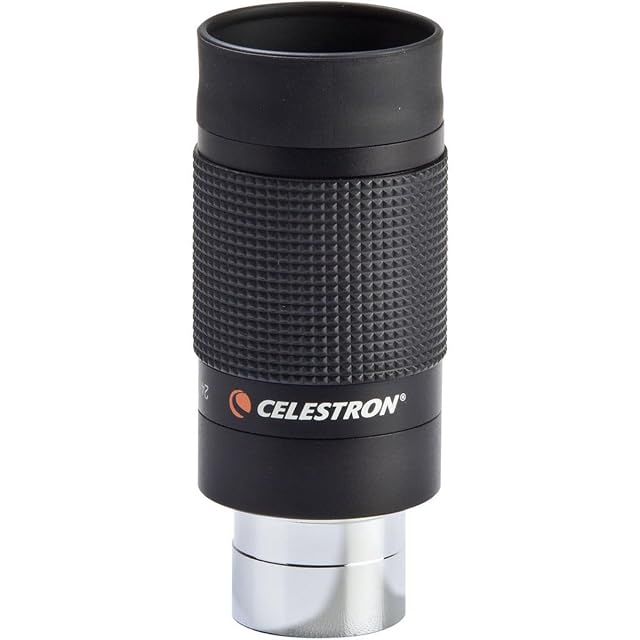
  1. Celestron 8–24 mm zoom eyepiece (93230)

    8–24 mm zoom · 40° to 60° apparent field · 15–18 mm eye relief · 1.25 in · threaded case · 2-year warranty

    Celestron's 93230 8-24 mm zoom: a 1.25-inch eyepiece with a 40 to 60-degree field, 15 to 18 mm of eye relief, a rubberized barrel that turns to zoom and a threaded plastic case, with no offer on Amazon.com when checked.

    Best for: Observers who want to stop swapping eyepieces in the cold

    7.2/10

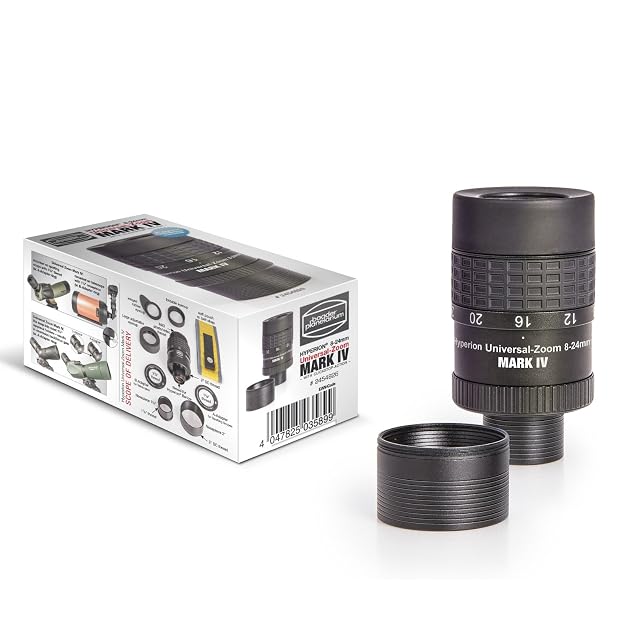
  2. Baader Planetarium Hyperion Zoom Mark IV

    8–24 mm with click stops at 8, 12, 16, 20, 24 mm · 68° widefield · 1.25 in and 2 in barrels · M43 thread · Phantom Group coatings

    Baader's Hyperion Universal Zoom Mark IV: a 68-degree widefield 8-24 mm zoom with click stops at five focal lengths, 1.25-inch and 2-inch barrels, Phantom Coating Group multi-coatings, three eyecups and an M43 photo thread.

    Best for: An owner of 1.25 in and 2 in focusers, or a binoviewer, who also photographs through the eyepiece

    7.8/10

    ≈ $396

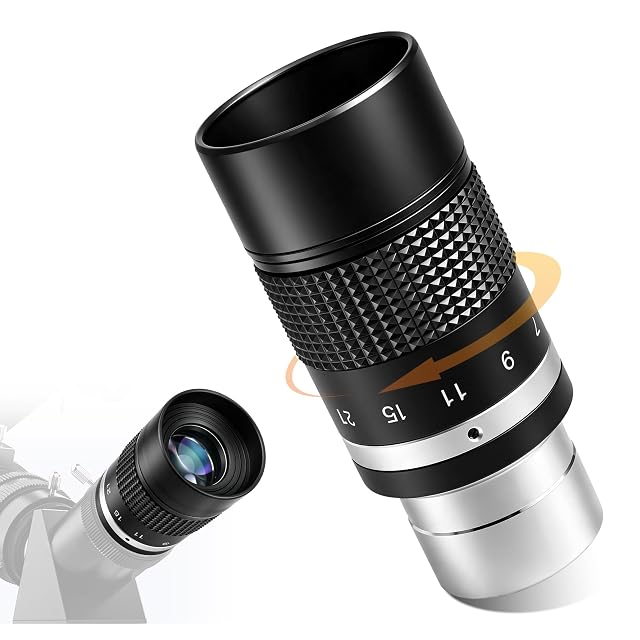
  3. Astromania FMC zoom 7–21 mm

    7–21 mm stepless zoom · 30° at 21 mm, 47° at 7 mm · 16–33 mm eye relief · four multi-coated elements · 1.25 in

    Astromania's FMC 7-21 mm zoom: four multi-coated elements, an apparent field of 30 degrees at 21 mm and 47 at 7 mm, 16 to 33 mm of eye relief, a rubber traction ring and a 1.25-inch filter thread.

    Best for: One eyepiece instead of four, for someone who wants to know what the long end costs in field

    ≈ $43

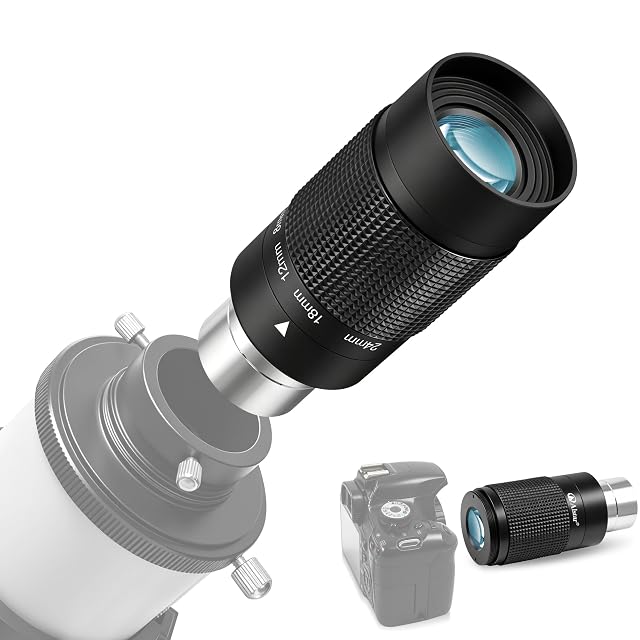
  4. Alstar 8–24 mm stepless zoom

    8–24 mm stepless zoom · 40° to 60° apparent field · 15–18 mm eye relief · 7 elements in 4 groups · all-metal · 1.25 in

    Alstar's 8-24 mm stepless zoom: a 7-element, 4-group multi-coated eyepiece with a 40 to 60-degree field, 15 to 18 mm of eye relief, blackened lens edges, a foldable eyecup, an all-metal body and a 1.25-inch filter thread.

    Best for: An eyeglass wearer who wants one eyepiece instead of four, with eye relief published at every setting

    ≈ $66

Finding your need in zoom eyepieces

Cover several magnifications

The focal length range replaces several fixed eyepieces. It is this section’s reason to exist and its first figure.

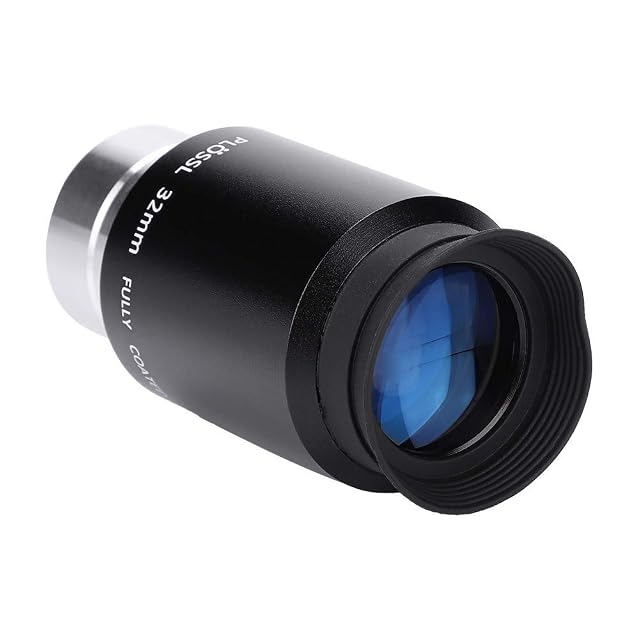
FO-SA 32 mm, sold as a zoom

Keep field at both ends

Apparent field at both ends is published separately because it almost always collapses at the long-focal-length end.

FO-SA 32 mm, sold as a zoom

Not refocus every time

Published parfocality says whether the image stays sharp while changing focal length. That is what makes a zoom genuinely practical.

Baader Planetarium Hyperion Universal Mark IV 8-24 mm

The buyer behind each kind, in zoom eyepieces

Observing in a group
Published action decides the gesture: rotating collar or pull. A simple gesture avoids losing the object between two people.
Reference points in the dark
Published stops allow a position to be found again without light. Without them, the setting is made blind.
An instrument with a given barrel
Published barrel size decides compatibility with the focuser. It is got round only with an adapter.

The downsides that come with zoom eyepieces

Zoom against apparent field
A zoom eyepiece almost always offers less field than a fixed one of the same focal length. Apparent field at both ends shows it.
Convenience against lens count
A zoom adds moving elements and surfaces. Published coatings are what limit the loss of transmission.
One zoom against three fixed eyepieces
The zoom replaces several eyepieces and equals none of them. The published focal length range says exactly what it covers.

The questions people ask about zoom eyepieces

Is a zoom worth several fixed eyepieces?

It covers their range and generally offers less field. Apparent field at both ends is published for that reason.

Why is the field given twice?

Because it changes sharply between the two ends of the range. A single value would mislead.

What is parfocality?

The ability to stay in focus while changing focal length. It is published because it decides the real comfort.

What are the stops for?

For finding precise positions without seeing the scale. It is a published characteristic, not a universal one.

How is a zoom adjusted?

Published action says so: collar or pull. The gesture matters when observing in the dark.

Which barrel size is needed?

The published barrel size has to match the focuser. It is the first compatibility filter.

Does a zoom suit the planets?

It allows the magnification to be tuned without changing eyepiece. This site publishes characteristics and promises no result.

What do the coatings cover?

The layers applied to the surfaces, published by the maker. They count all the more because a zoom has many lenses.

Worth remembering, on zoom eyepieces

A zoom eyepiece is bought for its range and judged at its least flattering end. Parfocality and stops then decide whether it is pleasant to use in the dark.

Zoom eyepieces in brief

  • Apparent field at both ends: 30 to 68 ° widefield, on 5 of the 5 models.
  • Eye relief: 15 to 16 to 33 mm, on 3 of the 5 models.

Comparison table for zoom eyepieces

The column is shown only when four instruments in five publish the figure. Below that, it would be comparing the absence of numbers.

ModelPriceActionBarrel sizeBodyFocal length range
FO-SA 32 mm, sold as a zoom$24Not applicable: fixed focal length1.25 in (31.7 mm), with filter threadAluminum alloy and optical glass · about 7.5 cm long, 145 g · rubber eyecup, two coversNone published · the specification gives a fixed 32 mm
Astromania FMC zoom 7–21 mm$43Stepless, precise adjustment1.25 in, threaded for standard filtersRubber traction ring · rubber eyecup · large eye lens7 to 21 mm, stepless
Alstar 8–24 mm stepless zoom$66Smooth twist of the zoom housing1.25 in, with filter threadAll-metal with knurled rubber grip · foldable rubber eyecup8 to 24 mm, stepless
Baader Planetarium Hyperion Universal Mark IV 8-24 mm$396Smoothed-out click-stop action, suited to binoviewing1.25 in and 2 in barrels included · fits some spotting scopes with 1 3/8 in threadLarge adjustable eyecup, small straight eyecup and winged foldable eyecup included · M43 photo and video thread8 to 24 mm
Celestron 8-24 mm zoom (93230)—Turn the rubberized barrel1.25 inRubberized barrel · threaded plastic case8 to 24 mm

The guides that discuss zoom eyepieces

Where the figures are drawn from

Specifications: manufacturer sheets for telescopes and observing optics and the matching Amazon product pages. Prices and availability: Keepa. Every figure in this table names its source.

Most recent revision in this category: November 7, 2026.

The way we judge zoom eyepieces

Any figure written into the body of this page was true on the day it was written. The amount shown next to each instrument is requested from the retailer as the page loads, and it is that amount, not the text, that stands.