Skip to content

Astromania FMC zoom 7–21 mm review

Publishes the apparent field at both ends — 30 degrees at 21 mm (0.83 in), 47 at 7 — which is the central compromise of every zoom.

Thirty degrees, and forty-seven

One of two pairs of field figures on this shelf.

A zoom is designed around its short focal length, and the field stop cannot grow as the focal length does. So the long end is the weak end: thirty degrees at 21 mm (0.83 in), against roughly fifty for a fixed 20 mm (0.79 in) Plössl.

At the short end it recovers: forty-seven degrees at 7 mm (0.28 in), which is near what a fixed eyepiece of that focal length gives.

That is the central compromise of every zoom ever made, and two listings on this shelf print it as two numbers instead of leaving it to be discovered.

Sixteen to thirty-three millimeters

The widest eye relief range published here, and the listing names what it is for: changing magnification without changing eyepiece.

Swapping a 20 mm (0.79 in) for a 7 mm (0.28 in) in the dark means unscrewing, fumbling, refocusing, and usually losing the object. A zoom removes that, and a zoom with thirty-three millimeters of relief at its long end lets spectacles stay on throughout.

A fixed 7 mm (0.28 in) Plössl has about five millimeters. Nobody wears glasses behind one.

It says the magnification depends on your telescope

One sentence, and the only one of its kind on this shelf.

Seven millimeters is not a magnification. On a 700 mm (27.6 in) refractor it is 100x; on a 1500 mm (59.1 in) Maksutov, 214x. The first is comfortable on a 70 mm (2.76 in) aperture, the second needs a steady night on a larger one.

The eyepiece shelf in this catalog runs the same arithmetic on a fixed 4 mm (0.16 in), and reaches the same place: the figure belongs to the reader’s own tube.

FMC, in the title

Fully multi-coated, claimed as an abbreviation and never expanded.

The ladder behind it: coated is one layer somewhere, fully coated is one layer on every air-to-glass surface, multi-coated is several layers somewhere, fully multi-coated is several on every surface.

A zoom has more air-to-glass surfaces than a fixed eyepiece — that is the price of the mechanism — so the coating claim matters more here than almost anywhere, and the surfaces are not named.

And the action is not published

Clicked or stepless, unknown.

The Alstar beside it on this shelf states stepless; the published Celestron on the European half has defined stops. This one publishes a rubber traction ring and leaves the mechanism out.

It is the difference between returning to a known magnification and sweeping for a comfortable one, and this page cannot say which it does.

Availability

American Amazon store sat at about $52 on the day of the survey.

Figures as Keepa reported them on the day this page was last updated. Stock and pricing shift without warning.

Prices quoted in this text were read on October 7, 2026. The live price is at the top of the page.
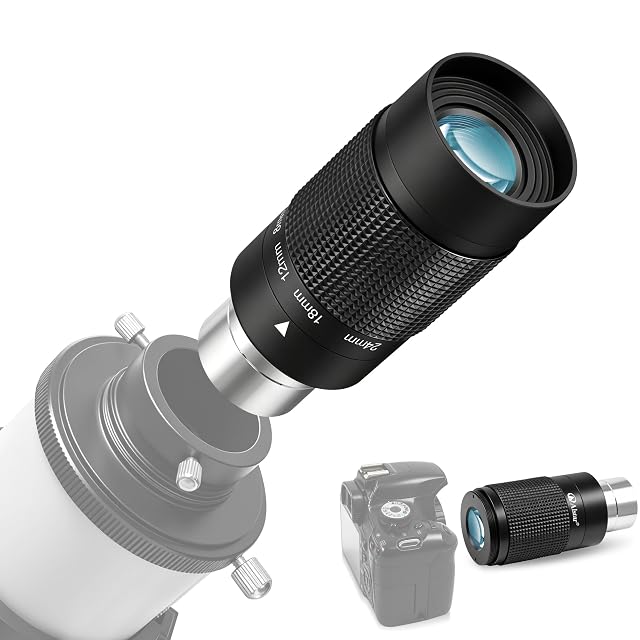
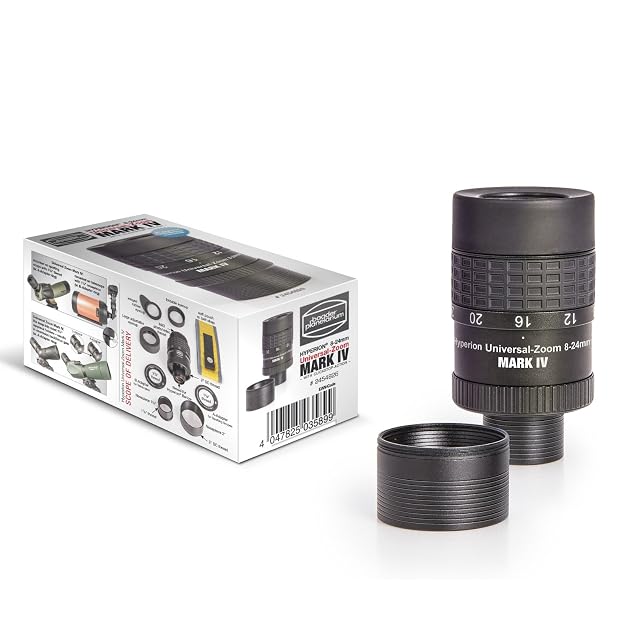
Its two nearest scopes on price

Same aisle, closest price — what the same spend else shows.

What it publishes, and what it withholds

Strengths

  • Publishes the apparent field at both ends of the range, which most zoom listings leave out
  • Sixteen to thirty-three millimeters of eye relief, the widest range published here
  • A filter thread, so one filter serves every focal length the zoom reaches
  • States that the magnification depends on the telescope, which no other zoom here says

Compromises

  • Thirty degrees at 21 mm (0.83 in) is a narrow field, and the listing publishes it without comment
  • No parfocality and no action published: clicked or stepless is unknown
  • FMC is claimed in the title without the surfaces being named
  • Seven millimeters at the short end is past what small apertures can use

Specifications

Focal length range21 mm (0.83 in) down to 7 mm (0.28 in), stated to give a variety of magnifications · Actual magnification stated to depend on the telescope’s focal length
Apparent field at both ends30 degrees at 21 mm (0.83 in) and 47 degrees at 7 mm (0.28 in) — one of two field pairs published on this shelf, with the Celestron 8–24 mm
Eye relief16 to 33 mm (0.63 to 1.30 in), stated exceptionally long, and stated to allow the magnification to be changed without changing eyepiece
ParfocalityNot published by the maker.
ActionNot published as stepped or stepless · A rubber traction ring is stated to ensure a good grip
StopsNot published by the maker.
Barrel size1.25 in, threaded for standard filters
CoatingsFMC — fully multi-coated, per the title
BodyA rubber traction ring for grip
Amazon referenceB0719FL3K4
EAN6970019298863

What observers ask about this one

Thirty degrees at 21 mm (0.83 in) — is that bad?

It is narrow, and it is the honest number. A fixed 20 mm (0.79 in) Plössl gives about fifty degrees; this zoom gives thirty at its 21 mm (0.83 in) end and forty-seven at its 7 mm (0.28 in) end. The reason is that a zoom is designed around its short focal length, and the field stop cannot grow as the focal length does. So the long end of any zoom is its weak end, and the published European zooms on this shelf give 40 to 60 degrees on one listing and nothing on the other. Publishing both numbers is what lets a reader see the compromise instead of discovering it.

Why is a long eye relief range stated as an advantage?

Because the listing names the real benefit: the magnification can be changed without changing eyepiece. That sounds obvious and it is the whole point — swapping a 20 mm (0.79 in) for a 7 mm (0.28 in) in the dark means unscrewing, fumbling, refocusing and often losing the object. Sixteen to thirty-three millimeters also means spectacles stay on at every setting, where a fixed 7 mm (0.28 in) would have about five millimeters and be unusable with them. It is the strongest argument any zoom on this shelf makes.

What does seven millimeters give on a small telescope?

More magnification than most small apertures can use. On a 700 mm (27.6 in) refractor, 7 mm (0.28 in) gives 100x, which a 70 mm (2.76 in) objective carries; on a 1500 mm (59.1 in) Maksutov it gives 214x, which needs a steady night. The listing says plainly that actual magnification depends on the telescope’s focal length, which is a sentence the rest of this shelf leaves out. The eyepiece shelf in this catalog runs the same arithmetic on a fixed 4 mm (0.16 in) and reaches the same conclusion.

The price on Amazon.com

This model is listed on Amazon.com, at ≈ $52 at the last reading. Listed is not the same as in stock: availability changes daily, and the buy box shows the live price.

Details checked on October 7, 2026.

This one and its buyer, among astronomy instruments

One eyepiece instead of four, by somebody who wants to know what the long end costs in field

Sources

Specifications: the manufacturer sheet for telescopes and observing optics and the matching Amazon product page. Prices and availability: Keepa. Every figure on this page names its source.

The way we judge these astronomy instruments