Skip to content

The best smart telescopes for 2026

A smart telescope has no eyepiece. A small optical tube sits over a camera sensor, a computer inside recognises the star field, points itself, and adds short exposures together while a phone shows the picture filling in. It is a different activity from looking through glass, and comparing the two on sharpness misses what is actually being bought: an instrument that is out of its bag and producing a recognisable nebula in a few minutes, from a garden where an eyepiece would have shown almost nothing. The figures worth reading are not the ones usually printed largest. Aperture still sets how fast the signal builds. Sensor size and focal length together set the field of view, and that decides which objects fit at all — a wide field frames a large nebula and makes a small galaxy a handful of pixels. Plate-solving is the feature that matters most in use: it is what lets the instrument find a target from a cold start without any alignment ritual. Then the unglamorous part, which decides whether it gets used: battery life through a whole session, whether the tripod is included, how the files come off, and what the instrument still does when the phone loses its connection. Read carefully whether the images can be exported as raw frames or only as finished pictures. We compare aperture, sensor and pixel size, field of view, plate-solving and tracking, stacking behaviour, battery life and file export.
The instruments here, column by column

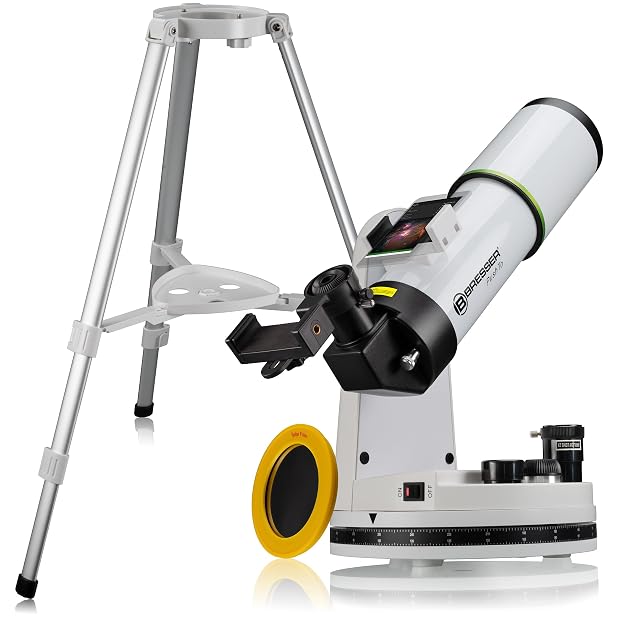
  1. Bresser PushTo AR 80/400

    80 mm aperture · 400 mm focal length · Bluetooth PushTo

    An 80/400 refractor whose built-in sensors report where it is pointing to a free phone app, which then guides the observer to a target with on-screen arrows.

    Best for: A beginner who wants help finding objects without the cost or weight of a GoTo mount

    ≈ €259

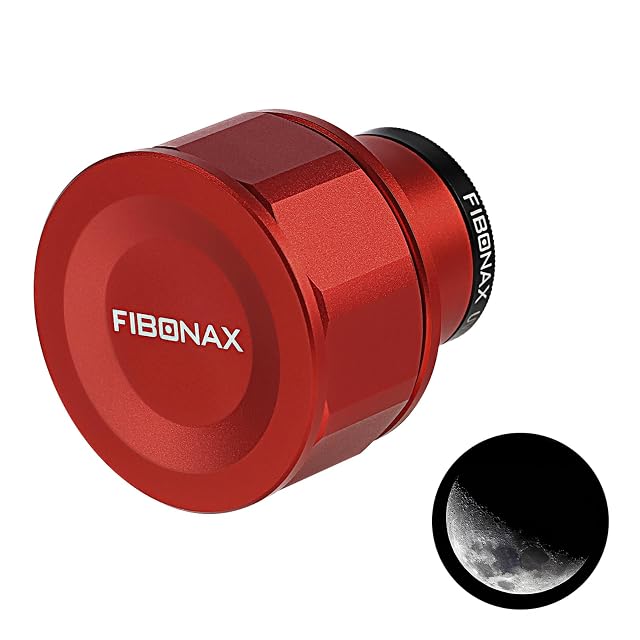
  2. FIBONAX NOVA8M

    8 MP sensor · 1.25 in eyepiece fitting · M28.5 × 0.6

    An 8 MP electronic eyepiece camera that replaces the eyepiece in a 1.25 in focuser and streams live video to a computer over USB, with an IR-cut filter fitted.

    Best for: Lunar and planetary video, and showing a live view to more than one person at once

    ≈ $80 / €96

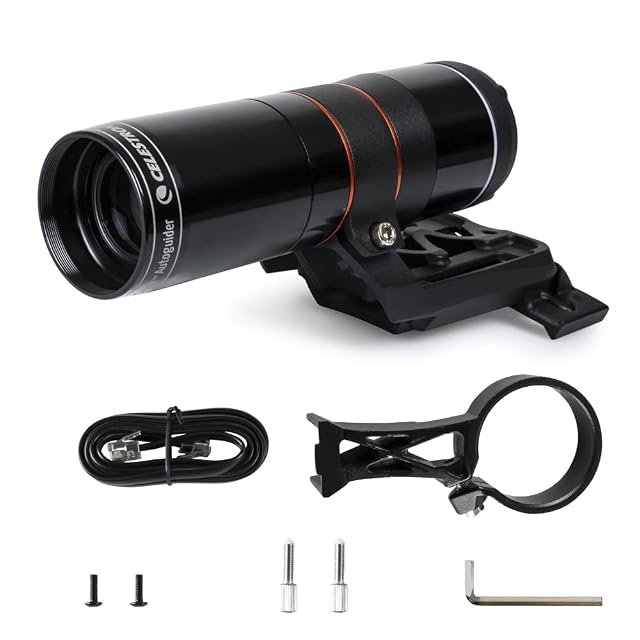
  3. Celestron StarSense Autoguider (94008)

    Automatic alignment accessory · four-element optics

    An accessory that bolts to a computerised Celestron mount and aligns it on the sky automatically in about three minutes, then improves its pointing and assists polar alignment.

    Best for: An owner of a computerised Celestron mount who is tired of three-star alignments

    ≈ $827 / £652 / €792

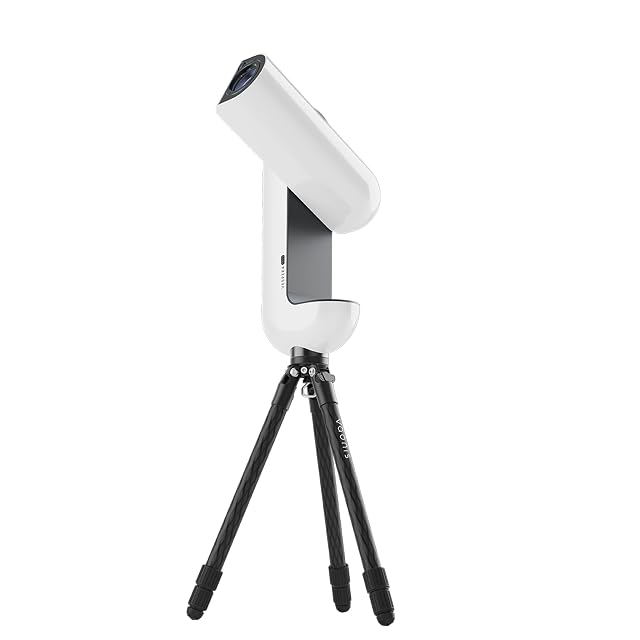
  4. Vaonis VESPERA Pro 2

    12.5 MP square sensor · 50 MP mosaic · apochromatic quadruplet

    A self-contained imaging telescope with a Sony IMX676 sensor, an apochromatic flat-field quadruplet objective and an app that stacks exposures across several nights automatically.

    Best for: Deep-sky imaging from a balcony or a garden, without a mount, a camera or a laptop

    ≈ $2990 / £2687 / €2990

Any figure written into the body of this page was true on the day it was written. The amount shown next to each instrument is requested from the retailer as the page loads, and it is that amount, not the text, that stands.