No eyepiece at all — a sensor, a phone and a stack · review
Vaonis VESPERA Pro 2 review
A self-contained imaging telescope with a Sony IMX676 sensor, an apochromatic flat-field quadruplet objective and an app that stacks exposures across several nights automatically.
The bottom line The most completely specified instrument on this shelf, and the one furthest from the traditional idea of a telescope.
An imaging instrument, described in imaging terms
Vaonis publishes the figure that matters for this kind of device: 1.6 arcseconds per pixel, with a Sony IMX676 behind an apochromatic flat-field quadruplet. That single number says more about what the system can resolve than any aperture-and-focal-length pair would, because sensor and optics are fixed to each other here.
What the software is for
Manual exposures from one to thirty seconds, gain from zero to thirty decibels, automatic dark calibration, and stacking that continues across nights. The output is FITS or TIFF — the formats that Pixinsight and Siril read — so the data is not trapped inside the app.
The practical specifications
Eleven hours of battery, 225 GB of storage, an aluminium tripod and a hard case in the box, a five-year warranty and French manufacture. Those are the figures that decide whether an instrument like this is usable on a trip, and all of them are published.
What it is not
It is not a visual telescope, and its pixel scale is coarse for planetary work. It is built for wide, faint, slow targets — and for producing an image while the owner is indoors.
Availability
German, French, Italian and Spanish Amazon stores ran from 2990 € to 3089 € on the day of the survey.
American and British Amazon stores list it in local currency, which the euro range above sets aside.
Figures as Keepa reported them on the day this page was last updated. Stock and pricing shift without warning.
Prices quoted in this text were read on 17 September 2026. The live price is at the top of the page.
What it publishes, and what it withholds
Strengths
Publishes arcseconds per pixel, which is the figure that actually describes an imaging system
FITS and TIFF export means the data leaves the ecosystem for real processing software
Manual exposure and gain ranges are stated, so it is not a locked-down appliance
Compromises
It is an imaging instrument: there is no eyepiece and nothing to look through
The maker’s comparative claims about other smart telescopes are unverifiable here
A 1.6 arcsec pixel scale is coarse for small planetary detail
Specifications
Aperture
Apochromatic flat-field quadruplet, per the maker
Sensor
Sony IMX676, 12.5 MP square
Pixel size
1.6 arcsec per pixel, as the maker states it
Field of view
50 MP, as the maker states it
Plate-solving
Not published by the maker.
Tracking
Not published by the maker.
Stacking behaviour
Manual 1–30 s, gain 0–30 dB
Battery life
11 hours and 225 GB, as the maker publishes them
File export
FITS and TIFF, for Pixinsight or Siril
Amazon reference
B0GY1TH8QQ (same reference on 6 Amazon marketplaces)
EAN
3760285690637
What observers ask about this one
Can you look through it?
No. The output is an image on a phone or tablet and files on internal storage. That is the design, and it is why the arcsecond-per-pixel figure matters more here than any eyepiece specification would.
What does multi-night stacking change?
Signal accumulates with total exposure time regardless of which night it came from. Automating the re-acquisition across nights is what makes tens of hours practical on a single target.
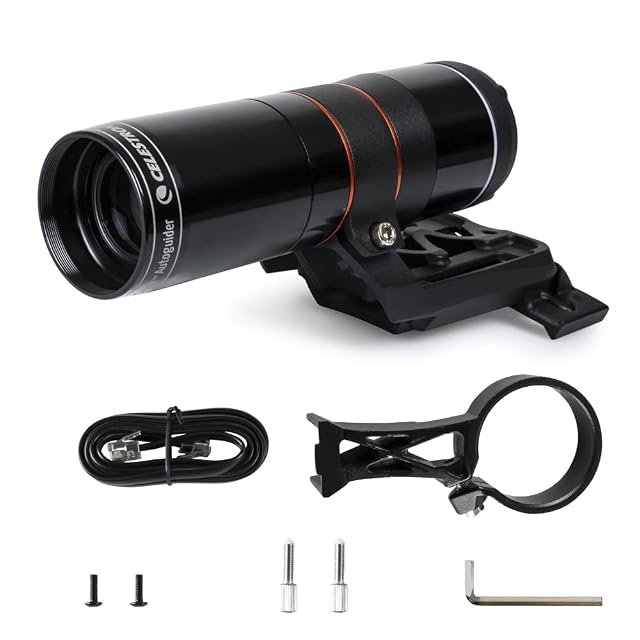
An accessory that bolts to a computerised Celestron mount and aligns it on the sky automatically in about three minutes, then improves its pointing and assists polar alignment.
Best for: An owner of a computerised Celestron mount who is tired of three-star alignments
80 mm aperture · 400 mm focal length · Bluetooth PushTo
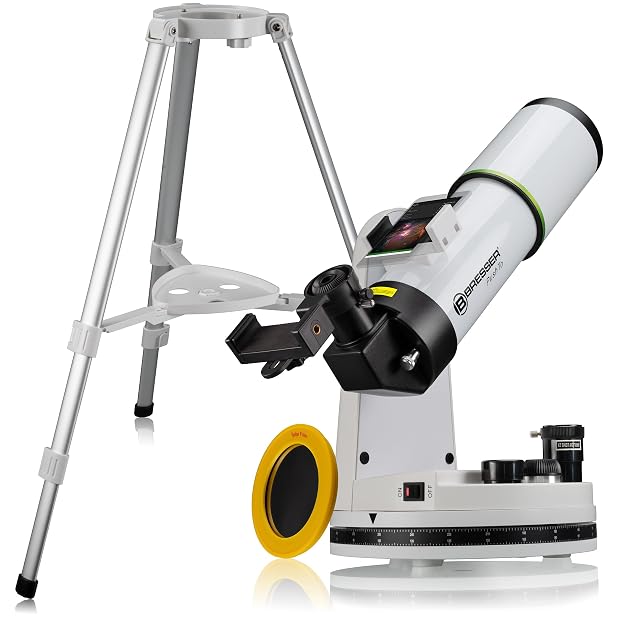
An 80/400 refractor whose built-in sensors report where it is pointing to a free phone app, which then guides the observer to a target with on-screen arrows.
Best for: A beginner who wants help finding objects without the cost or weight of a GoTo mount
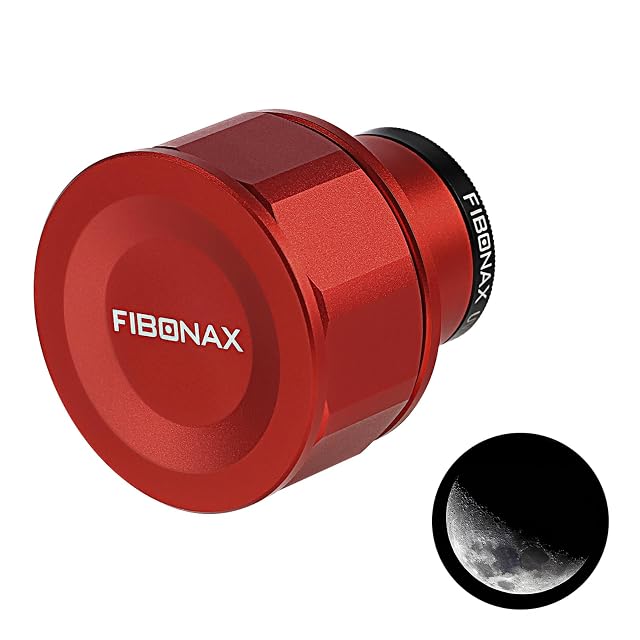
An 8 MP electronic eyepiece camera that replaces the eyepiece in a 1.25 in focuser and streams live video to a computer over USB, with an IR-cut filter fitted.
Best for: Lunar and planetary video, and showing a live view to more than one person at once