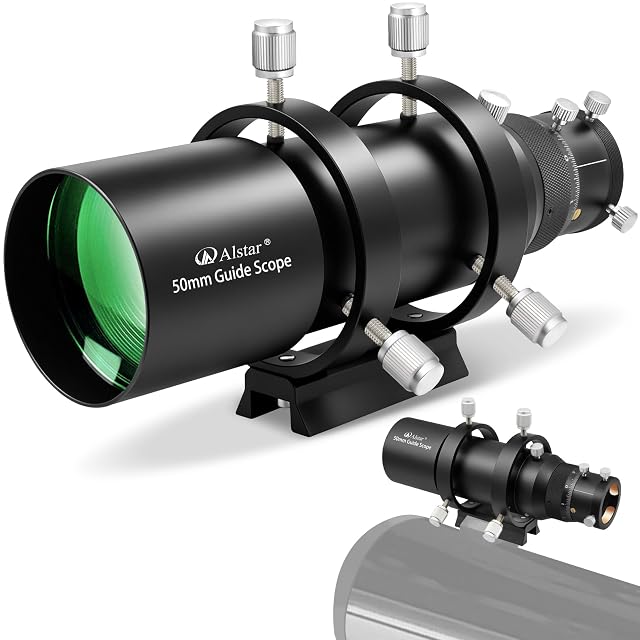
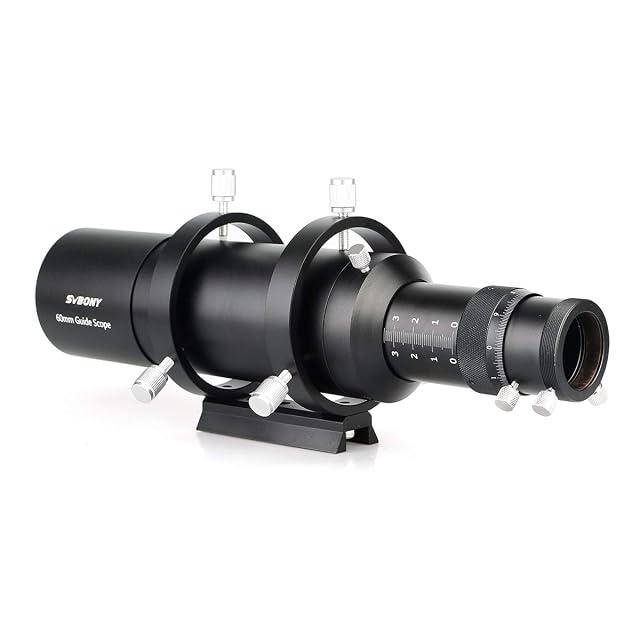
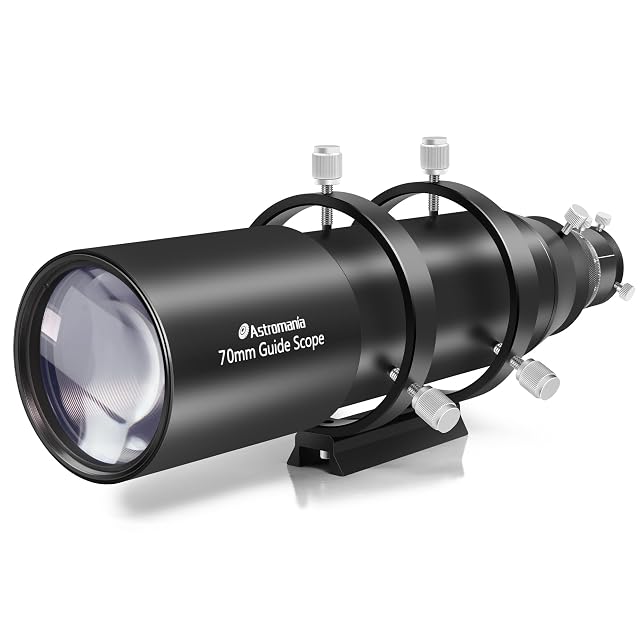
A small tube whose only job is to watch one star
The best guide scopes for 2026
A guide scope is a small telescope that never looks at anything worth seeing. It watches a single star, hands the position to a camera and software, and the software nudges the mount to keep that star exactly where it was — which is how an exposure of ten minutes holds round stars on a mount whose gears are not perfect. Because the job is measurement rather than viewing, the specifications invert. A short focal length is usually better than a long one, since a wide field makes it easy to find a guide star anywhere in the sky, and modern guide cameras have pixels small enough to measure a star accurately without magnification. Aperture only has to be enough to see a usable star, and adding more adds weight where weight is unwelcome. The property that decides whether the whole arrangement works is flexure: if the guide scope shifts by a fraction of a degree relative to the main tube during the exposure, the software will faithfully correct for a movement that never happened and smear the image. That is why rigid mounting rings, or a solid shoe with no adjustment screws to creep, matter more than the optics. Read the focuser — a helical focuser that locks is the right kind here — and read the back focus the camera needs. We compare aperture, focal length, mounting method, flexure resistance, focuser type, back focus and weight.