Skip to content

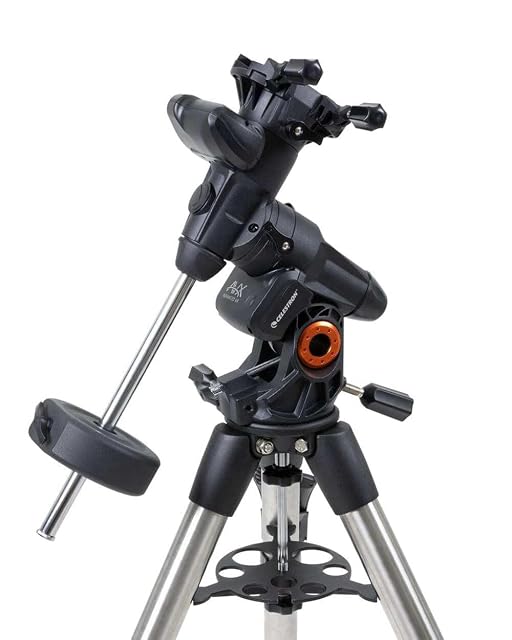
The mount is the camera’s tripod, and it has to turn

Visual observing forgives a mount that is near its limit; photography does not. An exposure records every vibration and every tracking error, which is why an imaging mount is chosen with far more margin than a visual one.

Payload, with margin

Everything above the mount counts: tube, camera, guide scope, focuser, cables. Then halve the number it is compared against.

Polar alignment is the foundation

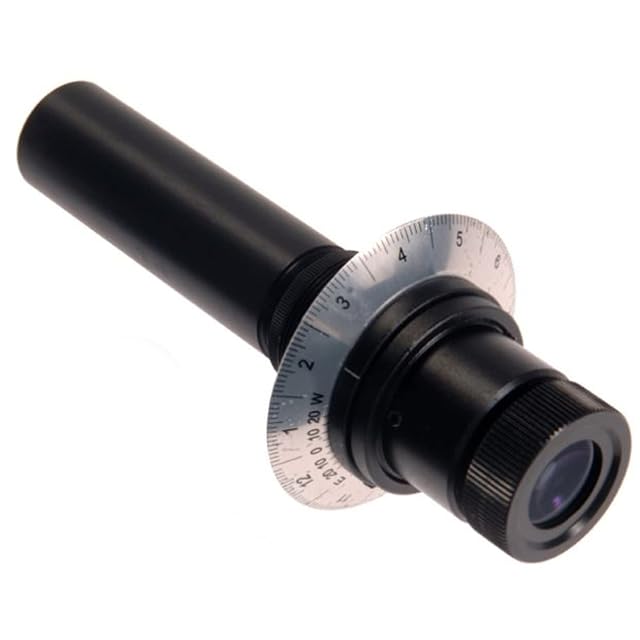
A mount whose axis is a degree from the pole trails stars in a minute, however good its drive. A polar scope with an illuminated reticle is the usual way to get within a few arcminutes.

Periodic error, unpublished

It is the specification that separates imaging mounts, and it appears in none of the listings here. Where a mount publishes nothing about its drive, this site prints that rather than assuming.

Balance is free

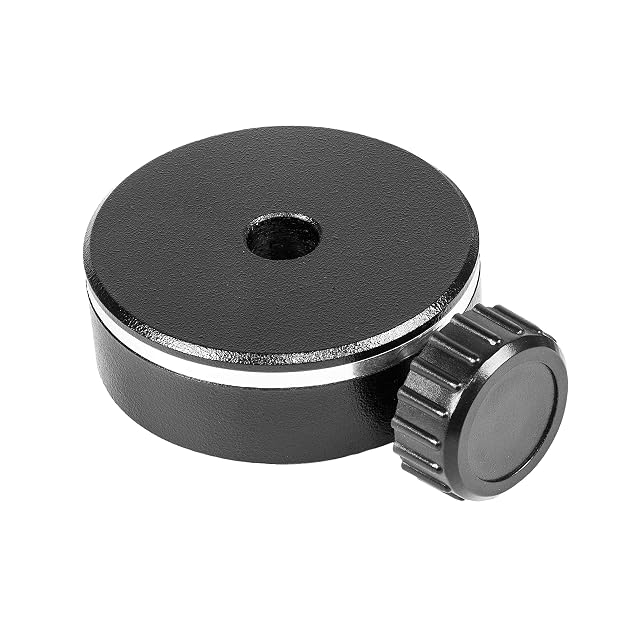
An equatorial mount tracks best balanced on both axes. Counterweights are the cheapest part of the system and the one most often left a little wrong.

The five, and the reason for the order

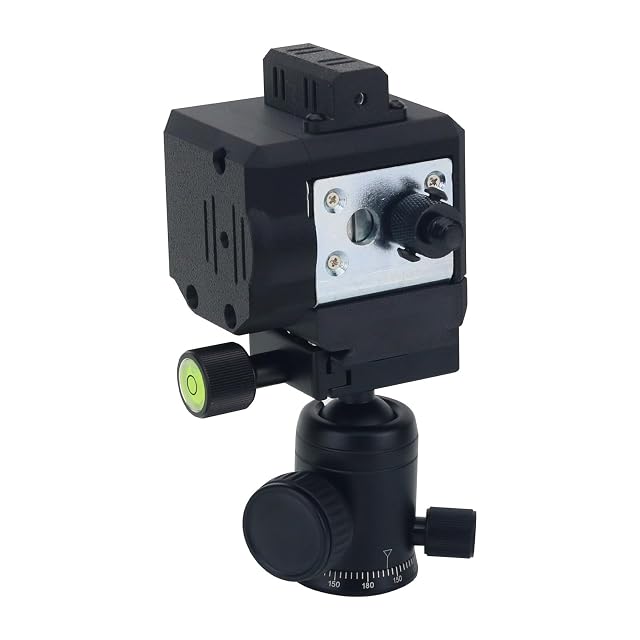
  1. TeSeek 99520

    Open-source tracker · ESP32-S dual core · 1/4 in output shaft

    A small equatorial tracking head built on an open-source design and an ESP32-S dual-core controller, offering sidereal, lunar and custom rates from a USB-C power bank.

    Best for: Wide-field camera tracking by somebody comfortable assembling their own chain of adapters

    ≈ €109
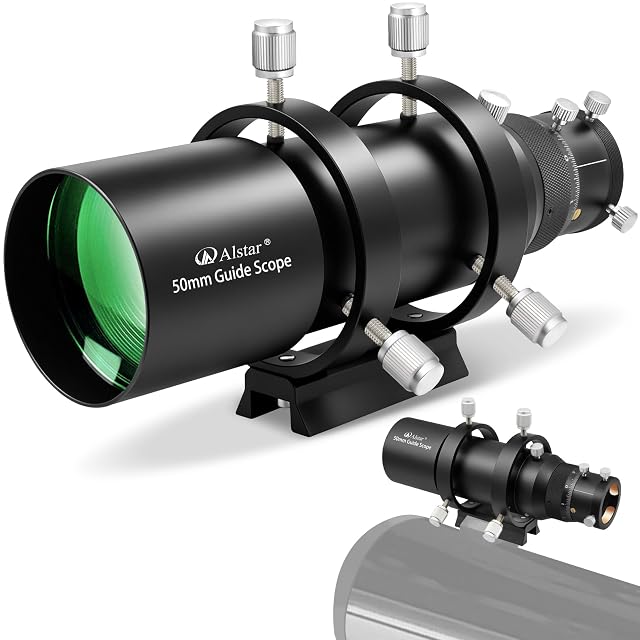
  2. A ALSTAR Guide Scope 50 mm (GS50A)

    50 mm aperture · 200 mm focal length · helical focuser

    A 50/200 guide scope with a brass compression-ring helical focuser, 40 mm of travel including 10 mm of fine focus, supplied with tube rings and a Synta-style dovetail plate.

    Best for: Guiding a main telescope of moderate focal length, and doubling as a wide finder

    ≈ $78 / £88 / €107

What gets asked before buying

How much margin is enough?

The common working rule is to load an imaging mount to about half its stated capacity. The rating describes what it will hold; it does not describe what it will track smoothly.

What is periodic error?

A repeating tracking error caused by the drive gear, appearing once per worm revolution. Almost no listing on this site publishes it, which is why it appears in the tables as not published rather than as zero.

Do I need a guide scope?

For exposures beyond a couple of minutes, usually yes. It watches a star and corrects the mount continuously, which removes both periodic error and small polar alignment errors.

Any figure written into the body of this page was true on the day it was written. The amount shown next to each instrument is requested from the retailer as the page loads, and it is that amount, not the text, that stands.

The tool we use ourselves

Chosen your instrument? Now do not pay over the odds.

Telescopes and mounts are discounted over and over through the year — hardest of all in the weeks before Christmas, which is exactly when most of them are bought — and a struck-through figure on its own says nothing whatever about what the same model was charged at four weeks ago. UniverTrack keeps a week-by-week record for each retailer, so a discount is measured against a figure somebody genuinely paid instead of one invented for the sale — and it says when the moment to buy has genuinely arrived.

Real price historyBuy-now alertsAI buying assistant
Try free for 14 days →
No commitment · Cancel in one click · 5 languages