Skip to content

What binoculars teach before a telescope is bought

A binocular is the cheapest way to find out whether the sky holds someone’s interest, and it teaches the three things that decide a telescope purchase: how much sky a field of view actually is, what a 5 mm exit pupil looks like, and how much magnification a pair of hands can hold.

Exit pupil, learned by looking

Fifty divided by ten is five millimetres, close to a dark-adapted pupil. A 16x50 gives 3.1 mm and looks visibly dimmer through the same objectives. Nothing explains the figure as quickly as comparing two pairs.

True field, learned by failing to find things

A binocular shows several degrees; a telescope at 100x shows well under one. Anyone who has hunted for an object with binoculars understands immediately why a finder is not optional on a telescope.

Steadiness, learned by shaking

Ten times magnification magnifies hand tremor ten times. That lesson transfers directly: it is the same reason a telescope on a thin tripod is unusable at 150x.

A red light and a chart

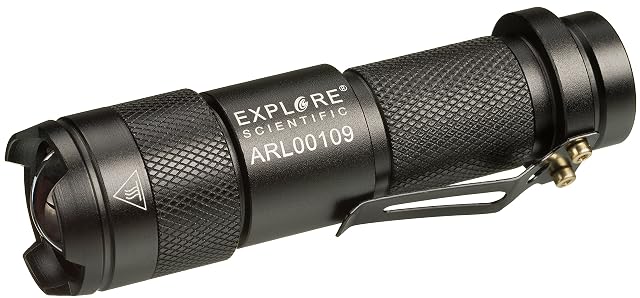
Both are used from the first evening and never replaced. A red torch is judged on how far down it dims rather than how bright it gets — a torch whose lowest setting still ruins dark adaptation is the wrong torch, whatever its maximum.

The five, and the reason for the order

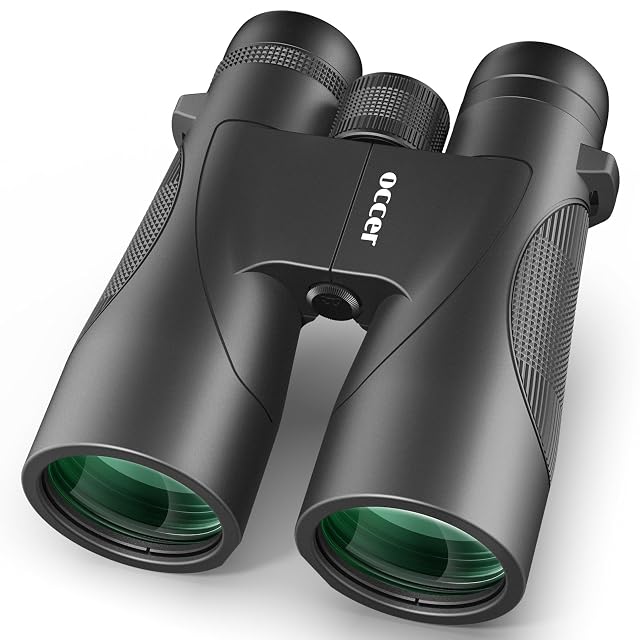
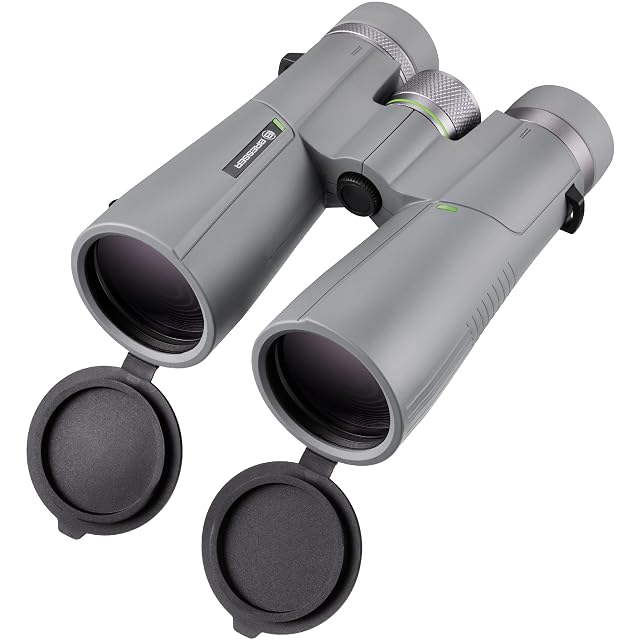
  1. occer 12x50

    12x magnification · 50 mm objectives · 4.2 mm exit pupil

    A 12x50 with an 18 mm prism and 50 mm objectives, supplied with a carry case, neck strap and cleaning cloth.

    Best for: Daytime distance viewing, with astronomy from a braced or seated position

    ≈ $69 / £61 / €60

What gets asked before buying

What does 10x50 mean?

Ten times magnification, fifty millimetre objectives. Dividing the second by the first gives the exit pupil — 5 mm here — which is the width of the beam of light leaving the eyepiece.

Is 10x too much to hold?

It is near the limit for most people. Tremor is magnified along with the sky, and bracing the binocular against a fence or a car roof shows noticeably more detail than holding it free.

What can binoculars show that a telescope cannot?

Wide objects. The Pleiades, the Hyades, the sweep of the Milky Way and large comets all fit in a binocular field and overflow a telescope’s. Two eyes also see more than one at the same brightness.

Any figure written into the body of this page was true on the day it was written. The amount shown next to each instrument is requested from the retailer as the page loads, and it is that amount, not the text, that stands.

The tool we use ourselves

Chosen your instrument? Now do not pay over the odds.

Telescopes and mounts are discounted over and over through the year — hardest of all in the weeks before Christmas, which is exactly when most of them are bought — and a struck-through figure on its own says nothing whatever about what the same model was charged at four weeks ago. UniverTrack keeps a week-by-week record for each retailer, so a discount is measured against a figure somebody genuinely paid instead of one invented for the sale — and it says when the moment to buy has genuinely arrived.

Real price historyBuy-now alertsAI buying assistant
Try free for 14 days →
No commitment · Cancel in one click · 5 languages