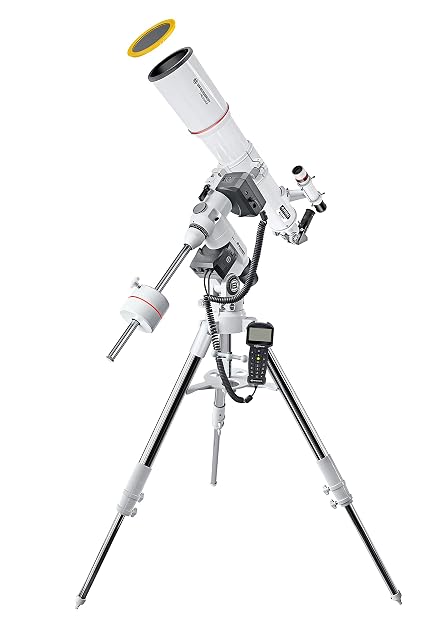
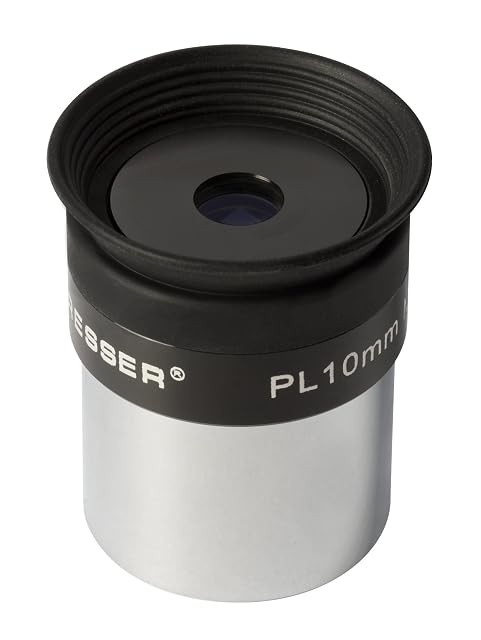
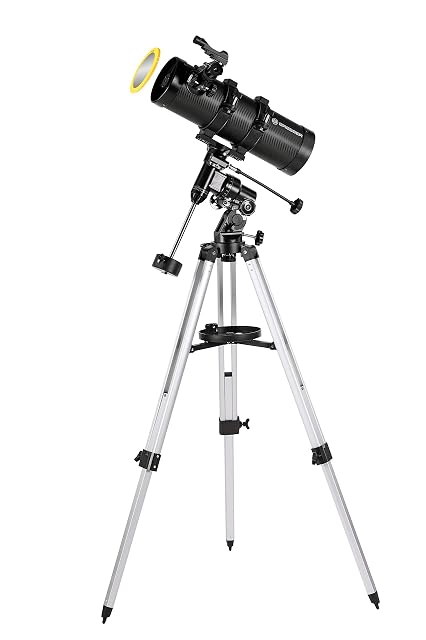
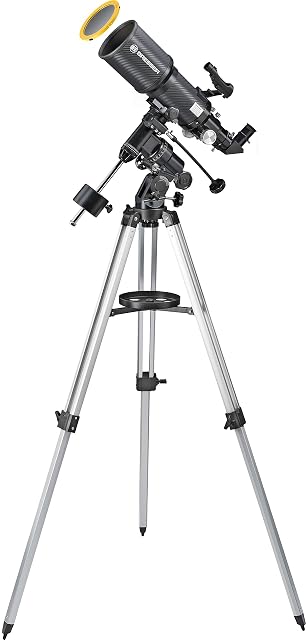
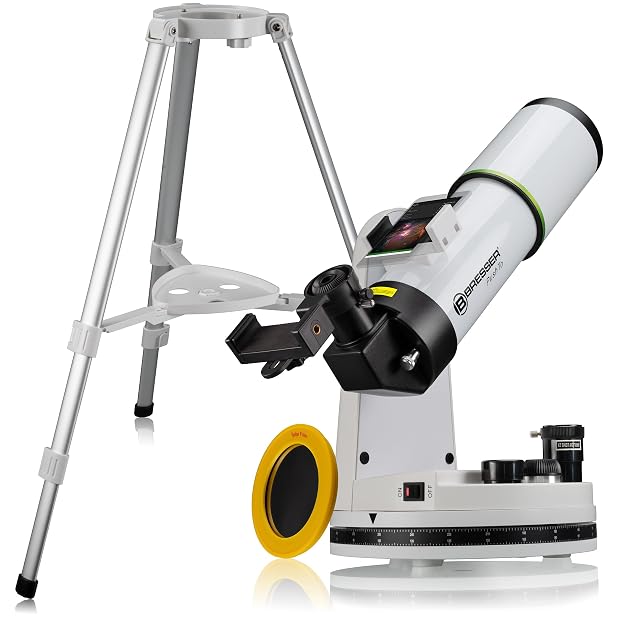
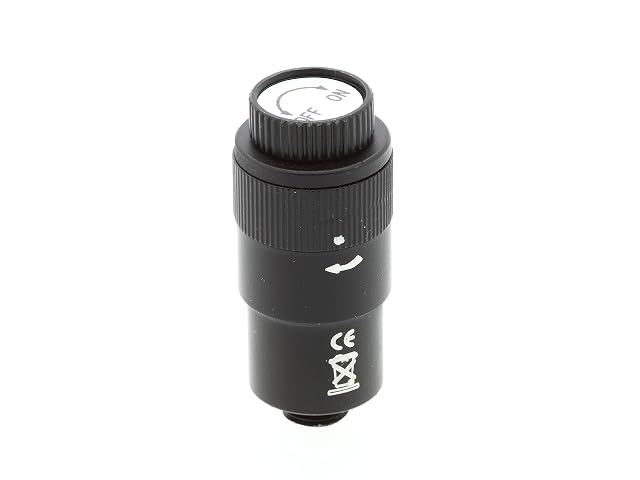
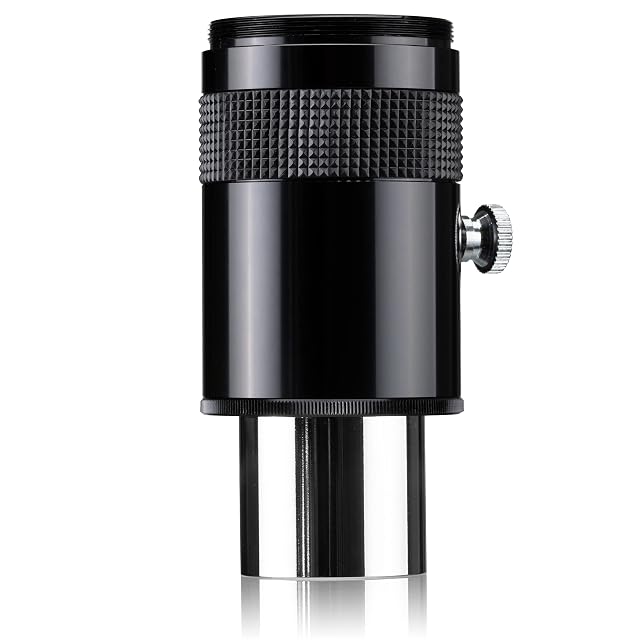
The JUNIOR products and the Messier products share a badge and almost nothing else. One is a 70/400 refractor in a backpack; the other is a 90 mm apochromat-class tube on an EXOS II GoTo mount. Reading the range as a single thing is the most common mistake made with it.
Accessories built around its own hardware
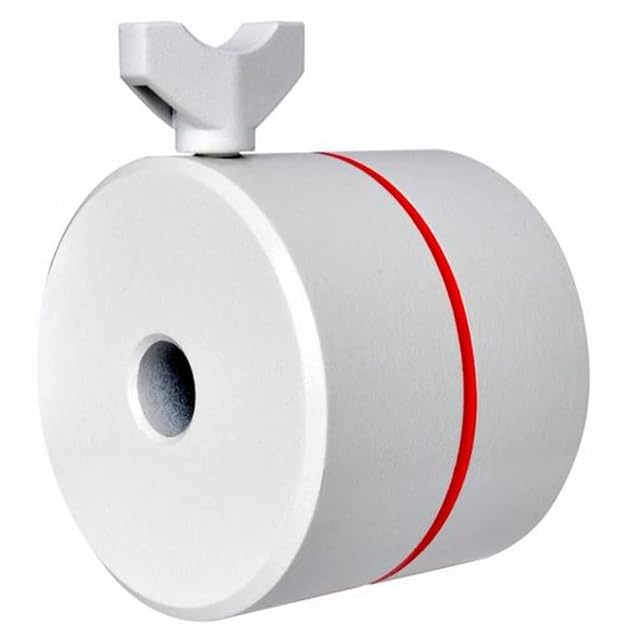
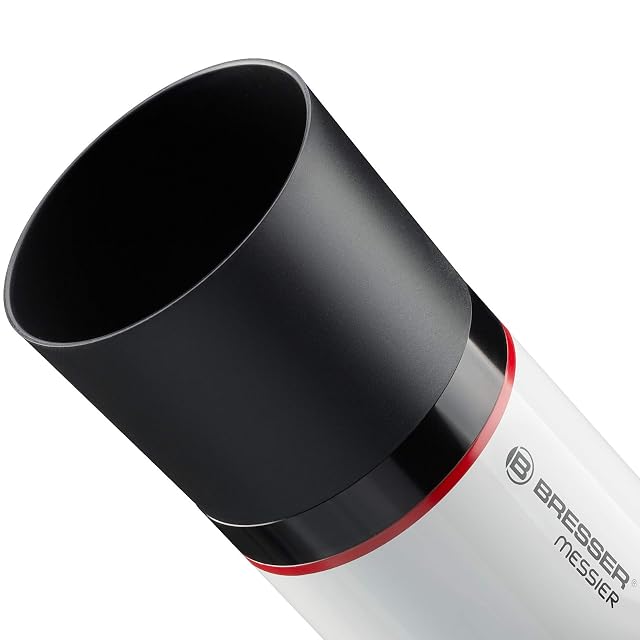
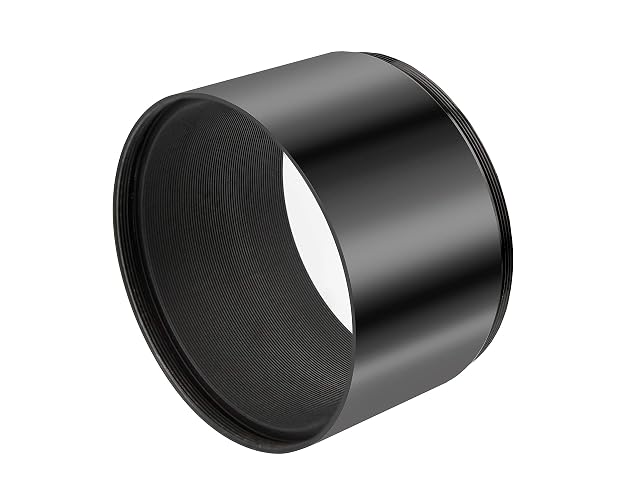
A good part of the Bresser accessory catalogue exists because of Bresser mounts and Bresser focusers: a counterweight cut for the EXOS-1 and EXOS-2, an extension sleeve for the HEXAFOC, a polar scope illuminator in a stated thread, a dew shield for the MCX102. These are precise products, and their listings give the figure that matters.
What the listings do well, and less well
Threads, bore diameters and optical paths are usually published. Optical claims are looser: one telescope in the range is titled with one focal length and bulleted with another, which the page for it reports rather than resolving.
Reading a Bresser page here
The model number does more work than the brand. Look at which line the product belongs to before comparing it with anything.
60 mm · 900 mm focal length · alt-azimuth · 2.5 kg complete
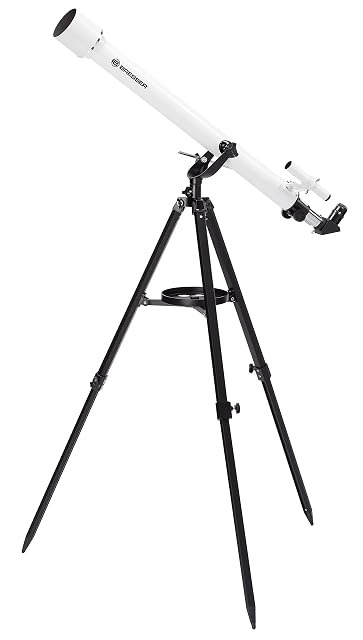
A classic 60/900 refractor on an alt-azimuth mount, supplied with three 1.25 in eyepieces, a star diagonal, an erecting lens and a smartphone adapter, at 2.5 kg complete.
Best for: The Moon, double stars and planetary glimpses from a balcony
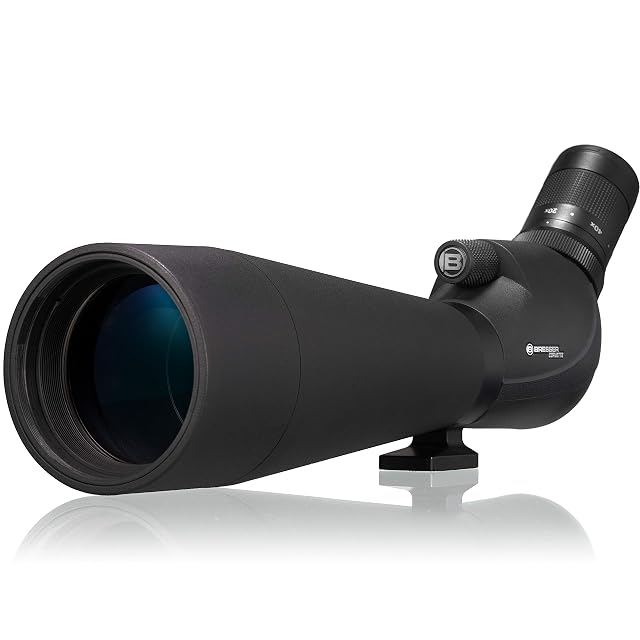
A waterproof 20–60x80 spotting scope with fully multi-coated optics, a 340° rotating body and a supplied tabletop tripod — published with its field of view, close focus, size and weight.
Best for: A buyer who wants to compare figures rather than adjectives before choosing
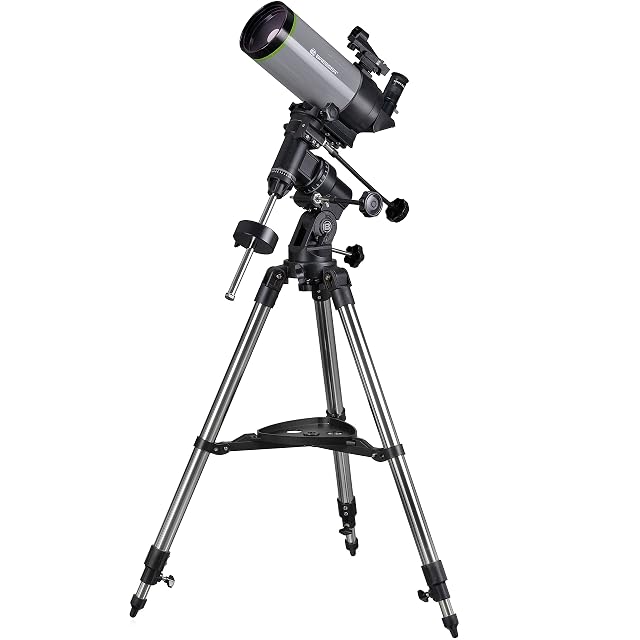
A 100/1400 Maksutov on an EQ3 equatorial mount with slow-motion controls on both axes, supplied with a 25 mm Plössl, an erecting prism and a phone holder.
Best for: A compact planetary telescope that also works on landscapes
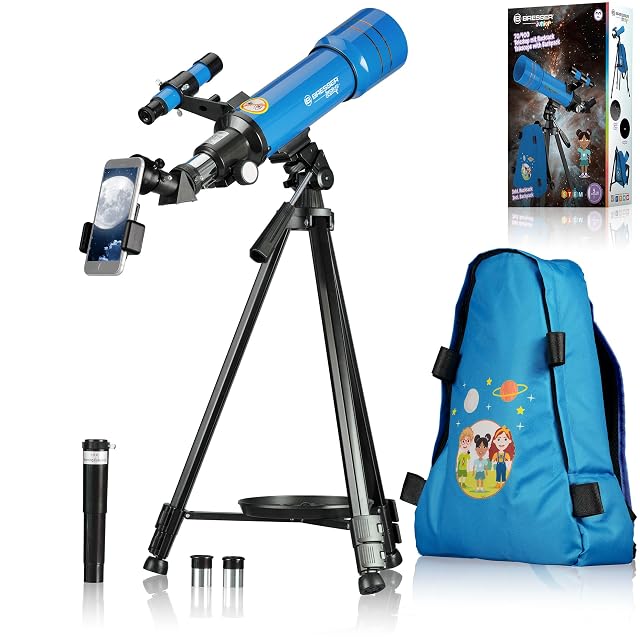
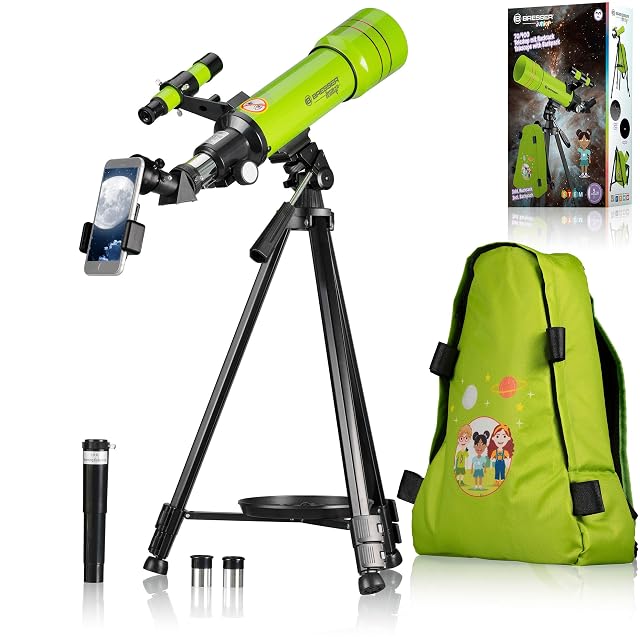
A 70/400 refractor sold as a first instrument for children from eight, supplied in a backpack with three eyepieces, a star diagonal and an erecting lens.
Best for: A child from about eight who will carry the telescope themselves
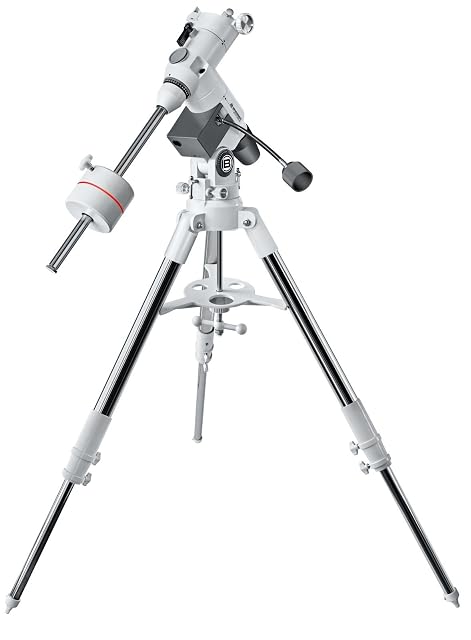
13 kg stated capacity · GP-level dovetail · 4.9 kg head
An equatorial mount head with radial ball bearings on both axes, a stated capacity of 13 kg, a polar finder and a 4.5 kg counterweight, on a height-adjustable aluminium tripod.
Best for: Carrying a serious tube steadily, with room to motorise later
102 mm · 460 mm focal length · EQ-3 mount · objective solar filter supplied
A 102/460 telescope on an EQ-3 equatorial mount, supplied with an objective solar filter for white-light observation, a 2 in focuser with a 1.25 in reducer and a smartphone adapter.
Best for: Wide-field night use with a daytime solar option, on a mount that can carry both
80 mm aperture · 400 mm focal length · Bluetooth PushTo
An 80/400 refractor whose built-in sensors report where it is pointing to a free phone app, which then guides the observer to a target with on-screen arrows.
Best for: A beginner who wants help finding objects without the cost or weight of a GoTo mount
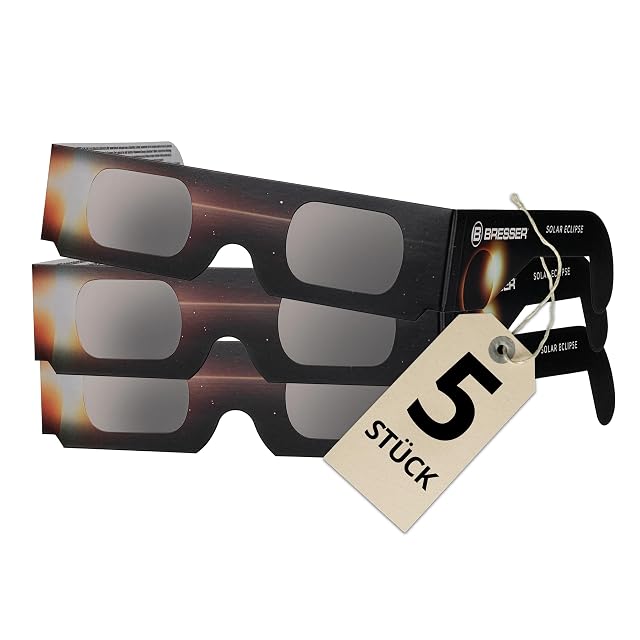
A five-pack of eclipse glasses from a named European brand, citing EN ISO 12312-2:2015, made in the USA and described as confirmed by an independent laboratory test.
Cited standard
EN ISO 12312-2:2015, with CE certification stated
Maker identification
Made in the USA, per the listing · Bresser is an established European optics company with a published address
Film construction
White-light filter film; the maker states the Sun appears light yellow · The maker describes the construction as suitable for repeated use
Frame type
Not published by the maker.
Fit
Not published by the maker.
Supplied quantity
Five pairs, Design B
Inspection guidance
Confirmed by an independent laboratory test, per the listing; the laboratory is not named
Amazon reference
B0H31LT23V (same reference on 5 Amazon marketplaces)
EAN
4007922202716
A long-established brand with a traceable corporate identity behind the product
The filter film’s colour rendering is stated, which sets expectations
The independent laboratory is referred to and not named
Best for: A buyer choosing on the identity of the company behind the product
Any figure written into the body of this page was true on the day it was written. The amount shown next to each instrument is requested from the retailer as the page loads, and it is that amount, not the text, that stands.