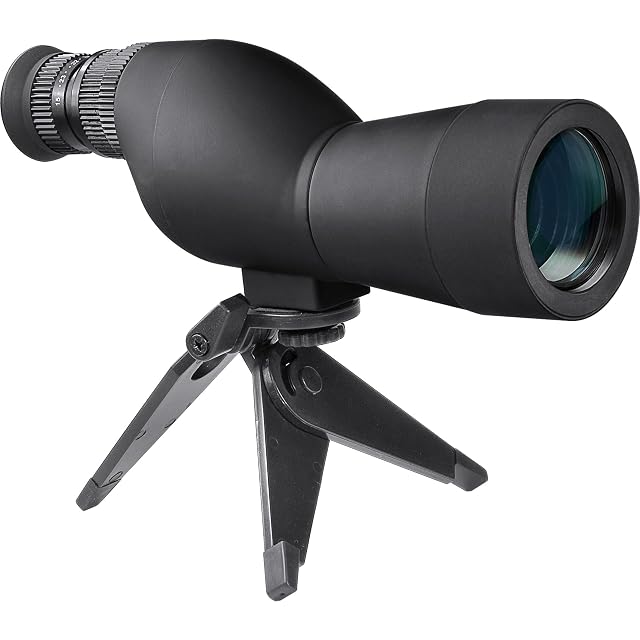
A waterproof 20–60x80 spotting scope with fully multi-coated optics, a 340° rotating body and a supplied tabletop tripod — published with its field of view, close focus, size and weight.
The bottom line The best-documented spotting scope on this shelf, and heavy enough that its own tripod is the first thing to replace.
Numbers, for once
Two point zero six degrees of field. Nine metres of close focus. Four hundred and seventy by a hundred by a hundred and seventy millimetres. One thousand three hundred and thirty-six grams. Four published figures where the rest of this shelf offers adjectives — and that is the reason to take this one seriously.
The rotating body
Three hundred and forty degrees of rotation in the tripod collar. Pointed at anything high, the eyepiece can be turned to meet the observer rather than the other way round, and that single mechanism does more for comfort than any coating.
The weight and what follows from it
One and a third kilograms on a supplied tabletop tripod is a lot. At 20x it will be steady enough; at 60x every touch will take time to settle. The published weight is exactly what tells you that in advance.
What the field figure means
Two degrees is four Moon diameters. For finding something in the sky that is workable; for sweeping it is narrow. A binocular at 10x50 covers two to three times as much.
Availability
German, French, Italian and Spanish Amazon stores ran from 150 € to 187 € on the day of the survey.
American and British Amazon stores list it in local currency, which the euro range above sets aside.
Figures as Keepa reported them on the day this page was last updated. Stock and pricing shift without warning.
Prices quoted in this text were read on 17 September 2026. The live price is at the top of the page.
What it publishes, and what it withholds
Strengths
The only scope here to publish field of view, close focus, dimensions and weight together
A 340° rotating body lets the eyepiece be set wherever the observer is
Waterproof with fully multi-coated optics, both stated plainly
Compromises
At 1336 g the supplied tabletop tripod is working near its limit
Nine metres of close focus is long for insects or garden birds
The 2.06° figure is quoted without saying which zoom setting it belongs to
Specifications
Aperture
80 mm
Zoom range
20x to 60x, variable
Exit pupil
4 mm at 20x falling to 1.3 mm at 60x
True field of view
2.06 degrees, as the maker publishes it
Body shape
340°, per the maker
Glass type
Not published by the maker.
Coatings
Not published by the maker.
Close focus
9 m, as the maker publishes it
Focusing
Not published by the maker.
Sealing
Not published by the maker.
Weight
470 × 100 × 170 mm, as the maker publishes them · 1336 g, as the maker publishes it
Eyepiece fitting
Not published by the maker.
Supplied accessories
Carry bag, tabletop tripod, manual
Amazon reference
B07S98ZY8B (same reference on 6 Amazon marketplaces)
EAN
4007922040721
What observers ask about this one
Which zoom setting does 2.06° refer to?
The listing does not say, and on a zoom the field changes across the range. It is almost certainly the wide end; this page reports it exactly as published without assigning it a setting.
Does the rotating body help for astronomy?
Considerably. Pointing high, the eyepiece can be rolled to whatever angle suits the observer’s position — which is the same problem a Newtonian solves by rotating its tube in its rings.
20–60x · 80 mm ED · 1.25 in eyepiece mount · magnesium body
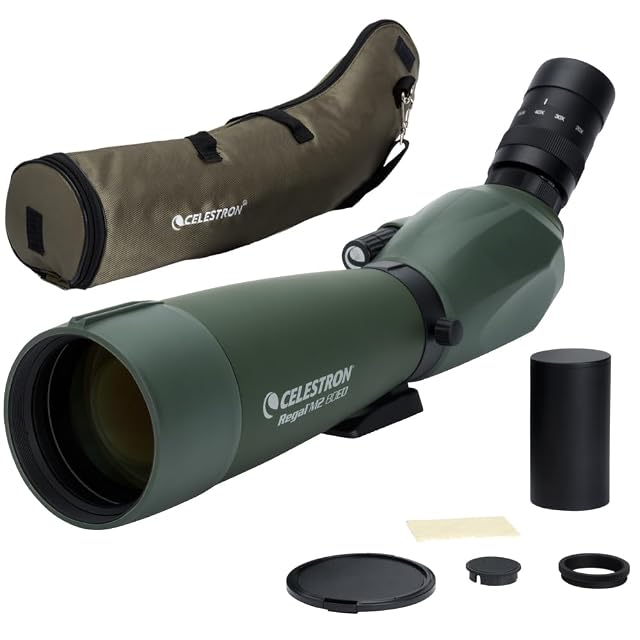
An ED-glass 20–60x80 angled spotting scope in a magnesium alloy body, with XLT coatings, dual focus, a rotating tripod collar, a 1.25 in astronomical eyepiece mount and a T-adapter ring.
Best for: The observer who wants one instrument for birds by day and the Moon and planets by night
20–60x zoom · 80 mm objective · 4 mm to 1.3 mm exit pupil
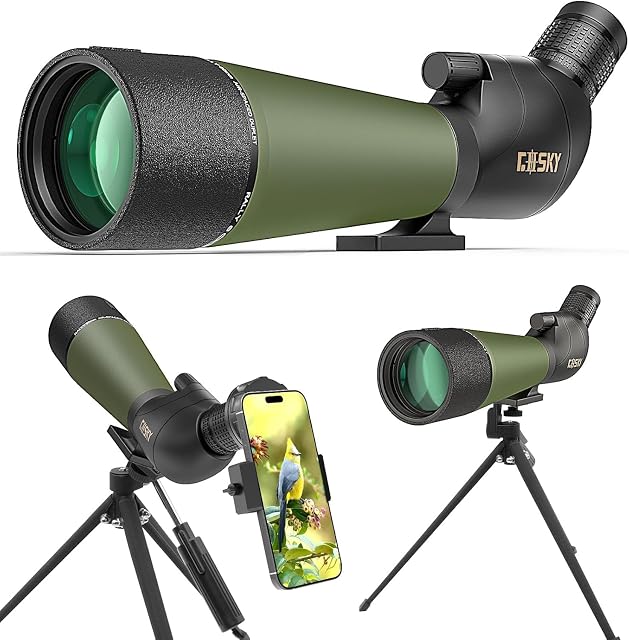
A 20–60x80 spotting scope with BAK4 porro prisms and fully multi-coated optics, supplied with a full-metal tabletop tripod, a phone adapter and a carry case.
Best for: Birds, wildlife and daytime distance work, with the Moon as a bonus