Daylight optics that double for the Moon
The best spotting scopes for 2026
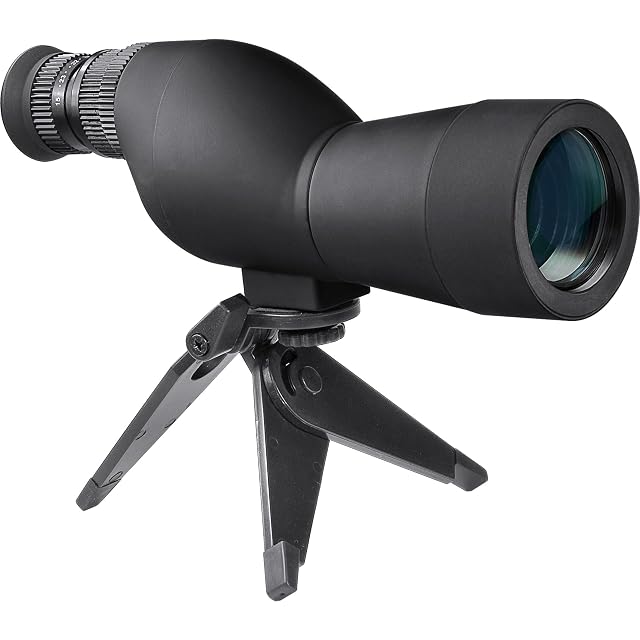
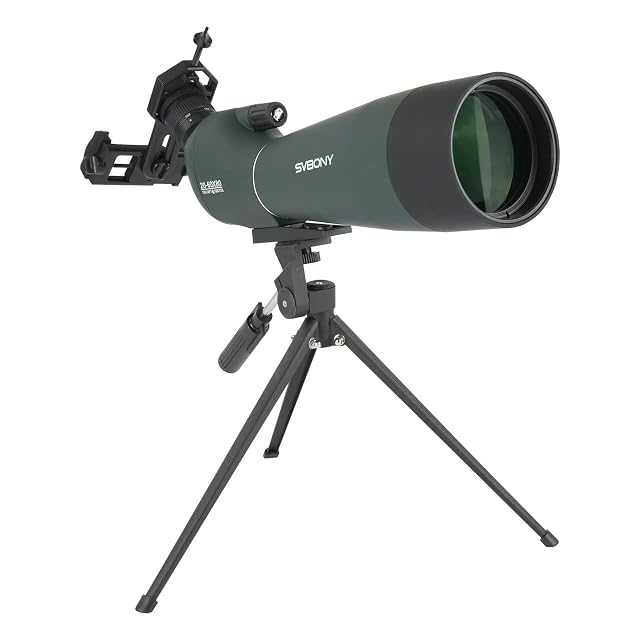
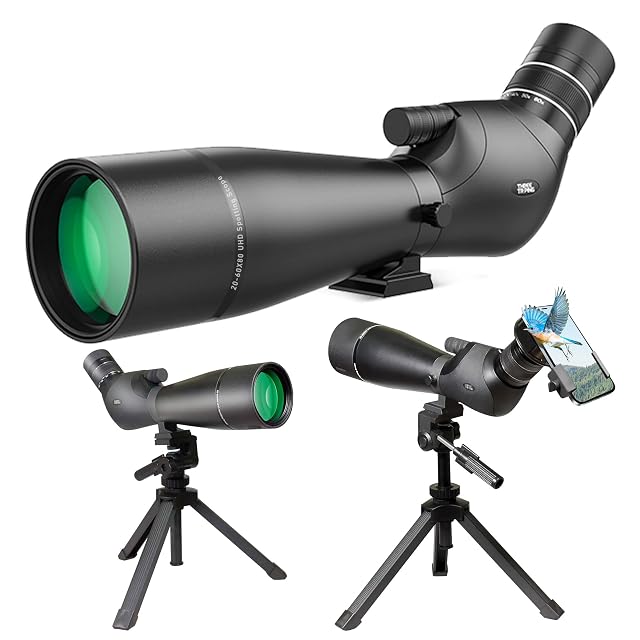
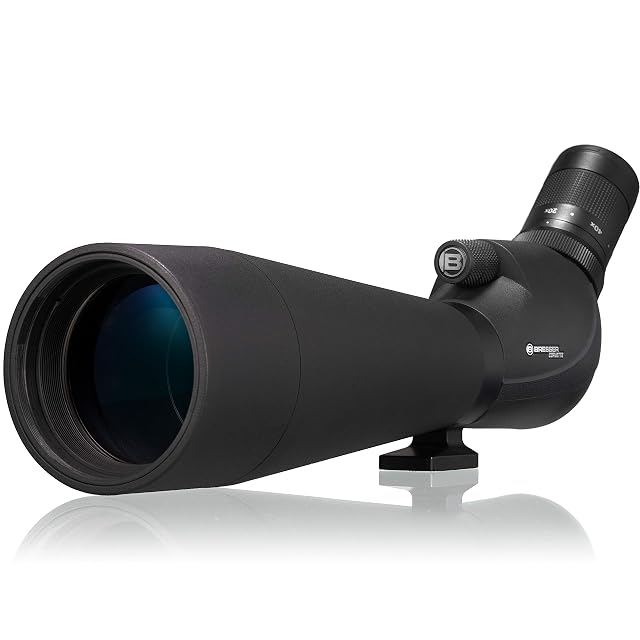
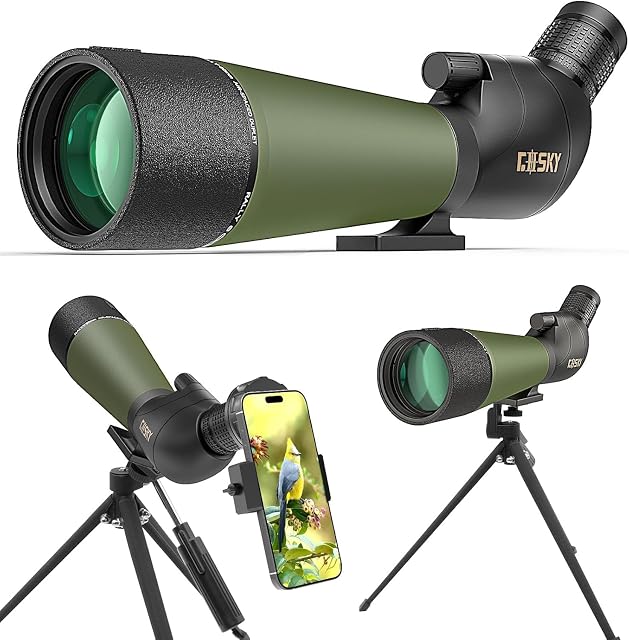
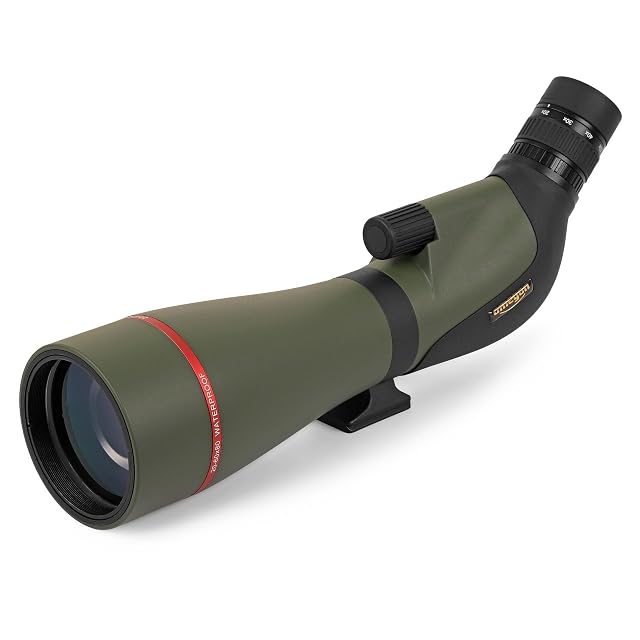
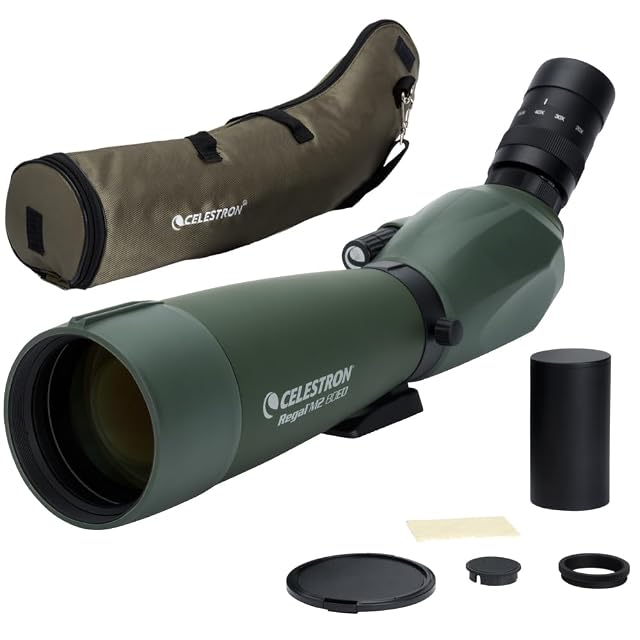
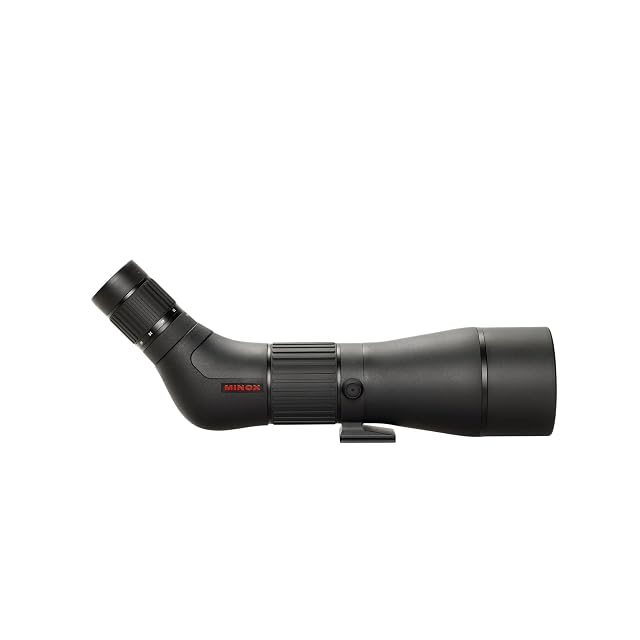
A spotting scope is built for terrestrial use — birds, ranges, landscapes — but its aperture and its zoom eyepiece make it a capable lunar instrument, and it is the piece of optics most likely to be already in the house when an interest in the sky begins. Understanding where it stops is more useful than pretending it does not. The zoom eyepiece that makes it convenient by day narrows the field and dims the image at its long end, and the exit pupil at maximum magnification is often too small for a dark sky. Against that, the erect image and the ease of pointing make it far more pleasant than a telescope for a quick look. Read the body shape first, because it changes the instrument more than the specifications do: an angled body is easier to share, easier on the neck when pointed high, and asks for a lower tripod; a straight body is faster to aim at something already located. Glass type — ED or fluorite-containing elements against ordinary glass — decides how much false colour appears on a bright edge, and the Moon is an unforgiving test of it. Then the practical set: sealing and nitrogen purge, close focus, the weight the tripod has to hold steady, and whether the eyepiece is removable so that an astronomical one can take its place. We compare aperture, zoom range, exit pupil, true field of view, body shape, glass type, coatings, close focus, focusing, sealing, weight, eyepiece fitting and supplied accessories.