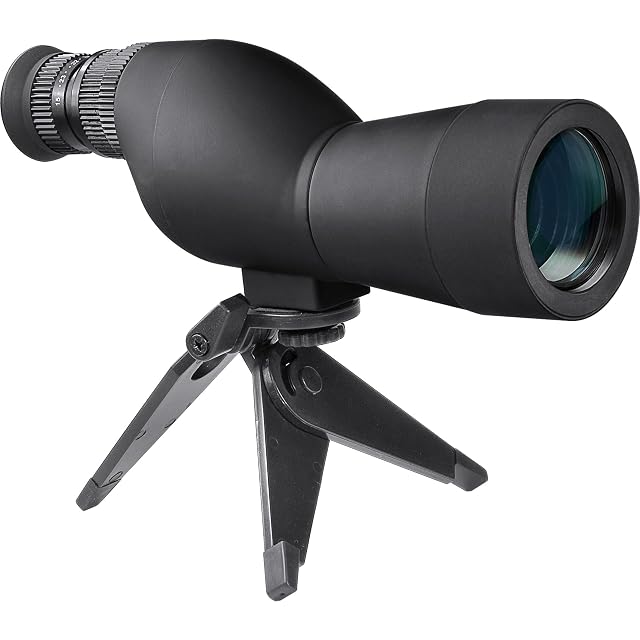
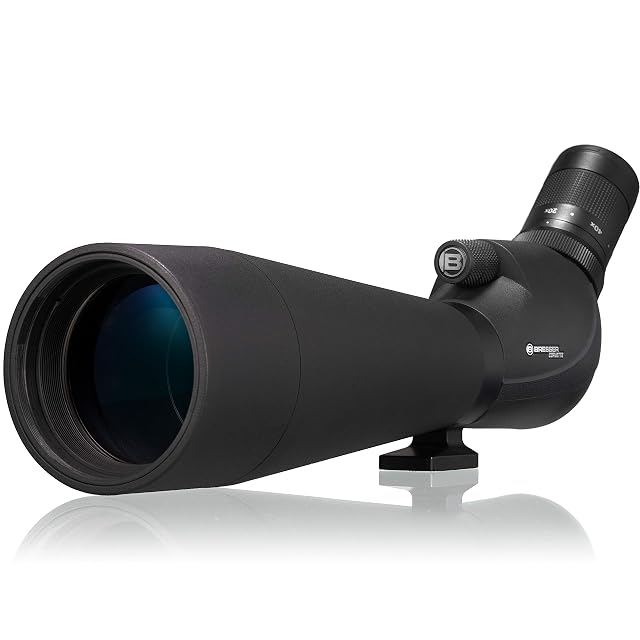
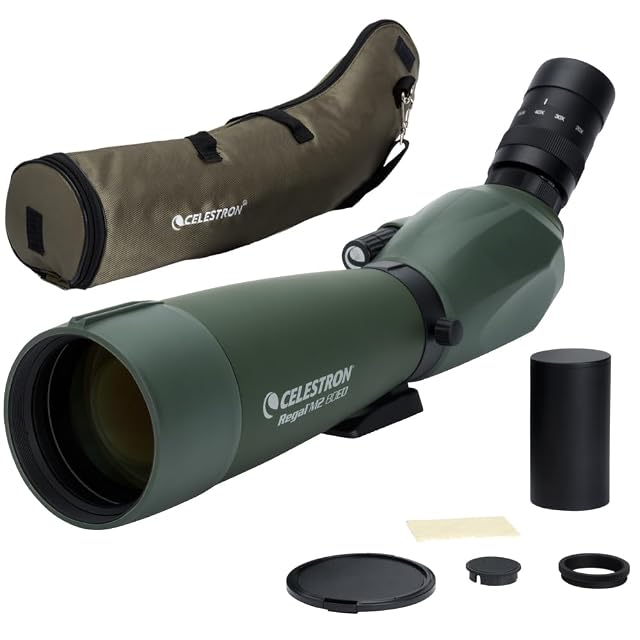
A 20–60x80 ED spotting scope with BAK4 porro prisms and an eight-element, six-group optical layout, supplied with a phone adapter, tripod, case and cloth.
The bottom line An unusually well-described optical layout at a price where ED glass is rare — with a title that contradicts its own specification.
An element count, published
Eight elements in six groups. Almost nothing on this shelf says how many pieces of glass the light passes through, and the figure matters: every air-to-glass surface costs transmission and adds scatter, which is precisely why coating labels exist.
ED, and what it is for
Extra-low dispersion glass reduces colour fringing. On a zoom spotting scope, fringing is worst at the top of the range, which is exactly where a 60x setting is trying to show fine detail. The maker claims ED without naming the glass type or giving a dispersion figure, which is the usual level of disclosure here.
The title does not agree with the bullets
“20x60-80mm” appears in the product name; the bullets describe 20–60x with an 80 mm objective. The second reading is the one consistent with everything else in the listing, and the contradiction is recorded above rather than resolved.
The dual focuser
Coarse to find, fine to settle. On an 80 mm scope at sixty times, that is not a luxury — it is what makes the top of the zoom range usable at all.
Availability
German and Spanish Amazon stores ran from 133 € to 177 € on the day of the survey.
American and British Amazon stores list it in local currency, which the euro range above sets aside.
French and Italian Amazon catalogues hold a record for it that nobody is selling.
Figures as Keepa reported them on the day this page was last updated. Stock and pricing shift without warning.
Prices quoted in this text were read on 17 September 2026. The live price is at the top of the page.
What it publishes, and what it withholds
Strengths
Publishing the element and group count is unusual and genuinely informative
ED glass at this price is the specification worth having on a zoom scope
Dual focus — coarse then fine — suits high magnification properly
Compromises
The title’s “20x60-80mm” contradicts the bullets’ 20–60x
No field of view is published at either end
ED is claimed without naming the glass type or the dispersion figure
Specifications
Aperture
80 mm
Zoom range
20x to 60x, per the bullets — the title reads “20x60-80mm”, which does not parse
Exit pupil
4 mm at 20x falling to 1.3 mm at 60x
True field of view
Not published by the maker.
Body shape
Not published by the maker.
Glass type
8 elements in 6 groups, as the maker states it · ED, from the model name and title · BAK4 porro prisms, fully multi-coated
B0CH8KK8C7 (same reference on 6 Amazon marketplaces)
EAN
0760754195727
What observers ask about this one
What does ED glass do?
Extra-low dispersion glass brings different wavelengths closer to a common focus, which reduces the colour fringing that a zoom spotting scope shows most at its long end. It is the single specification that separates the price tiers in this family.
Why is a dual focuser worth having?
At 60x, a single focus ring makes precise focus a matter of luck. A coarse ring to get close and a fine ring to settle it is the same arrangement a good telescope focuser uses, and for the same reason.
A waterproof 20–60x80 spotting scope with fully multi-coated optics, a 340° rotating body and a supplied tabletop tripod — published with its field of view, close focus, size and weight.
Best for: A buyer who wants to compare figures rather than adjectives before choosing
20–60x · 80 mm ED · 1.25 in eyepiece mount · magnesium body
An ED-glass 20–60x80 angled spotting scope in a magnesium alloy body, with XLT coatings, dual focus, a rotating tripod collar, a 1.25 in astronomical eyepiece mount and a T-adapter ring.
Best for: The observer who wants one instrument for birds by day and the Moon and planets by night