Skip to content

The best telescope eyepieces for 2026

An eyepiece does not have a magnification. Magnification is what happens when one is put in a particular telescope, and it is found by dividing the focal length of the telescope by the focal length of the eyepiece — which is why the same eyepiece gives one figure in a short refractor and three times that in a folded catadioptric. Everything else about choosing follows from understanding that division. Dividing the eyepiece focal length by the focal ratio of the telescope gives the exit pupil, the width of the light cone reaching the eye: too wide and light is wasted outside the pupil, too narrow and the image dims and shows floaters. The apparent field of view, printed in degrees, is how wide the view looks; multiply nothing, but understand that a wide apparent field at high magnification is what makes an object feel like it is floating rather than peered at down a tube. Eye relief — the distance the eye can sit behind the glass — is the specification that decides comfort and whether spectacles can be worn, and short-focal-length eyepieces of simple design have notoriously little of it. Read the barrel size, since the 1.25 inch and 2 inch fittings are not interchangeable without an adapter and the larger barrel exists to pass a wider field. Weight matters more than it seems: a heavy eyepiece can unbalance a small mount. We compare focal length, apparent field, eye relief, barrel size, optical design, coatings, weight and supplied accessories.
The instruments here, column by column

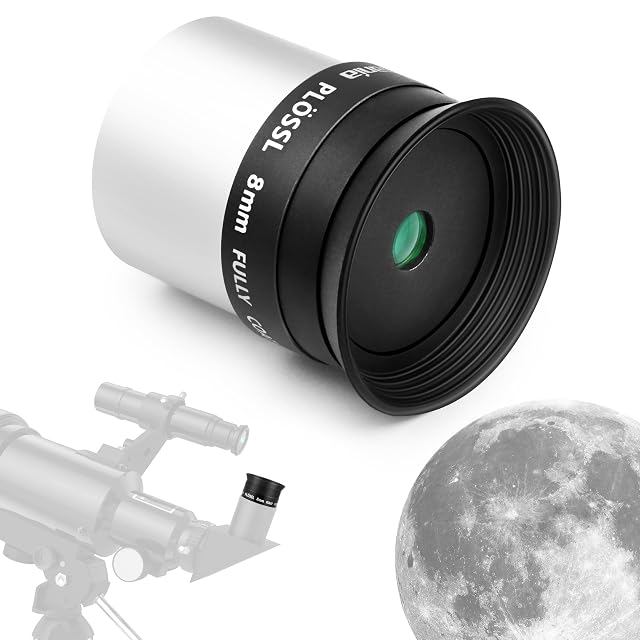
  1. Astromania Plössl 8 mm (PT18)

    8 mm focal length · apparent field stated two ways · four elements

    A four-element fully multi-coated Plössl of 8 mm focal length in a metal 1.25 in barrel, with a fold-down rubber eyecup and a filter thread.

    Best for: A step up from a supplied short eyepiece, on a case-based collection

    ≈ $17

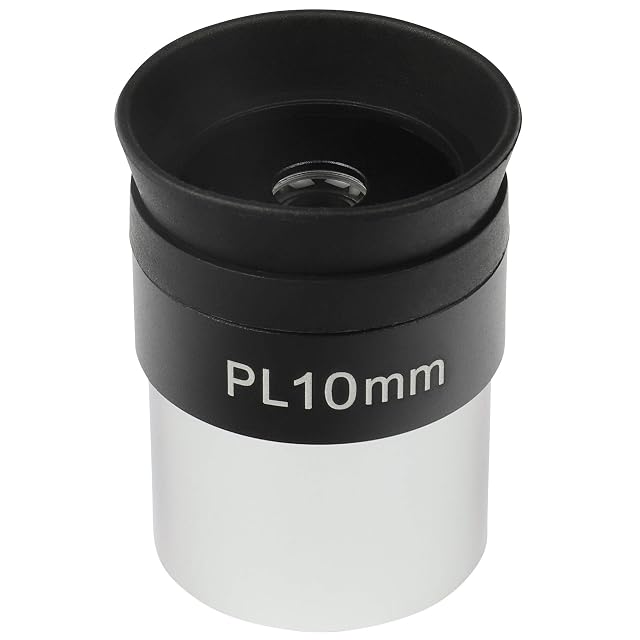
  2. Orbinar Plössl 10 mm

    10 mm focal length · 1.25 in barrel · four elements

    A four-element Plössl of 10 mm focal length in a 1.25 in barrel, multi-coated and threaded for filters.

    Best for: Replacing a supplied 10 mm eyepiece without spending much

    ≈ £14 / €15

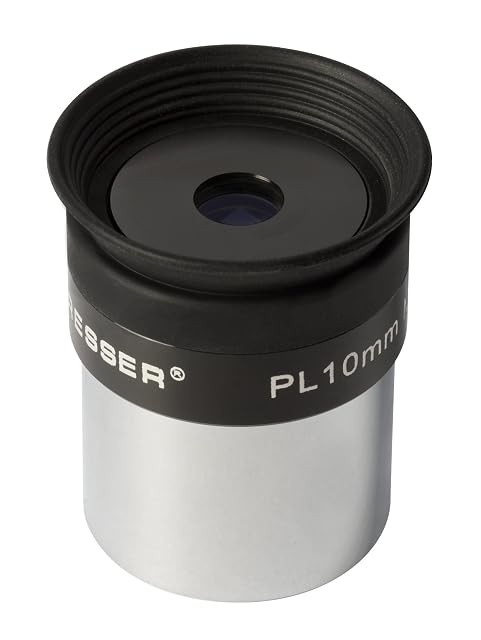
  3. Bresser Plössl 10 mm (4920210)

    10 mm focal length · four elements in two groups · 65 g

    A 10 mm Plössl with four elements in two groups, fully multi-coated, in a metal housing with a filter thread, published at 65 g.

    Best for: A dependable mid-power eyepiece for a case that is being built properly

    ≈ €25

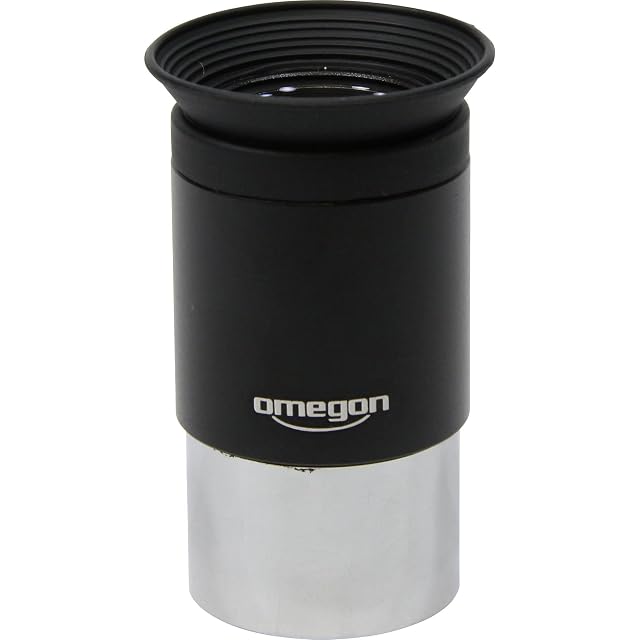
  4. Omegon Plössl 25 mm

    25 mm focal length · 50° apparent field · four elements

    A 25 mm Plössl with a 50-degree apparent field, coated optics, a metal body, rubber eyecups and a filter thread.

    Best for: The finding eyepiece — the one that stays in the focuser most of the evening

    ≈ £32 / €34

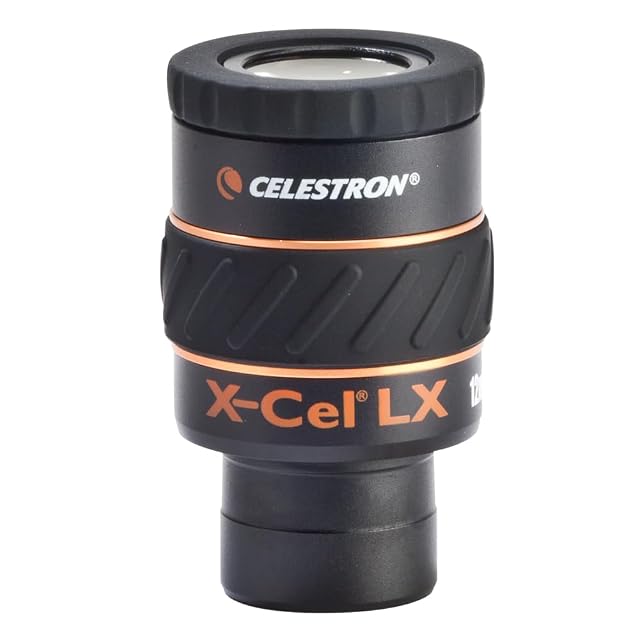
  5. Celestron X-Cel LX 12 mm (93424)

    12 mm focal length · 60° apparent field · six elements

    A six-element fully multi-coated eyepiece of 12 mm focal length with a 60-degree apparent field, a twist-up eyecup and a knurled rubber grip.

    Best for: The eyepiece that stays on the planets, used with gloves on a cold night

    ≈ $93 / £88 / €106

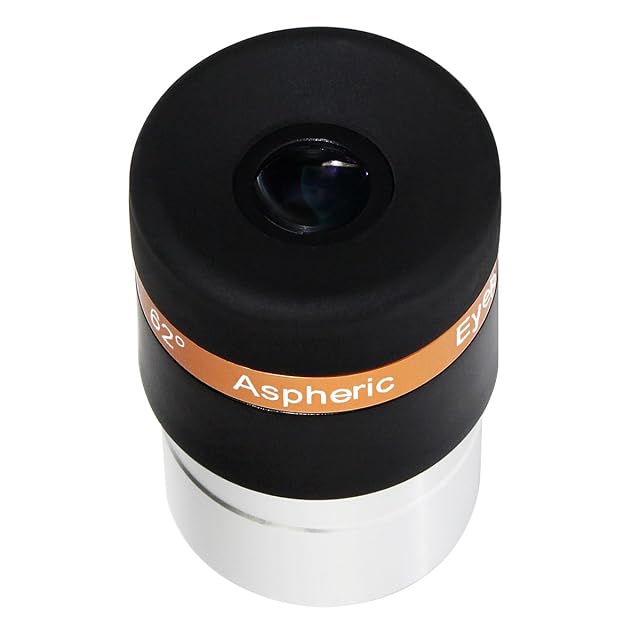
  6. SVBONY 4 mm aspheric

    4 mm focal length · 62° apparent field · 42 g

    A 4 mm aspheric eyepiece with a 62-degree apparent field, fully coated, in a 51 mm aluminium barrel with an M28.5 × 0.6 filter thread.

    Best for: Lunar and planetary detail on a telescope with a long focal length

    ≈ £18 / €20

Any figure written into the body of this page was true on the day it was written. The amount shown next to each instrument is requested from the retailer as the page loads, and it is that amount, not the text, that stands.