Skip to content

Small, bright, and worth the magnification

The planets are the objects a city observer can see as well as anyone. They are bright, they are small, and what limits them is the steadiness of the atmosphere rather than the darkness of the sky — which changes what is worth buying for them.

Aperture buys resolution

Detail scales with aperture, and on planets that is exactly the currency. A larger tube resolves finer features on the same night — until the atmosphere becomes the limit, which it usually does.

A long focal ratio helps

A folded telescope at f/11 or f/14 gives high magnification with ordinary eyepieces and generally carries a smaller central obstruction, which helps contrast on low-contrast detail.

Patience is a specification

Detail appears in flashes as the air steadies. Ten minutes at the eyepiece shows considerably more than one minute, and no purchase substitutes for it.

Colour filters, honestly

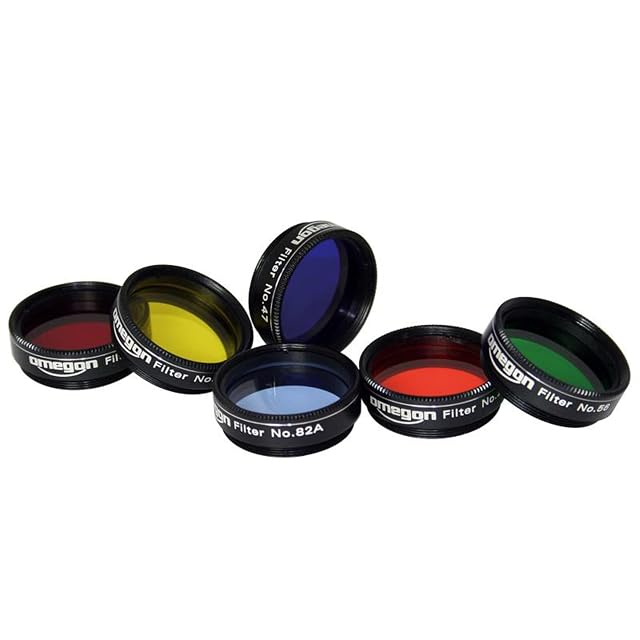
They raise the contrast of features that differ in colour from their surroundings. The effect is genuine, modest, and more useful in a large aperture than a small one.

The five, and the reason for the order

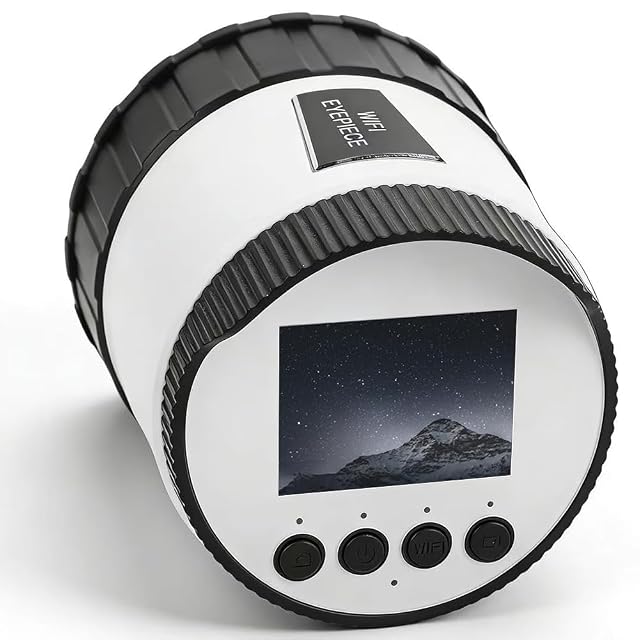
  1. Yiko V16

    4 MP sensor · 2 in display · clamps over eyepieces 38–73 mm

    A Wi-Fi electronic eyepiece with its own two-inch screen and battery, clamping over eyepieces from 38 to 73 mm, recording 2K video to a card of up to 256 GB.

    Best for: Screen-sharing a view in the field, with no laptop and no phone required

    ≈ €66

What gets asked before buying

What magnification for planets?

As much as the air allows, up to roughly twice the aperture in millimetres. On most nights the atmosphere stops it well short, and pushing past that point enlarges the blur rather than the detail.

Does light pollution matter?

Very little. A planet is thousands of times brighter than the sky glow, so the contrast that a city sky destroys is contrast the planets never depended on.

Why do planetary images look better than the eyepiece view?

Because a camera records hundreds of frames and the best are kept. The atmosphere steadies for fractions of a second, and stacking captures those moments where the eye cannot hold them.

Any figure written into the body of this page was true on the day it was written. The amount shown next to each instrument is requested from the retailer as the page loads, and it is that amount, not the text, that stands.

The tool we use ourselves

Chosen your instrument? Now do not pay over the odds.

Telescopes and mounts are discounted over and over through the year — hardest of all in the weeks before Christmas, which is exactly when most of them are bought — and a struck-through figure on its own says nothing whatever about what the same model was charged at four weeks ago. UniverTrack keeps a week-by-week record for each retailer, so a discount is measured against a figure somebody genuinely paid instead of one invented for the sale — and it says when the moment to buy has genuinely arrived.

Real price historyBuy-now alertsAI buying assistant
Try free for 14 days →
No commitment · Cancel in one click · 5 languages