The bottom line A properly specified eyepiece-replacement camera, held back by a modest frame rate and an operating system list with a gap in it.
It replaces the eyepiece
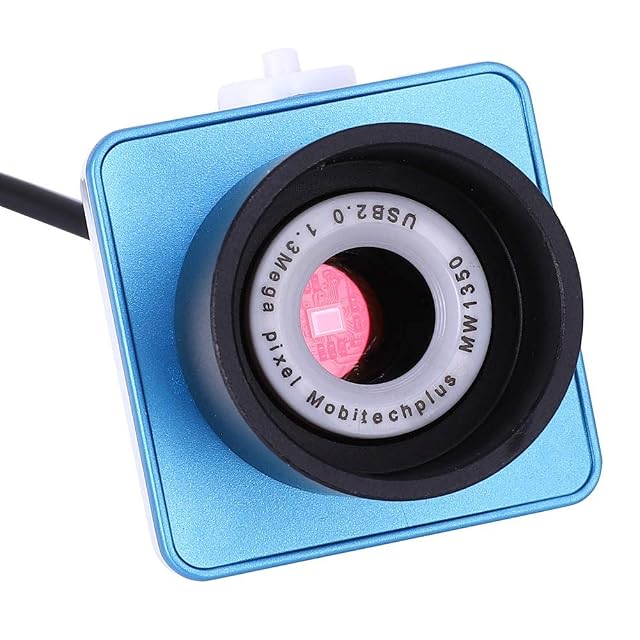
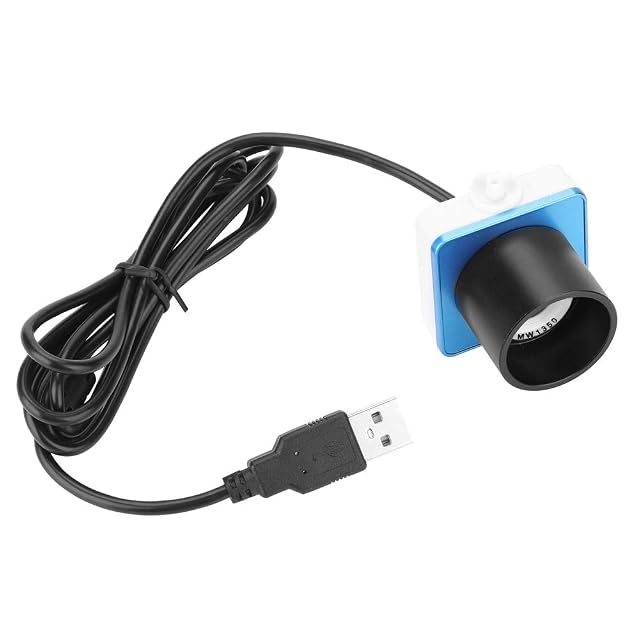
This is the kind of camera that goes into the focuser where an eyepiece would. The telescope forms an image directly on the sensor, which is the arrangement every serious planetary camera uses — and it is quite different from the clamp-on cameras elsewhere on this shelf.
The sensor is named
An IMX415 colour chip at 8 MP. Naming the sensor is the single most useful thing a camera listing can do, because the manufacturer’s own datasheet then supplies the figures the advertisement omits — pixel size above all, which decides whether the camera matches a given focal length.
Frame rate, and why it matters
Three thousand two hundred and sixty-four by two thousand four hundred and forty-eight at fifteen frames per second. Planetary imaging works by capturing long video runs and keeping only the frames that fall in moments of steady air, so the rate determines how many of those moments are caught.
The filter thread
The 1.25 in barrel carries the standard M28.5 × 0.6 filter thread, so a nebula filter or a planetary colour filter screws in directly. That is a practical detail worth more than another megapixel.
Availability
German, French, Italian and Spanish Amazon stores ran from 100 € to 103 € on the day of the survey.
British Amazon store lists it in local currency, which the euro range above sets aside.
American Amazon store gave no result whatever, so the buy button there opens a search rather than an empty page.
Figures as Keepa reported them on the day this page was last updated. Stock and pricing shift without warning.
Prices quoted in this text were read on 17 September 2026. The live price is at the top of the page.
What it publishes, and what it withholds
Strengths
The sensor is named, which allows its pixel size to be looked up at the source
A filter thread in the barrel means nebula and planetary filters screw straight in
USB 3.0 rather than 2.0, which is what sustains the frame rate
Compromises
Fifteen frames per second at full resolution is modest for planetary stacking
macOS is not in the maker’s list of operating systems
No pixel size is published, and that is the figure that matches a camera to a focal length
Specifications
Camera type
Replaces the eyepiece — it fits into a 1.25 in focuser
Sensor
IMX415 colour, 8 MP per the maker
Pixel size
Not published by the maker.
Frame rate
3264 × 2448 at up to 15 frames per second, as the maker states it
Region-of-interest capture
Not published by the maker.
Interface
USB 3.0 · Windows, Android and Linux, as the maker lists them
Cooling
Not published by the maker.
Filter thread
1.25 in aluminium adapter tube with a 1.25 in filter thread
Eyepiece fitting
Not published by the maker.
Software support
Not published by the maker.
Amazon reference
B07KWPDHHM (same reference on 5 Amazon marketplaces)
EAN
0609378744594
What observers ask about this one
Why does the named sensor matter?
Because a sensor model has published characteristics — pixel pitch, well depth, read noise — that a marketing bullet never gives. Naming the IMX415 lets a buyer find the figures rather than guess at them.
Is 15 fps enough?
For the Moon, comfortably. For planetary work the method is to capture thousands of frames and keep the sharpest few per cent, so a higher rate collects more usable frames in the same moments of steady air.