Skip to content

Celestron NexStar 8SE (11069) vs Sky-Watcher SkyMax-127 AZ-GTi

Eight inches with a handset, or 127 mm from a phone?

Both fold a long focal length into a short tube, and both find objects for the observer. They differ in aperture, in corrector design, and in how they are told where to go — a handset against a phone. One of the two does not publish its focal length at all.

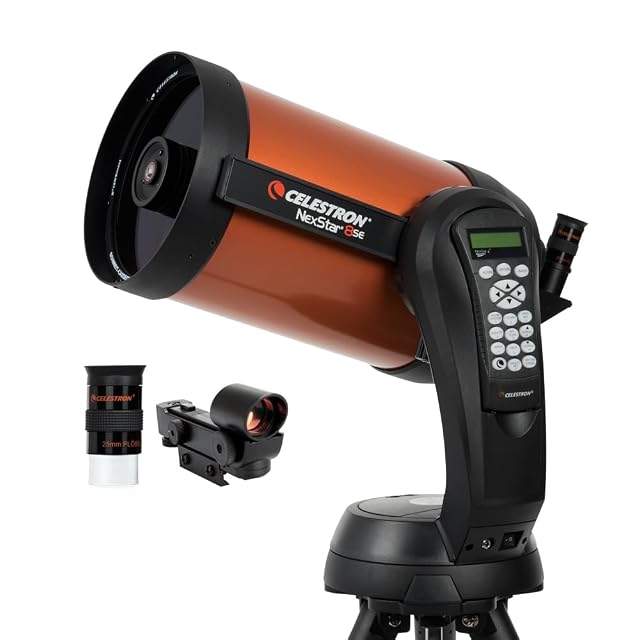
Celestron NexStar 8SE Schmidt-Cassegrain on its single-arm fork mount

Celestron NexStar 8SE (11069)

Wins 1 of 8

Check price

≈ $1499 / £1500 / €1537

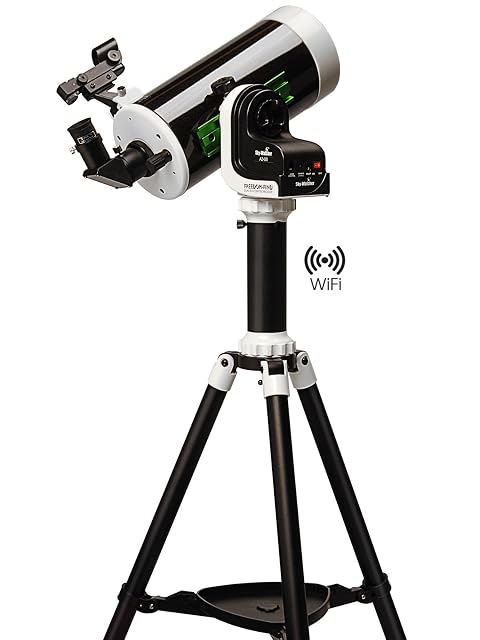
Sky-Watcher SkyMax-127 Maksutov on the AZ-GTi Wi-Fi mount

Sky-Watcher SkyMax-127 AZ-GTi

Wins 2 of 8

Check price

≈ £649 / €784

Line by line

Compared on NexStar 8SE (11069) SkyMax-127 AZ-GTi
Aperture 8 inches, as the maker writes it 127 mm (from the title)
Folded focal length The listing does not carry it 1500 mm (from the title)
Focal ratio Not published by the maker. f/11.8, the quotient of the two figures above
Corrector design Schmidt-Cassegrain with the maker’s XLT coating Maksutov-Cassegrain
Obstruction Not published by the maker. Not published by the maker.
Back focus Not published by the maker. Not published by the maker.
Cool-down guidance Not published by the maker. Not published by the maker.
Mount supplied Single-arm computerised fork on a steel tripod AZ-GTi alt-azimuth GoTo with Wi-Fi

A tick means one listing published something the other did not, or published a better figure. It does not mean the product is better, and the column is not a score out of anything: a maker who says less loses lines here without losing a comparison. The two verdicts below are where the page is settled.

Which one, for whom

Buy the Celestron NexStar 8SE (11069)

The aperture. Eight inches is the largest catadioptric on this site, and on planets that is the figure that decides how much detail is there to be seen at all. The listing writes the aperture in inches and then never gives a focal length, which on a folded instrument is the number an observer needs to work out any magnification.

Buy the Sky-Watcher SkyMax-127 AZ-GTi

The one that publishes its optics. A 127 mm Maksutov at 1500 mm is f/11.8, and a long focal ratio on a small obstruction is the classic planetary combination. Control is from a phone over Wi-Fi rather than a handset — fewer things to carry, and one more thing that needs charging.

What observers ask about these two

Why does a folded telescope need its focal length published?

Because the tube length says nothing about it. A 1500 mm focal length in a 350 mm tube is the whole point of the design, and without the figure no eyepiece magnification can be worked out.

Schmidt-Cassegrain or Maksutov?

A Maksutov usually has a smaller central obstruction and a longer focal ratio, which suits planets. A Schmidt-Cassegrain is generally faster and wider. Neither listing here publishes its obstruction, which is the figure that would settle it.

Does cool-down matter on these?

Yes, and neither listing mentions it. A closed tube brought from a warm house takes time to reach the outside temperature, and until it does the image boils. Larger apertures take longer.

The full reviews

Any figure written into the body of this page was true on the day it was written. The amount shown next to each instrument is requested from the retailer as the page loads, and it is that amount, not the text, that stands.