Skip to content

What the first one taught you to buy

Nobody buys a second telescope for the same reasons as the first. It is bought because the first was too heavy to carry out, too small for faint objects, too slow to set up, or would not track. Each of those points at a different instrument.

If the first was too small

A larger Dobsonian is the most aperture per unit of anything, and the honest question is where it will live and how many trips it takes to move.

If the first was too big

A short refractor or a folded catadioptric goes out on a weeknight. Used regularly, either shows more over a year than a large instrument used twice.

If the first would not track

An equatorial with a drive, or a computerised mount. The tube may not need to change at all — which is the argument for buying the mount rather than a whole telescope.

If the first showed nothing faint

That is aperture and sky darkness together. A larger tube helps; a darker site helps more, and costs the price of the petrol.

The five, and the reason for the order

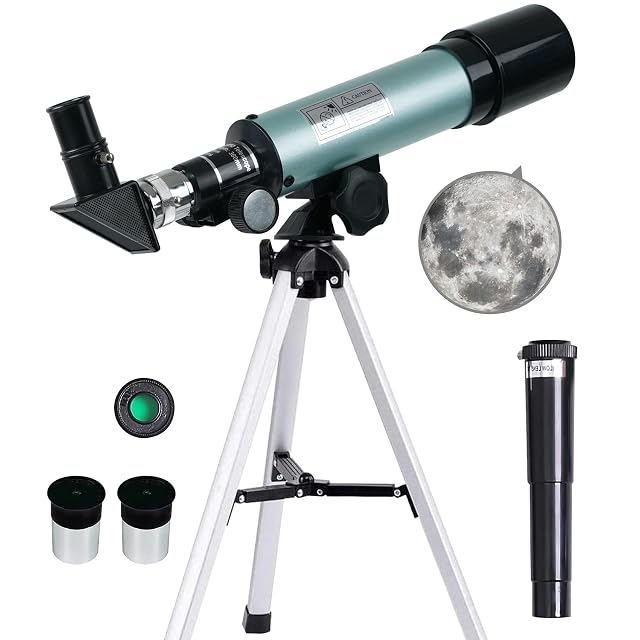
  1. Mijiao 50080

    50 mm aperture · 360 mm focal length

    A 50/360 refractor for children and beginners, supplied with two eyepieces, a 1.5x erecting lens, a Moon filter and a folding tripod that packs into a bag.

    Best for: A child’s first telescope that has to fit in hand luggage

    ≈ £17

  2. Bresser PushTo AR 80/400

    80 mm aperture · 400 mm focal length · Bluetooth PushTo

    An 80/400 refractor whose built-in sensors report where it is pointing to a free phone app, which then guides the observer to a target with on-screen arrows.

    Best for: A beginner who wants help finding objects without the cost or weight of a GoTo mount

    ≈ €259

What gets asked before buying

Is more aperture always the answer?

Only if the first telescope was limited by aperture rather than by how often it was carried outside. A larger tube that stays indoors shows less than a smaller one that does not.

When is a folded telescope the right second?

When the limit was focal length in a manageable tube — planets and double stars at high magnification, from a small space.

Does a smart telescope replace a visual one?

It does a different thing. It stacks exposures and shows a processed image on a screen; it does not put photons in your eye. Several observers own both for exactly that reason.

Any figure written into the body of this page was true on the day it was written. The amount shown next to each instrument is requested from the retailer as the page loads, and it is that amount, not the text, that stands.

The tool we use ourselves

Chosen your instrument? Now do not pay over the odds.

Telescopes and mounts are discounted over and over through the year — hardest of all in the weeks before Christmas, which is exactly when most of them are bought — and a struck-through figure on its own says nothing whatever about what the same model was charged at four weeks ago. UniverTrack keeps a week-by-week record for each retailer, so a discount is measured against a figure somebody genuinely paid instead of one invented for the sale — and it says when the moment to buy has genuinely arrived.

Real price historyBuy-now alertsAI buying assistant
Try free for 14 days →
No commitment · Cancel in one click · 5 languages