Computerised pointing, and the accessories around it
The idea the range is organised around
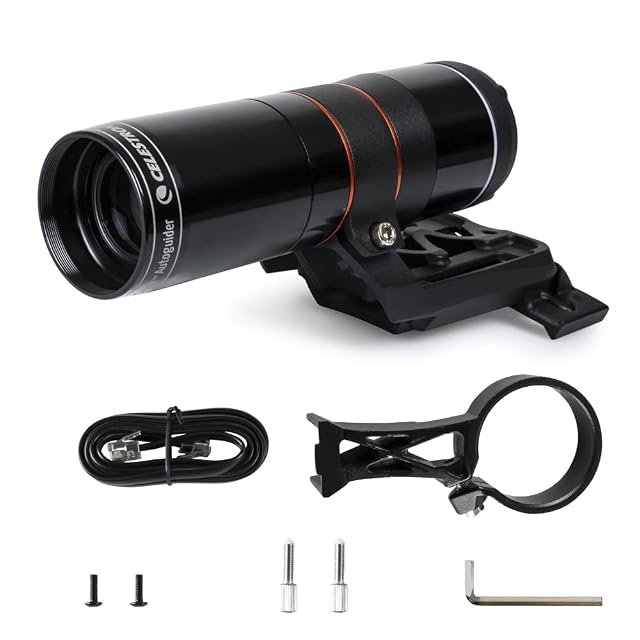
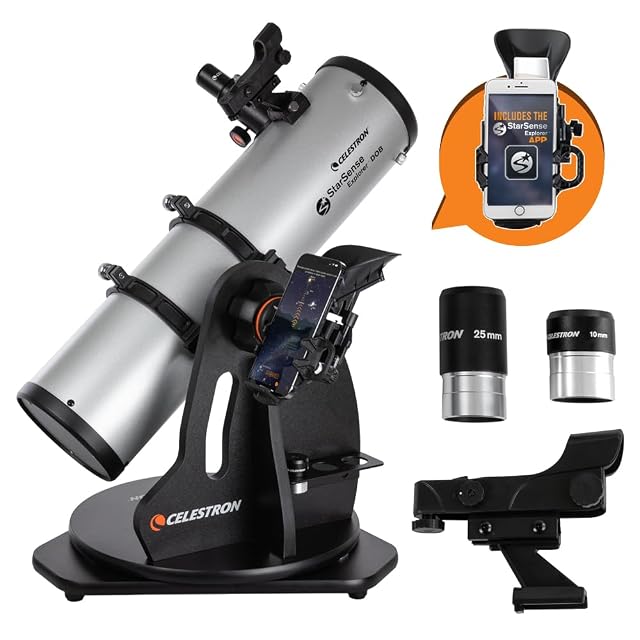
Most of the Celestron products on this site answer the same question: where is the object. StarSense Explorer puts a phone on the tube and tells the observer where to push it; the StarSense Autoguider does the equivalent for a mount; the StarPointer is the simplest version of the same idea.
The instruments
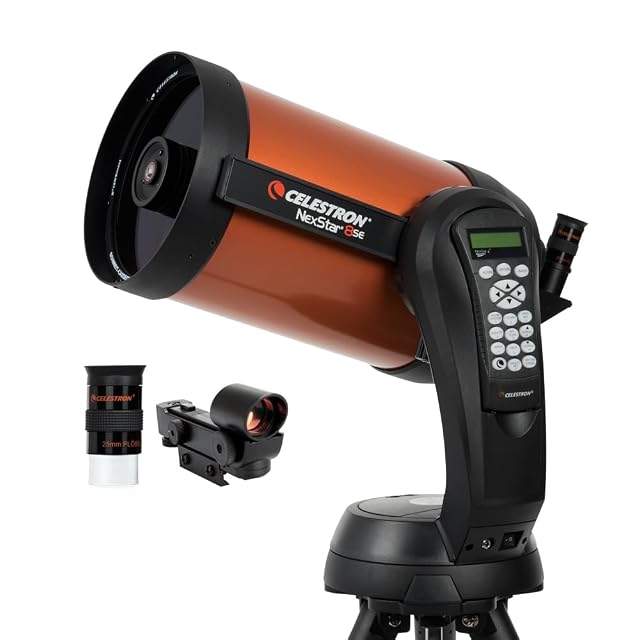
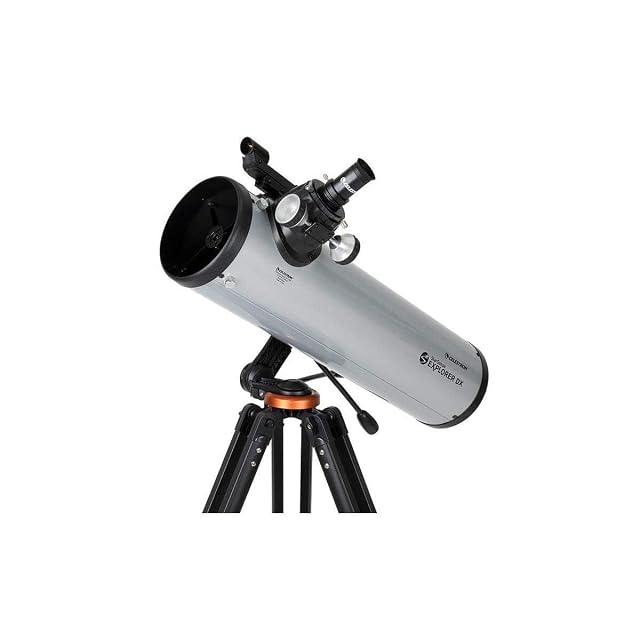
They span a tabletop 130 mm reflector, a 130 mm on a full tripod, an 8 inch Schmidt-Cassegrain on a computerised fork, a 70 mm travel refractor and a spotting scope. The common thread is not aperture or price — it is that each is sold with a way of aiming it.
The accessories
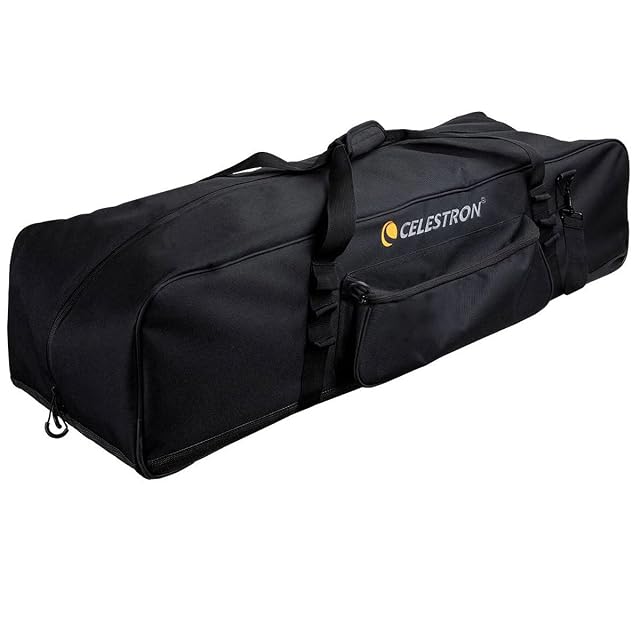
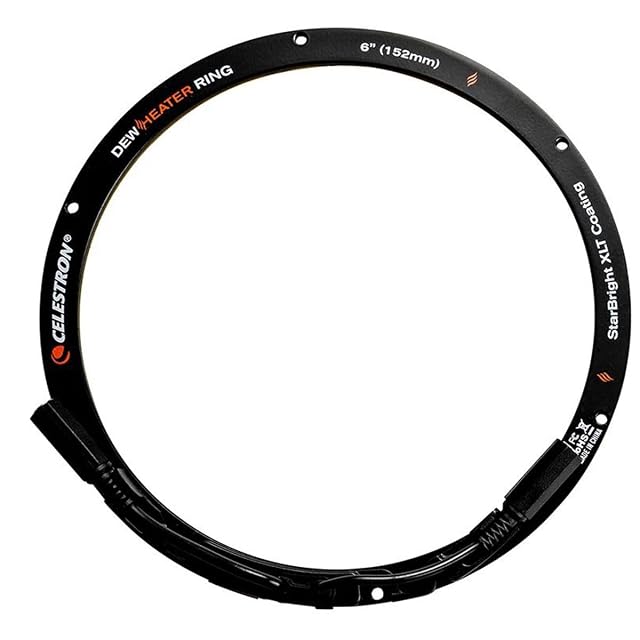
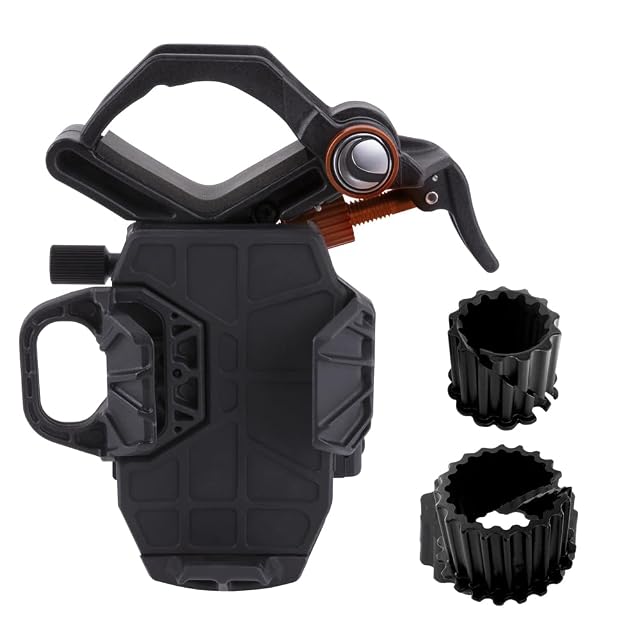
The accessory line is cut for Celestron hardware: a dew heater ring for a 6 inch Schmidt-Cassegrain, a 40 inch bag sized for a telescope with its mount and trays, a three-axis phone adapter. Their listings publish dimensions more often than most.
Reading a Celestron page here
The pointing system is a real specification and it is treated as one. What it does not change is aperture: a 130 mm reflector collects what a 130 mm reflector collects, however it is aimed.
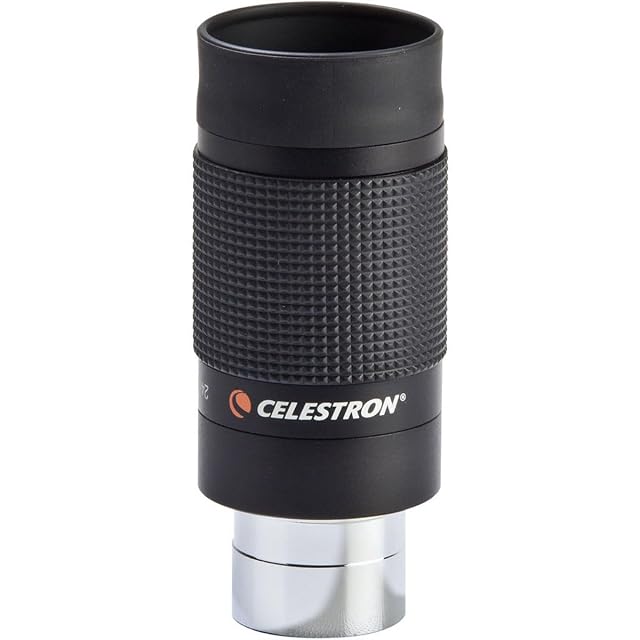
8–24 mm variable · 40°–60° apparent field · 1.25 in
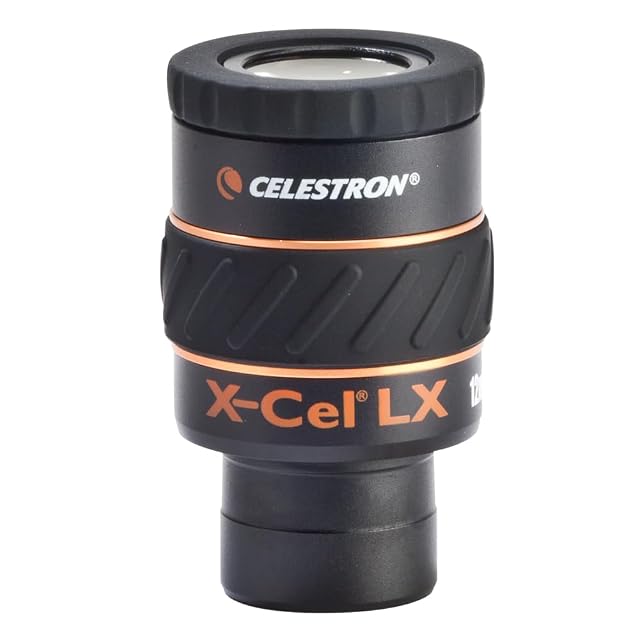
An 8–24 mm zoom eyepiece in a 1.25 in barrel, multi-coated, with a fold-down eyecup and an apparent field running from 40 to 60 degrees across the range.
Best for: Observers who want to stop swapping eyepieces in the cold
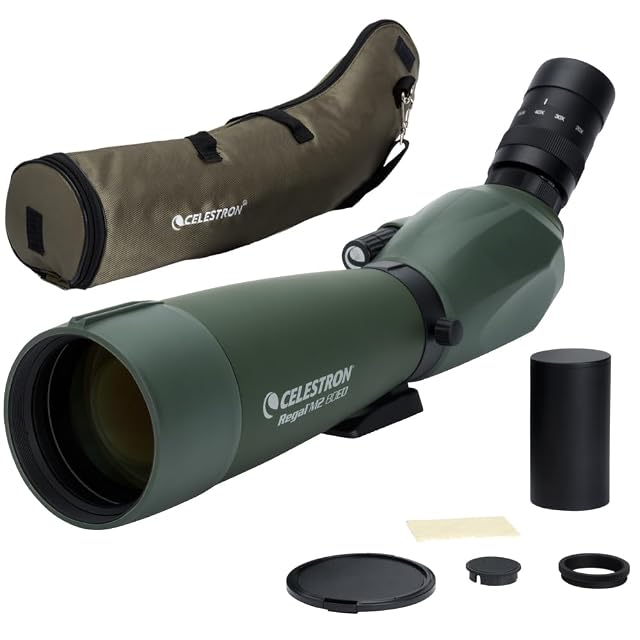
20–60x · 80 mm ED · 1.25 in eyepiece mount · magnesium body
An ED-glass 20–60x80 angled spotting scope in a magnesium alloy body, with XLT coatings, dual focus, a rotating tripod collar, a 1.25 in astronomical eyepiece mount and a T-adapter ring.
Best for: The observer who wants one instrument for birds by day and the Moon and planets by night
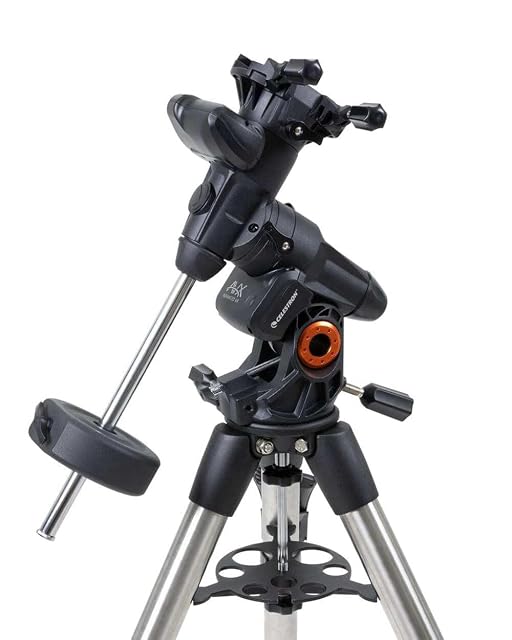
An accessory that bolts to a computerised Celestron mount and aligns it on the sky automatically in about three minutes, then improves its pointing and assists polar alignment.
Best for: An owner of a computerised Celestron mount who is tired of three-star alignments
A 130 mm Newtonian on a manual alt-azimuth mount whose dock and app read the star field through the phone camera and steer the observer to a target with on-screen arrows.
Best for: A beginner who wants to see things this month rather than learn to star-hop first
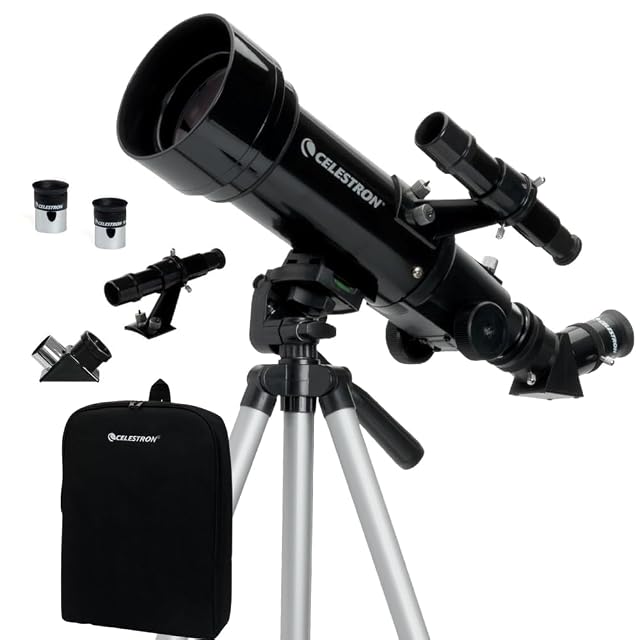
A 70 mm travel refractor sold with a backpack, a full-height tripod, two eyepieces, and — in this Amazon-exclusive version — an extra 4 mm eyepiece and a 3x Barlow.
Best for: A 70 mm that travels with a proper tripod rather than a tabletop stand
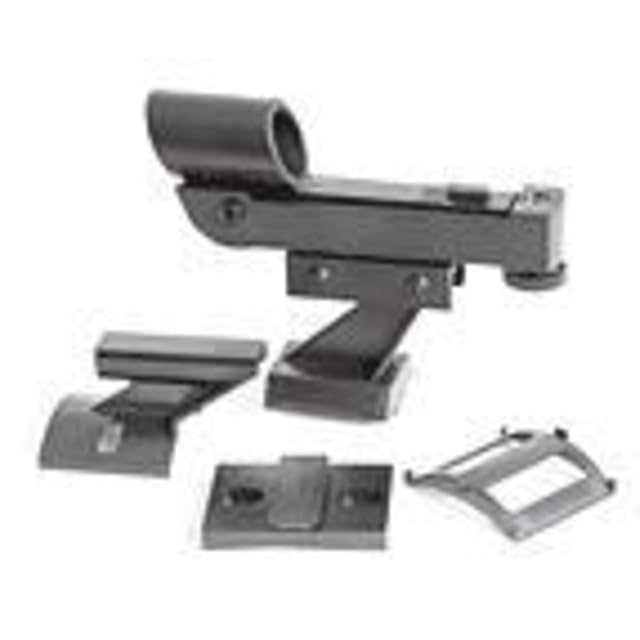
A red dot finder that projects an artificial star onto a window so a target can be aimed at with both eyes open, supplied with several mounting plates.
Reticle type
A red LED star projected onto a window
Brightness adjustment
Adjustable over a wide range, per the maker
Bracket fitting
Not published by the maker.
Battery type
Not published by the maker.
Life
Not published by the maker.
Window size
None — it is a projected reticle, not an optical finder · The listing gives none
Alignment adjustment
Not published by the maker.
Amazon reference
B002HMN02O (same reference on 5 Amazon marketplaces)
EAN
4047825003690
Base plates are supplied, which addresses the shoe problem directly
Both-eyes-open aiming is genuinely faster than squinting through an optical finder
No clear aperture figure
Best for: Complementing an optical finder on a telescope that already has the bracket
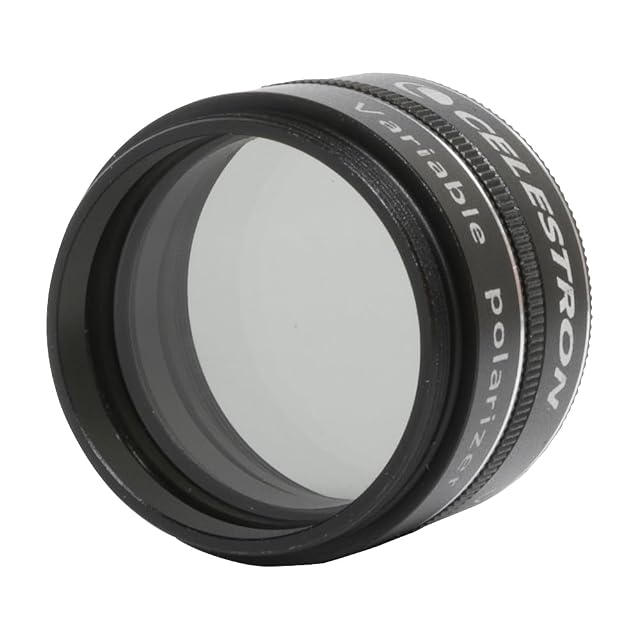
A two-element polarising filter for 1.25 in eyepieces with transmission adjustable from 1 to 40 per cent by rotating its lower ring.
Transmission percentage
1 % to 40 %, adjustable, as the maker publishes it
Neutral or tinted dimming
Not published by the maker.
Fixed or variable design
Variable polarising filter, threaded for 1.25 in eyepieces · Rotate the lower ring, per the maker · Threaded on both faces, so other filters can be combined with it
Thread size
Not published by the maker.
Glass flatness
Not published by the maker.
Cell depth
Not published by the maker.
Amazon reference
B07N99RW5K (same reference on 6 Amazon marketplaces)
EAN
0050234941075
A published transmission range rather than a single fixed figure or a colour word
One filter covers what several fixed neutral filters would
A polarising pair costs some light even at its most open setting
Best for: The Moon across its whole cycle, where a fixed filter is right at only one phase
Any figure written into the body of this page was true on the day it was written. The amount shown next to each instrument is requested from the retailer as the page loads, and it is that amount, not the text, that stands.