No eyepiece at all — a sensor, a phone and a stack · review
Celestron StarSense Autoguider (94008) review
An accessory that bolts to a computerised Celestron mount and aligns it on the sky automatically in about three minutes, then improves its pointing and assists polar alignment.
The bottom line A time-saver for one brand’s computerised mounts, sold without a single optical figure to judge it by.
An accessory in the smart telescope aisle
This is not a telescope. It attaches to a computerised Celestron mount and does, automatically, the alignment routine that otherwise involves centring named stars by hand. The maker puts the time at about three minutes.
Why alignment is worth money
Every GoTo mount’s accuracy rests on its alignment, and an alignment built on a misidentified star produces pointing that is confidently wrong all evening. Automating the step removes the commonest way for the whole system to be quietly useless.
What else the maker claims for it
Improved pointing precision — putting objects in the centre of high-power eyepieces and small sensors — plus assisted polar alignment and mount modelling. Those are the functions listed; no figures accompany them.
The blanks on this listing
Focal length, aperture, sensor size, field of view. For an optical accessory with a four-element design credited to a named designer, that is a notable silence, and it means this page can describe what the device claims to do and not what it is made of.
Availability
German, French, Italian and Spanish Amazon stores ran from 792 € to 930 € on the day of the survey.
American and British Amazon stores list it in local currency, which the euro range above sets aside.
Figures as Keepa reported them on the day this page was last updated. Stock and pricing shift without warning.
Prices quoted in this text were read on 17 September 2026. The live price is at the top of the page.
What it publishes, and what it withholds
Strengths
Three minutes of automatic alignment replaces a routine that trips up most beginners
It improves pointing on equipment already owned rather than replacing it
Assisted polar alignment shortens the slowest part of an imaging setup
Compromises
It only works with computerised Celestron mounts, which is a narrow compatibility list
It costs a substantial fraction of what a mid-range telescope costs
No field of view, focal length or sensor specification is published in this listing
Specifications
Aperture
Four elements, credited by the maker to Mark Ackermann
Sensor
Not published by the maker.
Pixel size
Not published by the maker.
Field of view
Not published by the maker.
Plate-solving
About three minutes, as the maker states it · Automatic alignment, improved pointing accuracy, assisted polar alignment, mount modelling
Tracking
Not published by the maker.
Stacking behaviour
Not published by the maker.
Battery life
Not published by the maker.
File export
Not published by the maker.
Amazon reference
B0CCXFGYQN (same reference on 6 Amazon marketplaces)
EAN
0050234940085
What observers ask about this one
Will it work on a non-Celestron mount?
The listing restricts it to computerised Celestron telescopes. Compatibility of this kind is a firmware and connector question as much as a mechanical one, and the maker’s own list is the one to trust.
Does it replace a guide scope and camera?
The maker names guiding among its functions alongside alignment and mount modelling. What it does not publish here is any of the numbers — focal length, sensor, field — that would let you compare it with a conventional guiding setup on paper.
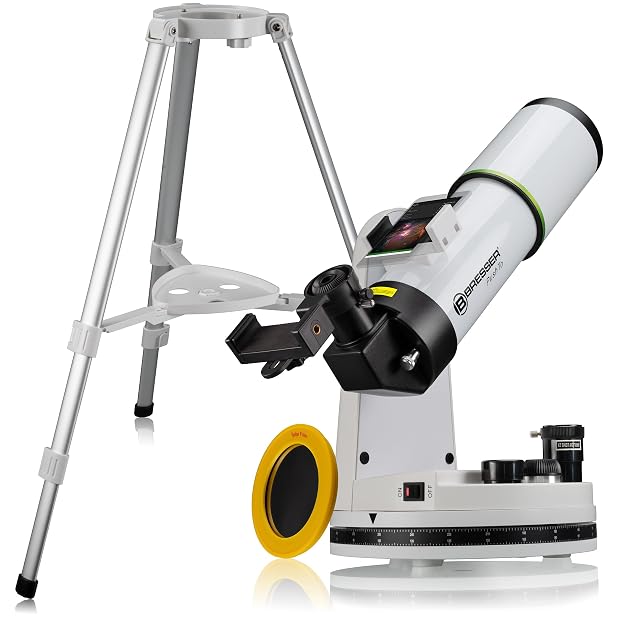
80 mm aperture · 400 mm focal length · Bluetooth PushTo
An 80/400 refractor whose built-in sensors report where it is pointing to a free phone app, which then guides the observer to a target with on-screen arrows.
Best for: A beginner who wants help finding objects without the cost or weight of a GoTo mount
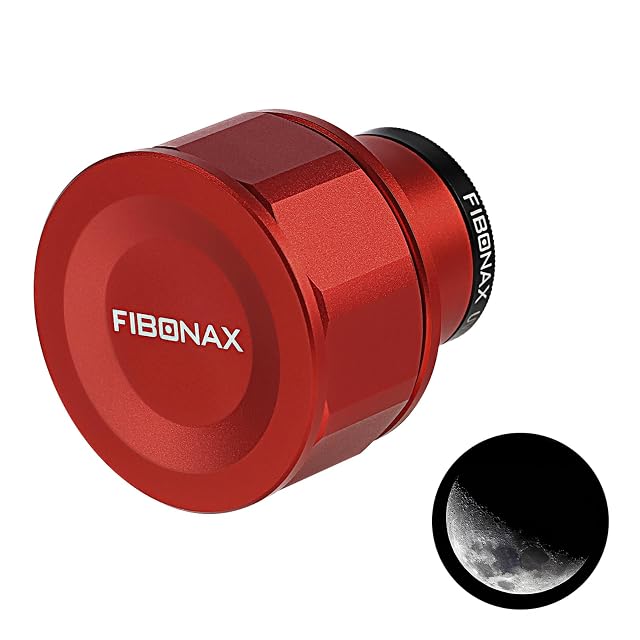
An 8 MP electronic eyepiece camera that replaces the eyepiece in a 1.25 in focuser and streams live video to a computer over USB, with an IR-cut filter fitted.
Best for: Lunar and planetary video, and showing a live view to more than one person at once
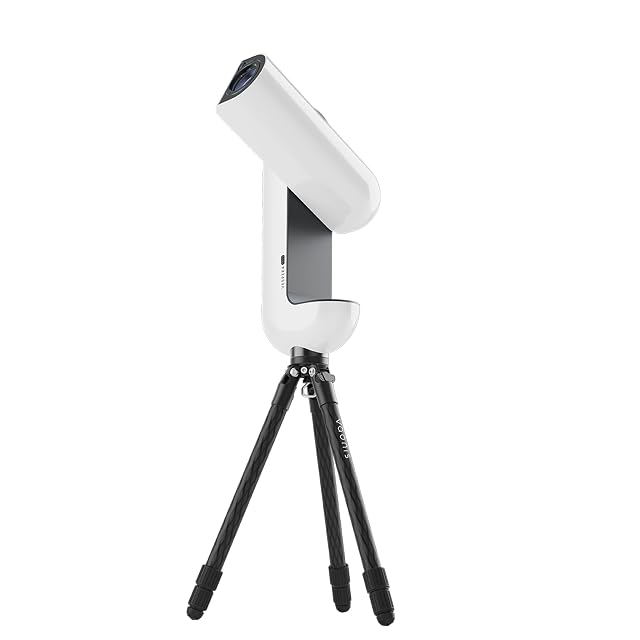
A self-contained imaging telescope with a Sony IMX676 sensor, an apochromatic flat-field quadruplet objective and an app that stacks exposures across several nights automatically.
Best for: Deep-sky imaging from a balcony or a garden, without a mount, a camera or a laptop