They pass the lines the gas emits and block the rest · review
Celestron Origin nebula narrowband (93669) review
Celestron's Nebula Filter for the Origin intelligent telescope: an H-alpha, H-beta and OIII imaging filter built for the Origin's f/2.2 6-inch RASA optics, that replaces the optical window in its filter drawer.
Celestron’s Origin is an intelligent telescope built around a 6-inch Rowe-Ackermann Schmidt Astrograph at f/2.2. This filter is engineered for it: remove the optical window from the Origin’s filter drawer and insert the filter in its place. It has no thread and fits nothing else.
Three lines
It transmits only hydrogen-alpha, hydrogen-beta and oxygen III, and blocks the rest, including most light pollution and sky glow. Emission nebulae “pop”, in Celestron’s word, against a darker background.
Why f/2.2
At f/2.2, light reaches the filter at steep angles, which shifts an ordinary filter’s passband off its lines. A filter designed for that speed keeps them in place. That is the reason it exists.
What is not published
The bandwidths and the transmission.
Price and availability
On November 7, 2026, Amazon.com listed it at $219.00 from a third-party seller.
Figures as Keepa reported them on the day this page was last updated. Stock and pricing shift without warning.
Prices quoted in this text were read on November 7, 2026. The live price is at the top of the page.
Its two nearest scopes on price
Same aisle, closest price — what the same spend else shows.
Multi-band: transmits only hydrogen-alpha, hydrogen-beta and oxygen III, stated · bandwidths not published
Line transmission
High throughput of nebula wavelengths claimed; no figures
Blocking outside the band
Blocks light pollution and sky glow, stated
Thread size
None: replaces the optical window in the Origin's filter drawer, no adapters needed
Glass flatness
Not published · engineered for the Origin's f/2.2 Rowe-Ackermann Schmidt Astrograph
Coatings
Not published by the maker.
Amazon reference
B0CRSRJN55
EAN
0050234936699
What observers ask about this one
Will it fit another telescope?
No. It replaces the optical window in the Celestron Origin's filter drawer and has no thread.
Why does f/2.2 matter?
At very fast focal ratios, light passes through a filter at steep angles, which shifts its passband. A filter designed for f/2.2 keeps its lines where they should be at that speed.
What does it change in Origin images?
Emission nebulae stand out against a darker background, especially from urban and suburban skies, Celestron says.
The price on Amazon.com
This model is listed on Amazon.com, at ≈ $219 at the last reading. Listed is not the same as in stock: availability changes daily, and the buy box shows the live price.
Details checked on November 7, 2026.
This one and its buyer, among astronomy instruments
An owner of the Celestron Origin, and nobody else
Sources
Specifications: the manufacturer sheet for telescopes and observing optics and the matching Amazon product page. Prices and availability: Keepa. Every figure on this page names its source.
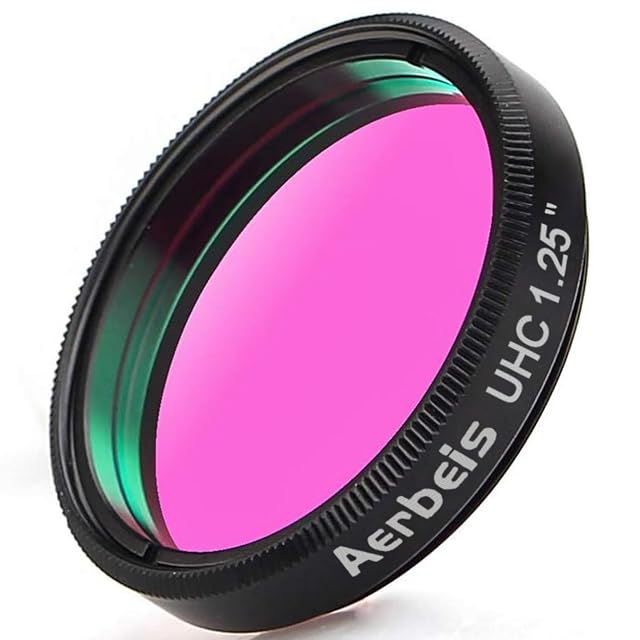
UHC · M28.5 × 0.6 thread · aluminum alloy frame · waterproof coating · no passband published
Aerbeis's 1.25-inch UHC filter: high-transparency optical glass in an aluminum alloy frame with a standard M28.5 × 0.6 thread and a waterproof coating, sold for emission nebulae from light-polluted skies.
Best for: A first nebula filter for a light-polluted sky, bought on price with the specification taken on trust
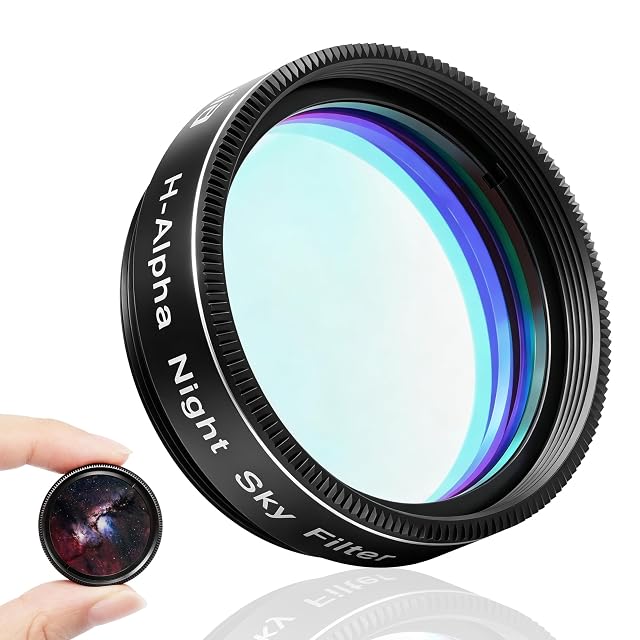
H-alpha narrowband · 1.25 in · hardened multi-coatings · for imaging H-II regions · no bandwidth published
Astromania's 1.25-inch H-alpha narrowband filter, sold for high-contrast imaging of hydrogen regions and as an extreme anti-light-pollution filter, with hardened multi-coatings and no published bandwidth.
Best for: Imaging hydrogen regions, by someone who will ask the seller for the bandwidth before buying
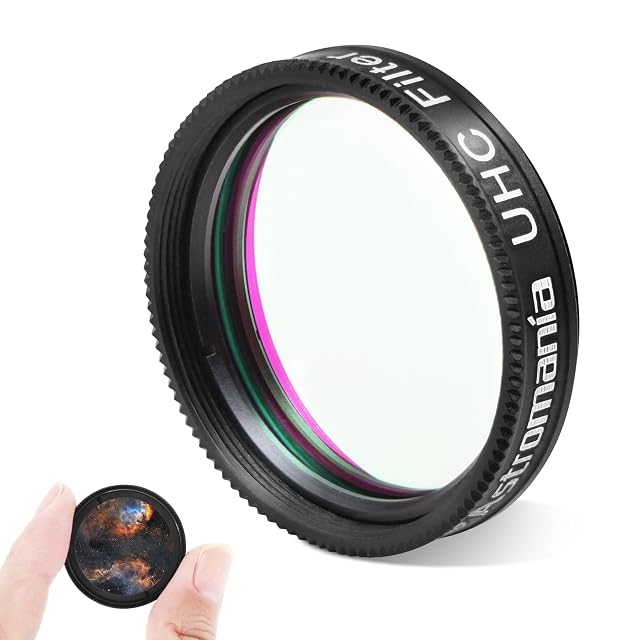
UHC · 1.25 in standard thread · optical glass in an aluminum frame · anti-reflection coatings · no passband published
Astromania's 1.25-inch UHC filter: optical glass in an aluminum frame with anti-reflection coatings and a standard thread, sold for the Orion, Lagoon and Swan nebulae from city and dark skies alike.
Best for: An observer in a suburban sky who wants the effect explained before buying