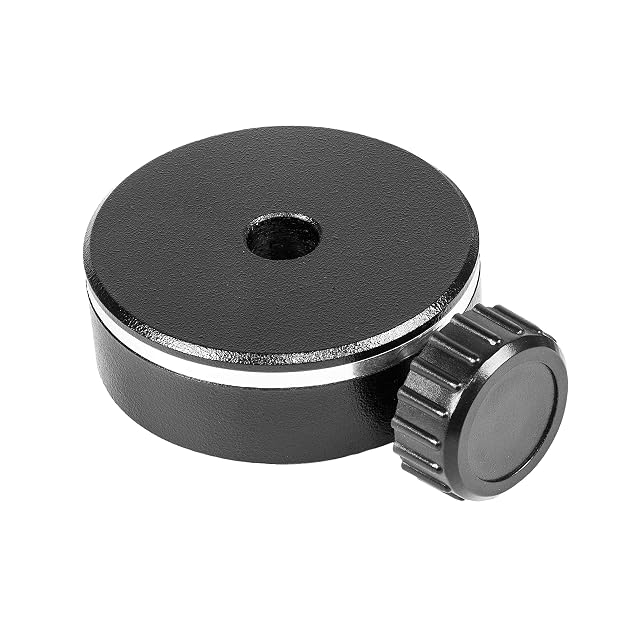
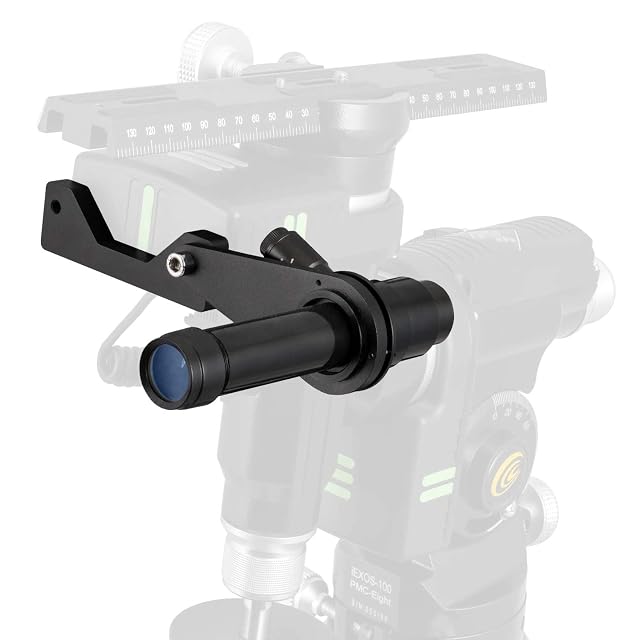
Several Explore Scientific products on this site name the mount they are for rather than a size: a counterweight for the iEXOS-100, a polar scope for the iEXOS-100. That is more useful than a diameter, and it is also narrower — the part is right for one mount and unspecified for the rest.
The optical parts
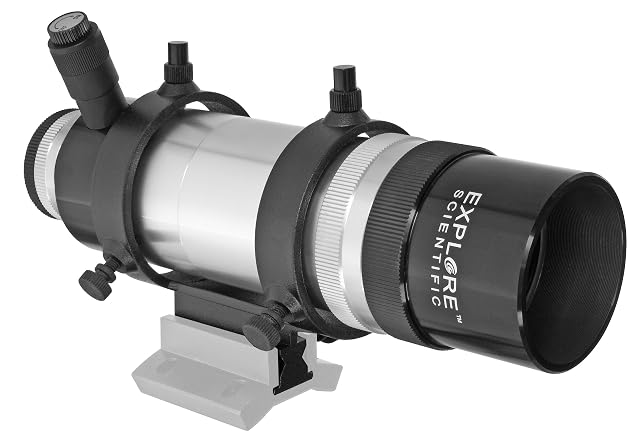
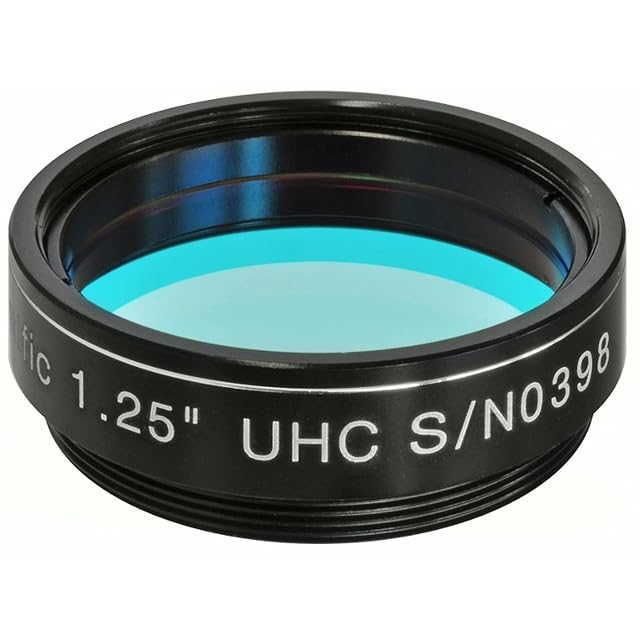
An 8x50 illuminated finder with its reticle and eye relief published, a UHC filter with its passband given. Both publish the figure their shelf is compared on.
The torch
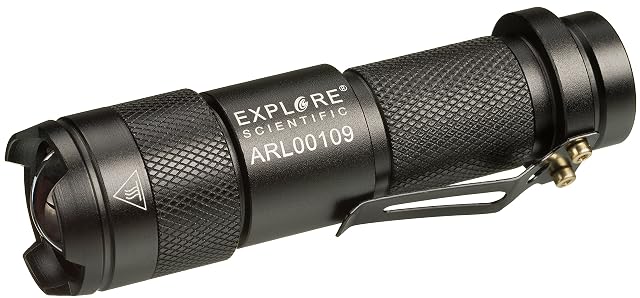
The Astro R-Lite belongs to a shelf judged on its minimum rather than its maximum: what matters for a red torch is how far down it dims, not how bright it gets. Its listing gives a continuously adjustable dimmer and a runtime.
Reading an Explore Scientific page here
Check whether the part names a mount or a measurement. The first is precise and narrow; the second travels.
A black anodised red torch with an adjustable dimmer, bright and dim continuous modes, a flashing mode and a 360-degree side signal, published at 105 g.
Red output type
Not published by the maker.
Dimming range
Continuously adjustable by a dial, per the maker
Minimum
Not published by the maker.
Mode memory
Continuous bright, continuous dim, and flashing · 360 degrees, through side cutouts
Battery type
One AA (LR6), supplied
Cold behaviour
Up to 100 hours, as the maker publishes it
Weight
92 × 25 × 25 mm, as the maker publishes them · 105 g, as the maker publishes it
Attachment
Torch, wrist strap, belt clip, battery
Amazon reference
B07CZ2TP7X (same reference on 6 Amazon marketplaces)
EAN
4007922039534
A continuous dimmer, which is the specification that matters most for astronomy
Runtime, dimensions, weight and battery type all published
No wavelength figure for the red LED
Best for: Reading a chart at the eyepiece without losing dark adaptation
Any figure written into the body of this page was true on the day it was written. The amount shown next to each instrument is requested from the retailer as the page loads, and it is that amount, not the text, that stands.