Skip to content

What goes in the luggage and still works

A travel telescope is judged on three things that have nothing to do with optics: how long it is when packed, what the whole kit weighs, and how long it takes to be looking through it. Aperture matters too, but it is the one that gives way.

Packed length is the constraint

Airline and rucksack limits are lengths, not weights. A tube that fits diagonally into a cabin bag travels; one that does not stays home, whatever it weighs.

Total carried weight, not tube weight

The figure that matters is everything that leaves the house: tube, mount, tripod, eyepieces, case. Listings publish tube weight far more often, which is the least useful of the five.

Setup time decides how often it is used

On a trip, a telescope competes with dinner and sleep. Anything that takes fifteen minutes to assemble is used once; anything that opens and works is used nightly.

The honest alternative

A pair of binoculars is smaller than any telescope here, needs no mount to be useful, and works on the first evening. Where the answer to “what should I take” is binoculars, this site says so rather than selling a smaller telescope.

The five, and the reason for the order

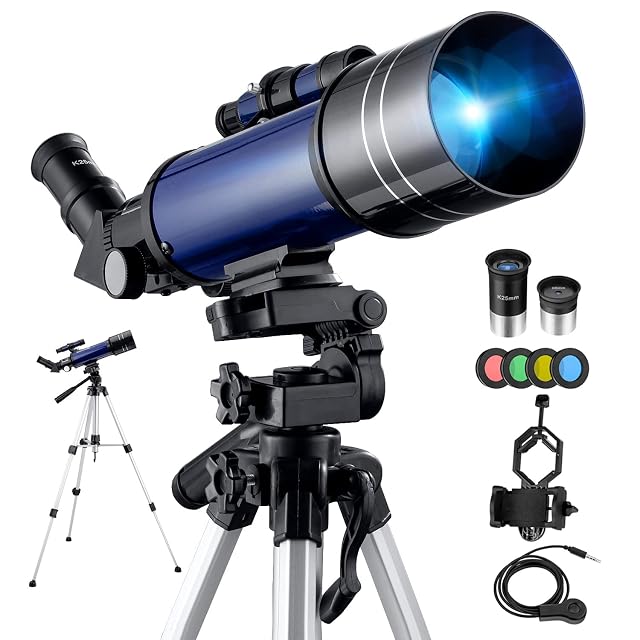
  1. BEBANG YWMY-Y103

    70 mm aperture · 400 mm focal length

    A 70/400 travel refractor with a 45° erecting diagonal, four Moon filters, a shutter release, a phone adapter and a backpack.

    Best for: Daytime and Moon use in one instrument, with phone photography in mind from the start

    ≈ £65 / €55

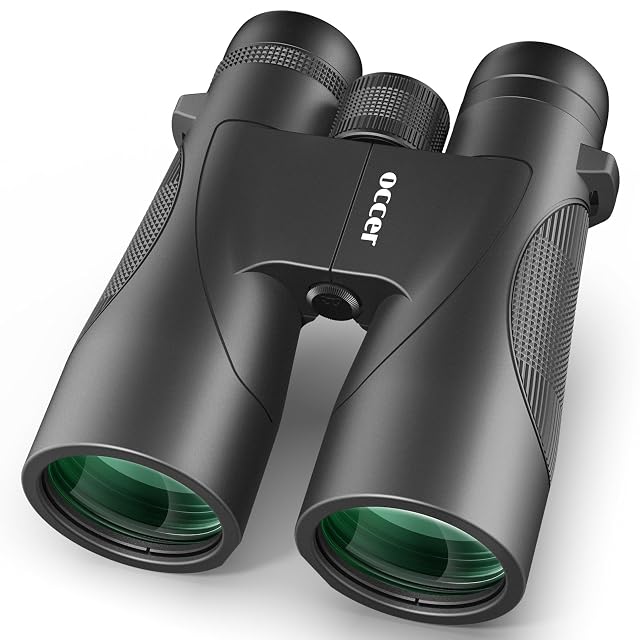
  2. occer 12x50

    12x magnification · 50 mm objectives · 4.2 mm exit pupil

    A 12x50 with an 18 mm prism and 50 mm objectives, supplied with a carry case, neck strap and cleaning cloth.

    Best for: Daytime distance viewing, with astronomy from a braced or seated position

    ≈ $69 / £61 / €60

What gets asked before buying

What aperture is realistic for travel?

Small. A 70 mm refractor or a 50 mm binocular is what fits alongside clothes, and both show the Moon, the brighter clusters and Jupiter’s moons well enough to be worth carrying.

Do binoculars count as a travel telescope?

For most trips they are the better answer: nothing to assemble, useful in daylight, and they go in a coat pocket rather than a case.

What is usually forgotten?

The tripod. A travel telescope is often published without one, and a 70 mm refractor hand-held is not usable at any magnification.

Any figure written into the body of this page was true on the day it was written. The amount shown next to each instrument is requested from the retailer as the page loads, and it is that amount, not the text, that stands.

The tool we use ourselves

Chosen your instrument? Now do not pay over the odds.

Telescopes and mounts are discounted over and over through the year — hardest of all in the weeks before Christmas, which is exactly when most of them are bought — and a struck-through figure on its own says nothing whatever about what the same model was charged at four weeks ago. UniverTrack keeps a week-by-week record for each retailer, so a discount is measured against a figure somebody genuinely paid instead of one invented for the sale — and it says when the moment to buy has genuinely arrived.

Real price historyBuy-now alertsAI buying assistant
Try free for 14 days →
No commitment · Cancel in one click · 5 languages