Two eyes, a wide field, and no setup at all · review
Bresser Wave 10x50 (1331050) review
A waterproof, gas-filled 10x50 porro binocular with BaK-4 prisms, full multi-coating, a UR prism coating, twist-up eyecups and a metal center focus, published with its weight and size.
The Wave 10x50 is listed as waterproof, with a protective gas filling against fogging. For astronomy that is more than a hiking feature: binoculars are carried from a warm room into cold, damp night air, and an unsealed pair can mist on the inside of its lenses where nothing can wipe it.
The figures that are published
Ten times, fifty millimeters, BaK-4 prisms, full multi-coating, and a UR coating on the prisms that Bresser says raises light transmission. Weight and size are given as numbers: 758 g (26.7 oz) and 170 × 135 × 63 mm.
Divide 50 by 10 and the exit pupil is 5 mm, a good match for an eye adapted to the dark.
Eyecups and glasses
The eyepieces are described as long eye relief, with twist-up eyecups and diopter adjustment, and the listing says the pair suits eyeglass wearers. No eye-relief figure in millimeters is given, so an observer with strong glasses should check the return policy.
How it holds
At 758 g it sits in the middle of what a 10x50 weighs. Held up at the zenith for minutes at a time, any 10x50 shakes; a reclining chair, a fence post or a monopod makes the view steadier than any upgrade in glass. The listing does not mention a tripod socket.
What it shows
The Pleiades and the Beehive filling the field, the Andromeda Galaxy as an oval glow, the Orion Nebula, Jupiter’s four bright moons in a line, and the Milky Way breaking into stars under a dark sky.
Price and availability
On November 7, 2026, Amazon.com listed it at about $166 from a third-party seller.
Figures as Keepa reported them on the day this page was last updated. Stock and pricing shift without warning.
Prices quoted in this text were read on November 7, 2026. The live price is at the top of the page.
Its two nearest scopes on price
Same aisle, closest price — what the same spend else shows.
Waterproof and gas-filled, so it will not fog inside when carried from a warm house into a cold night
BaK-4 prisms and full multi-coating, both stated
Weight and dimensions published as figures
Compromises
No field of view published
At 758 g it needs bracing or a support for long sessions, like any 10x50
No tripod socket is mentioned
Specifications
Aperture
50 mm (1.97 in) objectives
Magnification
10x
Exit pupil
5 mm (0.20 in), the quotient of the two published figures
True field of view
Not published by the maker.
Prism type and coatings
BaK-4 glass · fully multi-coated optics · UR coating on the prisms · protective gas filling against fogging · waterproof
Eye relief
Not published as a figure · Long-eye-relief (LE) eyepieces, twist-up eyecups and diopter adjustment, stated suitable for eyeglass wearers
Close focus
Not published by the maker.
Weight
758 g (26.7 oz) · 170 × 135 × 63 mm (6.7 × 5.3 × 2.5 in)
Tripod mounting
Not published by the maker.
Supplied accessories
Carrying strap, bag, protective cover
Amazon reference
B09C2K417R
EAN
4007922070797
What observers ask about this one
Why does gas filling matter for astronomy?
Because binoculars go from a warm house into cold, damp air. An unsealed pair can fog on the inside of the lenses, where it cannot be wiped; a sealed, gas-filled body has no moist air inside to condense.
Is 10x50 the right size for the sky?
It is the classic choice. Fifty millimeters gathers enough light for star clusters and the brighter galaxies, and the 5 mm exit pupil suits an eye adapted to the dark. Ten times is about the most that can be held steady by hand.
Can I use it with glasses?
Bresser describes the eyepieces as long eye relief, with twist-up eyecups and diopter adjustment, and says the pair suits eyeglass wearers. It does not publish the eye relief in millimeters.
Our score
8.4/ 10
A sealed, properly specified 10x50 that publishes its weight and size, built for weather rather than for the lightest possible hold.
The price on Amazon.com
This model is listed on Amazon.com, at ≈ $166 at the last reading. Listed is not the same as in stock: availability changes daily, and the buy box shows the live price.
Details checked on November 7, 2026.
This one and its buyer, among astronomy instruments
Dusk and night-sky use in damp or cold weather that would fog an unsealed pair
Specifications: the manufacturer sheet for telescopes and observing optics and the matching Amazon product page. Prices and availability: Keepa. Every figure on this page names its source.
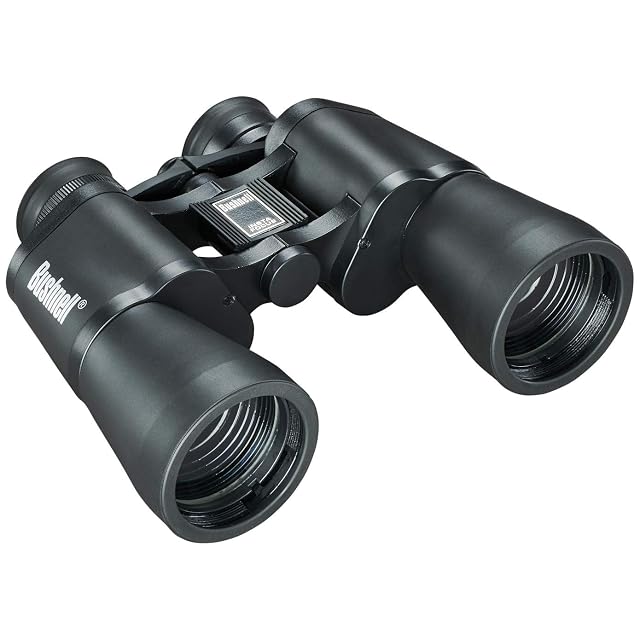
A long-running 10x50 porro binocular from Bushnell's Falcon line, with BK-7 prisms, fully coated optics and a central InstaFocus lever, and no waterproofing claimed.
Best for: A first, inexpensive pair kept in the car for whatever the sky or the day offers
10x · 50 mm (1.97 in) · porro prisms · multilayer-coated · long eye relief
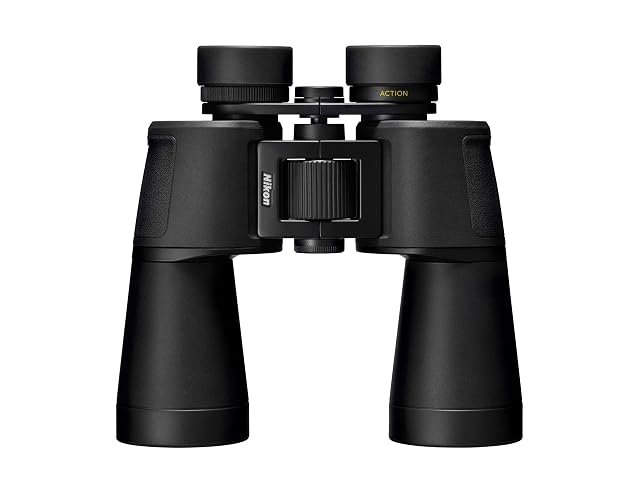
Nikon's Action 10x50: a rubber-armored porro binocular with multilayer-coated lenses, turn-and-slide eyecups, long eye relief for glasses and a tripod-ready body.
Best for: Sweeping the Milky Way and open clusters, on a tripod or from a reclining chair
10x · 50 mm (1.97 in) · 282 ft field at 1000 yd · BaK-4, silvered prisms · 26.1 oz (740 g)
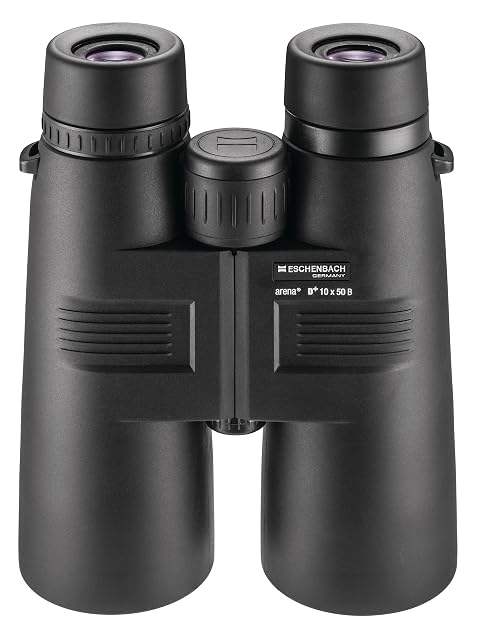
A waterproof, nitrogen-filled 10x50 with BaK-4 prisms carrying an extra silver coating, published with its field of view, close focus, dimensions and weight.
Best for: The observer who wants to compare figures rather than adjectives before buying