Skip to content

Aperture against the weight of carrying it

The largest telescope is not the one that shows most; the largest telescope that gets carried outside is. This guide reads aperture against the figures that decide whether it leaves the house — heaviest single part, whether the tube collapses, and how many trips it takes.

The number no maker here gives

Heaviest single part. It appears on almost none of the listings on this site, and it is the number that decides whether a large Dobsonian is used monthly or annually. Where a maker does publish a packed weight, this site quotes it.

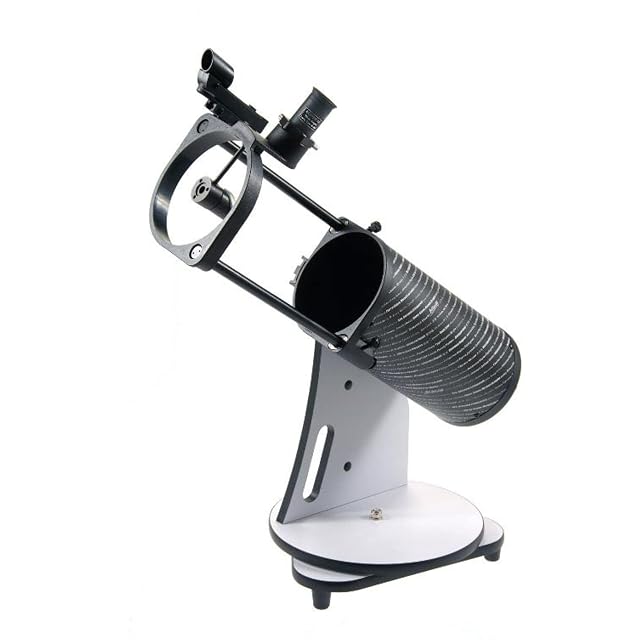
Collapsing tubes

A truss or FlexTube design shortens the tube for transport and then has to be re-collimated, or at least checked, each time it is extended. That is a few minutes at the start of a session, against a tube that will not fit in a car at all.

Folding the light instead

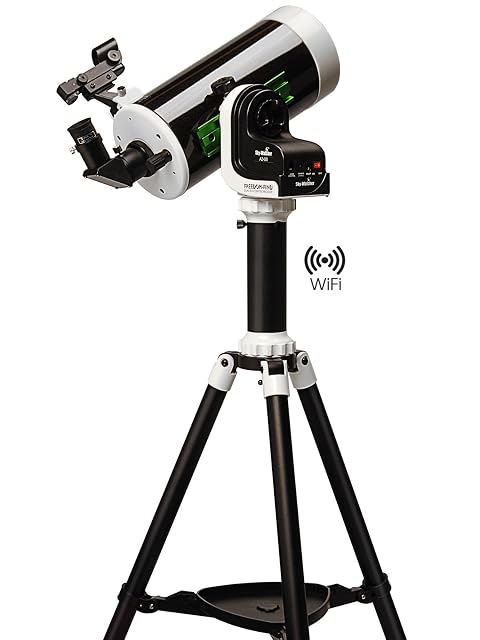
A catadioptric puts 1500 mm of focal length into a tube a third that length. The optics are more compact; the mount usually is not, and on a computerised fork the tripod is the part that decides the trip count.

A bag is part of the instrument

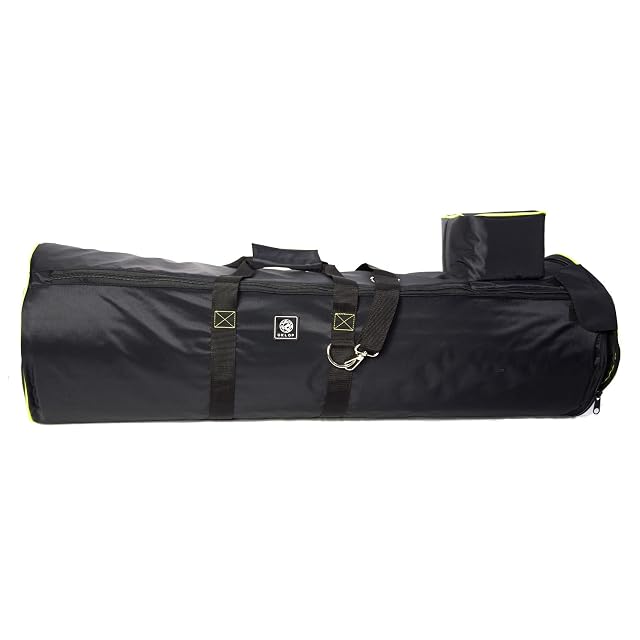
Where a padded case is cut for a specific tube, the listing says so. A bag sized for a 200/1200 Newtonian is a different object from a universal one, and the difference shows the first time it is carried across a dark field.

The five, and the reason for the order

What gets asked before buying

How much difference does aperture really make?

Light collected goes with the area, so 203 mm gathers about two and a half times what 130 mm does. On faint objects that is the difference between a smudge and a shape.

Why does the heaviest single part matter more than the total?

Because the telescope is carried in pieces. A 30 kg instrument that splits into three 10 kg parts goes outside; a 20 kg one that does not split may not.

Is a folded telescope a way around the problem?

Partly. A Maksutov or Schmidt-Cassegrain puts a long focal length in a short tube, which is easier to carry, but the mount it needs is usually where the weight returns.

Any figure written into the body of this page was true on the day it was written. The amount shown next to each instrument is requested from the retailer as the page loads, and it is that amount, not the text, that stands.

The tool we use ourselves

Chosen your instrument? Now do not pay over the odds.

Telescopes and mounts are discounted over and over through the year — hardest of all in the weeks before Christmas, which is exactly when most of them are bought — and a struck-through figure on its own says nothing whatever about what the same model was charged at four weeks ago. UniverTrack keeps a week-by-week record for each retailer, so a discount is measured against a figure somebody genuinely paid instead of one invented for the sale — and it says when the moment to buy has genuinely arrived.

Real price historyBuy-now alertsAI buying assistant
Try free for 14 days →
No commitment · Cancel in one click · 5 languages