Skip to content

Filters remove light. That is the whole trick.

Every filter on this site works by taking light away. What separates them is which light, and whether the object you are looking at happens to emit outside the part that is removed. That single question decides whether a filter helps or simply dims.

Narrowband, and why it works

Emission nebulae radiate at a few specific wavelengths. A filter that passes those and blocks the rest removes most of the sky glow and little of the object, so contrast rises sharply. The published passband is what tells you whether a given filter does this.

Broadband, and why it works less well

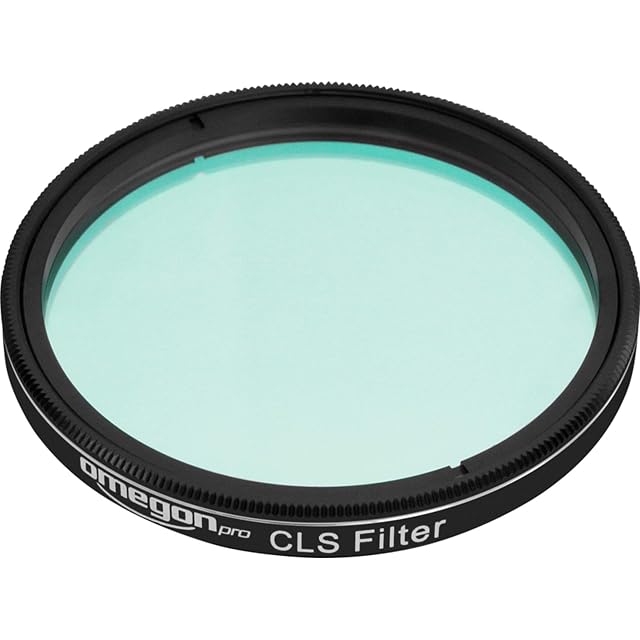
A light pollution filter cuts a narrow region where certain lamps emit. Against sodium lighting the gain is real; against broadband white LED lighting there is far less to remove without removing the stars too.

Neutral, and the Moon

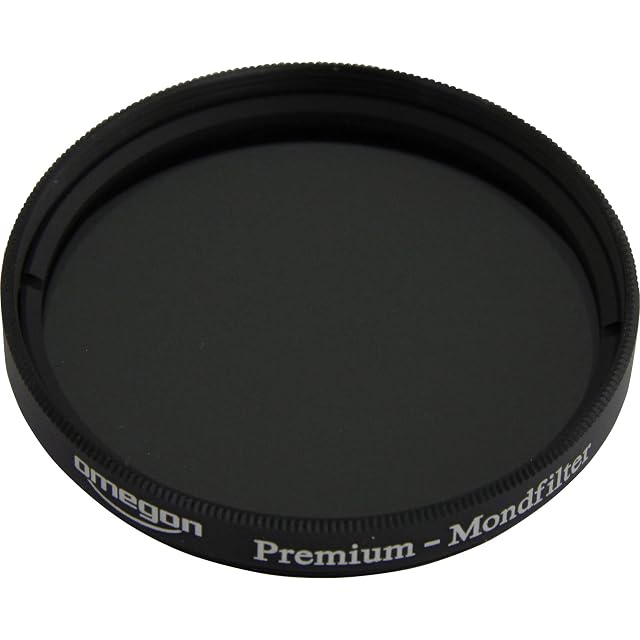
A Moon filter is a grey attenuator. The useful question is the transmission percentage and whether the dimming is neutral or tinted, because a tint shifts the apparent colour of a surface whose colour is being studied.

What no filter does

Add light. Every one of them reduces the total reaching the eye, and improvement comes only from removing more background than object.

The five, and the reason for the order

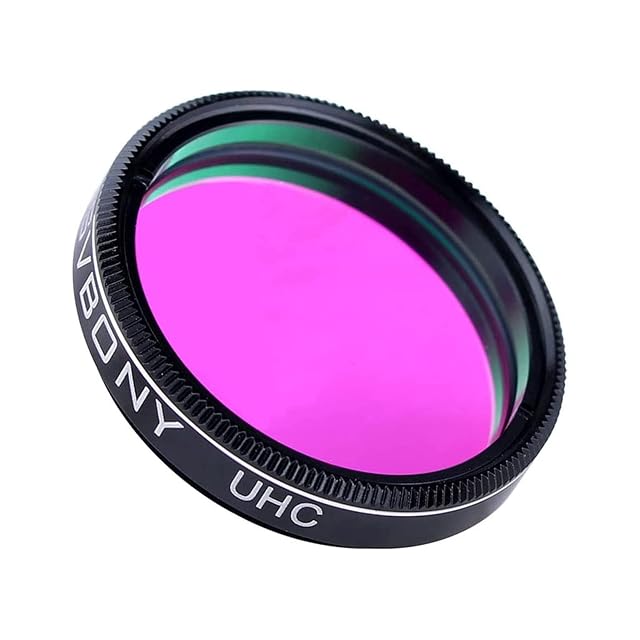
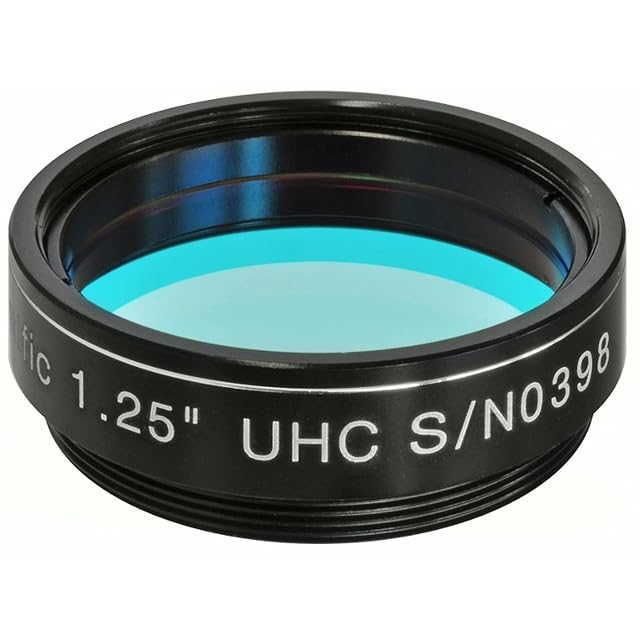
  1. SVBONY UHC 1.25 in (EUF9131A)

    UHC · 1.25 in · double-sided multi-layer coating · no passband published

    A 1.25 in UHC filter with a precision-polished substrate and double-sided multi-layer coating, sold for raising nebula contrast — with no wavelengths published.

    Best for: A first nebula filter for a suburban sky, bought on price rather than on specification

    ≈ $28 / £24 / €31

What gets asked before buying

Will a filter show me galaxies from a city?

No. A galaxy emits across the spectrum, like the sky glow behind it, so a filter removes as much of one as the other. Nebula filters work because emission nebulae emit in narrow bands.

What does a Moon filter actually do?

It dims. A bright Moon overwhelms the dark-adapted eye, and reducing the brightness lets fine contrast be seen. A neutral filter dims all colours equally; a tinted one does not.

Do colour filters help on planets?

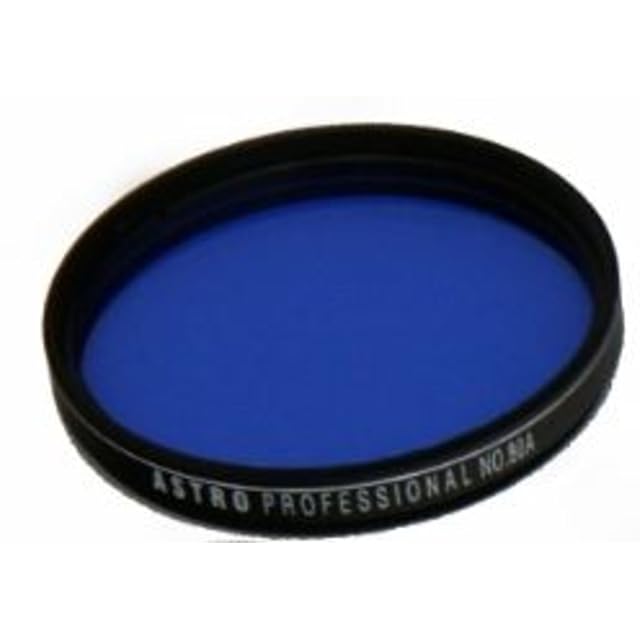
They raise the contrast of features that differ in colour from their surroundings — a red filter darkens blue haze on Mars, for instance. The effect is real, modest, and depends heavily on aperture.

Any figure written into the body of this page was true on the day it was written. The amount shown next to each instrument is requested from the retailer as the page loads, and it is that amount, not the text, that stands.

The tool we use ourselves

Chosen your instrument? Now do not pay over the odds.

Telescopes and mounts are discounted over and over through the year — hardest of all in the weeks before Christmas, which is exactly when most of them are bought — and a struck-through figure on its own says nothing whatever about what the same model was charged at four weeks ago. UniverTrack keeps a week-by-week record for each retailer, so a discount is measured against a figure somebody genuinely paid instead of one invented for the sale — and it says when the moment to buy has genuinely arrived.

Real price historyBuy-now alertsAI buying assistant
Try free for 14 days →
No commitment · Cancel in one click · 5 languages