Skip to content

FIBONAX UHC 1.25 in (Dawn01) review

A filter titled UHC and described in its own features as narrowband wavelength isolation — with threads on both faces for stacking.

UHC in the title, narrowband in the features

The title: UHC Filter for Telescopes.

The sixth feature: Narrowband Wavelength Isolation.

Those are the two halves this shelf divides into. A UHC passes a wide window holding several emission lines and leaves the stars in place. A narrowband passes a slice a few nanometers wide and takes almost everything else away.

Different behavior, different price, different objects.

No wavelength and no bandwidth are published, so the page gives no way to tell which this is. Both claims are printed above.

Threads on both faces

The only stackable filter on this shelf.

An ordinary filter has one usable thread, which is enough to screw it into an eyepiece. This one has M28.5 × 0.6 on both faces, so a second filter goes behind it — the listing names polarizing and Moon filters.

That is why the thread specification matters more on this page than on any other here: stacking only works if both threads are the same, and this is the only listing that names the thread and advertises the practice.

Over ninety per cent

A transmission figure, which nothing else on this shelf offers.

It is also not the figure the shelf has been asking for. It sits in the sentence about multi-coated glass maximizing light transmission, so it describes the substrate and its coatings — how much of the light the filter means to pass gets through the glass.

The missing number is transmission at a named line. A filter passing hydrogen-beta at ninety-five per cent is a different instrument from one passing it at seventy, and the published page for the Explore Scientific here names that percentage as the other half of a filter specification.

This is not that. It is still more than the rest of this shelf publishes.

Sodium and mercury

The two streetlight sources, named.

Sodium emits a hard pair of lines in the yellow; mercury emits in the blue and green. A filter that blocks both removes most of what a town puts into the sky, and naming them says more about the design than “light pollution” does.

Three objects are named on the other side of the ledger: Orion, the Lagoon, and lunar crater detail.

And terrestrial photography

The fourth feature offers the filter for terrestrial photography with enhanced clarity.

A filter cut to pass two gas emission lines and block the rest of the spectrum will make a daylight scene an unusual color. Whatever it does there, it is not clarity in the sense the sentence implies.

It is the one claim on this page that the rest of the page contradicts.

Availability

American Amazon store sat at about $19 on the day of the survey.

Figures as Keepa reported them on the day this page was last updated. Stock and pricing shift without warning.

Prices quoted in this text were read on October 7, 2026. The live price is at the top of the page.
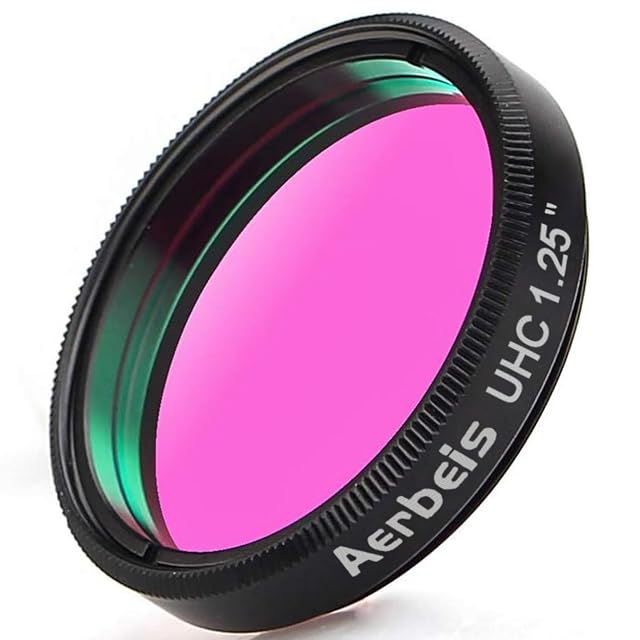
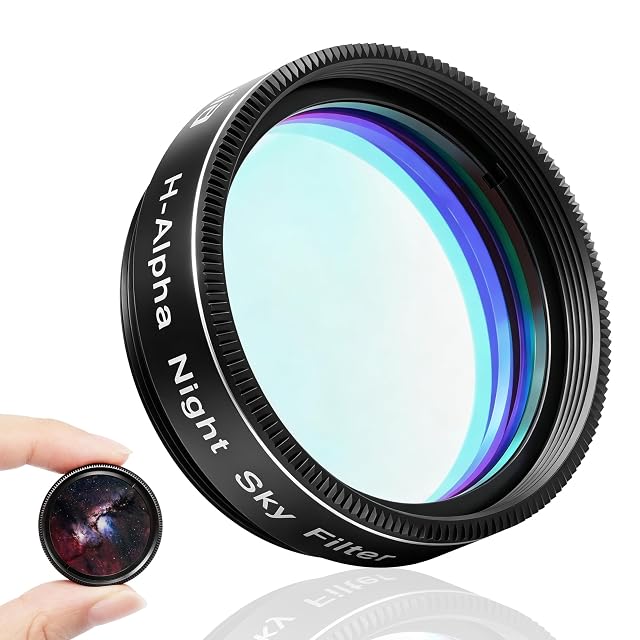
Its two nearest scopes on price

Same aisle, closest price — what the same spend else shows.

What it publishes, and what it withholds

Strengths

  • Threads on both faces, so a polarizing or Moon filter can be stacked behind it
  • Names the two gas emissions it targets: H-beta and oxygen III
  • Names the two streetlight sources it blocks: sodium and mercury
  • A transmission figure of some kind — over 90% — which no other filter on this shelf gives

Compromises

  • The title says UHC and a feature says narrowband, which are opposite categories
  • The 90% figure is attached to the glass, not to any named line
  • No wavelength in nanometers and no bandwidth anywhere
  • Claims suitability for terrestrial photography, which a line filter is not for

Specifications

Bandpass and typeThe title says UHC. A published feature says narrowband wavelength isolation, stated to isolate key wavelengths including H-beta and O-III emissions · Those are the two opposite categories on this shelf, and no wavelength in nanometers and no bandwidth are published
Line transmissionNot published by the maker. · Light transmission is claimed as greater than 90%, attributed to the multi-coated glass rather than to any named line
Blocking outside the bandStated to block sodium and mercury streetlight glare, and to suppress artificial light · No figure or optical density is published
Thread sizeDual M28.5 × 0.6 threads, one on each face, stated to let multiple filters be connected in series — the only stackable filter on this shelf
Glass flatnessNot published by the maker.
CoatingsMulti-coated optical glass, stated to maximize light transmission and reduce reflections · The number of layers and the faces treated are not given · Aircraft-grade aluminum, as the maker words it, with a protective storage case included
Amazon referenceB0D1TWF7GZ
EAN0755496189554

What observers ask about this one

Is it a UHC or a narrowband filter?

The listing says both and this page chooses neither. The title reads UHC Filter for Telescopes; the sixth published feature reads Narrowband Wavelength Isolation. Those are the two categories this shelf is divided into: a UHC passes a wide window holding several emission lines and keeps the stars visible, while a narrowband passes a slice a few nanometers wide and removes almost everything else. They behave differently, cost differently and suit different objects. With no wavelength and no bandwidth published, the page offers no way to tell which this is.

What does over 90% transmission mean here?

Less than it appears. The figure sits in the feature about multi-coated optical glass maximizing light transmission, so it describes the glass and its coatings — how much of the light the filter is meant to pass actually gets through the substrate. It is not a transmission at a named line, which is the figure that separates a good narrowband filter from a poor one: a filter passing hydrogen-beta at 95% behaves very differently from one passing it at 70%. The published page for the Explore Scientific on this shelf names that missing percentage as the other half of a filter specification. This figure is not it, and it is more than the rest of this shelf gives.

What is the point of threads on both faces?

Stacking. A standard filter has a male thread on one side and a female on the other, which is enough to screw it into an eyepiece — but a filter with a usable thread on both faces can take another filter behind it, so a light-pollution filter and a Moon filter can sit in the same barrel. The listing advertises exactly that, naming polarizing and Moon filters. It is the only filter on either half of this shelf to do so, and it is the reason the named M28.5 × 0.6 thread matters on this page more than on any other.

The price on Amazon.com

This model is listed on Amazon.com, at ≈ $19 at the last reading. Listed is not the same as in stock: availability changes daily, and the buy box shows the live price.

Details checked on October 7, 2026.

This one and its buyer, among astronomy instruments

An urban observer who wants to stack a Moon filter behind a light-pollution filter

Sources

Specifications: the manufacturer sheet for telescopes and observing optics and the matching Amazon product page. Prices and availability: Keepa. Every figure on this page names its source.

The way we judge these astronomy instruments