They pass the lines the gas emits and block the rest · review
SVBONY UHC 1.25 in (EUF9131A) review
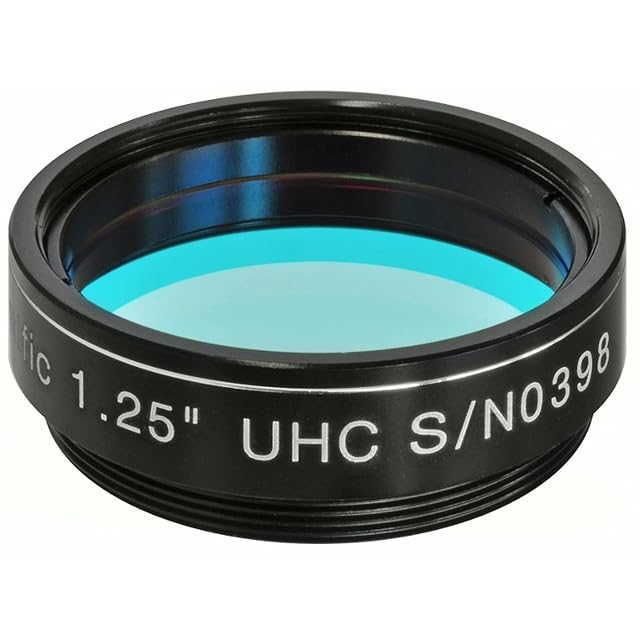
A 1.25 in UHC filter with a precision-polished substrate and double-sided multi-layer coating, sold for raising nebula contrast — with no wavelengths published.
The bottom line A carefully made piece of glass sold under a name that says nothing about what it passes.
What the maker does specify
Substrate polished on both sides for parallelism. Multi-layer coating on both faces, with a broadband layer at the rear to reduce internal reflection. A rigid case. Those are genuine manufacturing claims, and parallelism in particular matters: a filter that is not flat degrades the image at high magnification.
What is missing, and why it is the whole point
The passband. A nebula filter is defined by which wavelengths it lets through and how much of each. Emission nebulae radiate at specific lines, and a filter’s value is the match between its window and those lines. No wavelength and no percentage appears anywhere in this listing.
The comparison this shelf allows
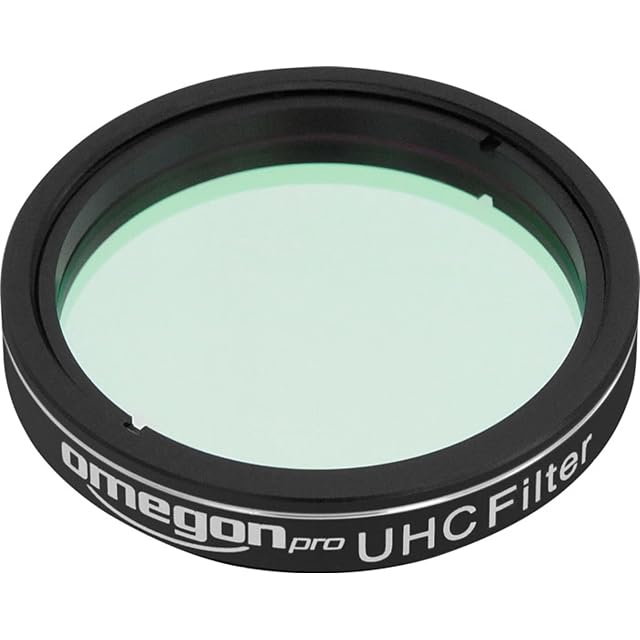
One of the three UHC filters here publishes its passing wavelengths outright. Against that, a filter described only as “ultra high contrast” cannot be compared — which is exactly the situation the designation page on this site describes.
Where it will help
Under a suburban sky, on emission nebulae, at low to medium magnification. Nothing gets brighter; the background darkens and the contrast rises. An observer expecting more light will read that as failure.
Availability
German, French, Italian and Spanish Amazon stores ran from 31 € to 40 € on the day of the survey.
American and British Amazon stores list it in local currency, which the euro range above sets aside.
Figures as Keepa reported them on the day this page was last updated. Stock and pricing shift without warning.
Prices quoted in this text were read on 17 September 2026. The live price is at the top of the page.
What it publishes, and what it withholds
Strengths
Substrate parallelism is addressed explicitly, which matters at high magnification
Coated on both faces, which reduces the ghosting a single-coated filter produces
A rigid case is included, which is where most filters should live
Compromises
No passband and no transmission figure: the two numbers that define a filter
“UHC” is a name, and two filters carrying it can pass very different windows
The claim that it works for both eye and sensor is made without qualification
Specifications
Bandpass and type
UHC — a market convention, not a published standard · The listing gives none: no wavelengths and no transmission percentage appear
Line transmission
Not published by the maker.
Blocking outside the band
Not published by the maker.
Thread size
1.25 in, screwing into an eyepiece barrel
Glass flatness
Precision polished on both sides for parallelism, per the maker
Coatings
Double-sided multi-layer, with a broadband layer on the rear per the maker
Amazon reference
DE B0746J8KDP · US B06XKRSH6X · GB B06XKRSH6X · FR B06XKRSH6X · IT B06XKRSH6X · ES B06XKRSH6X
EAN
0609378744273
What observers ask about this one
What does UHC actually guarantee?
Nothing published. It is a market convention describing an intention — a window wide enough to include several emission lines. The width of that window and the transmission at each line vary between makers, and neither appears here.
Will it work for photography as well?
The maker says so. Visual filters are designed around the eye’s response, and a band that suits a sensor may leave little visible at the eyepiece. Where a maker specifies which use a filter is for, this site reports it — here it claims both.
114 mm mirror · 900 mm focal length · alt-azimuth mount
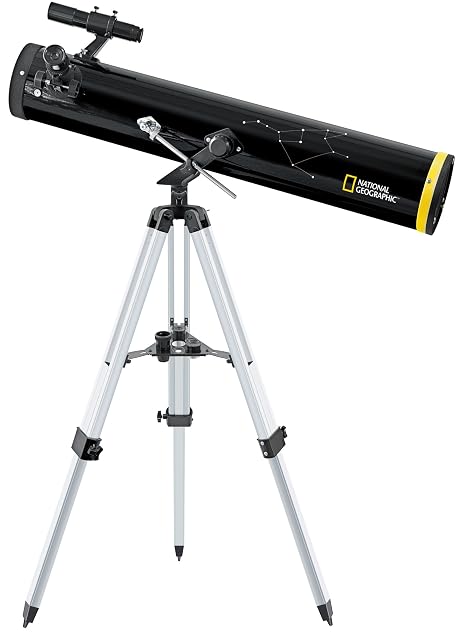
A 114/900 Newtonian on a simple alt-azimuth mount, supplied with three eyepieces, a 6x30 finder and a 1.5x erecting lens, recommended by the maker from age eight.
Best for: A family telescope where nobody wants to learn polar alignment