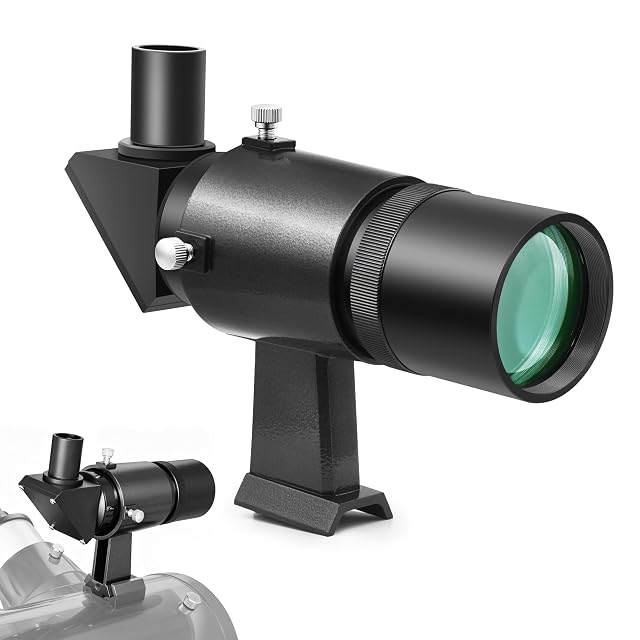
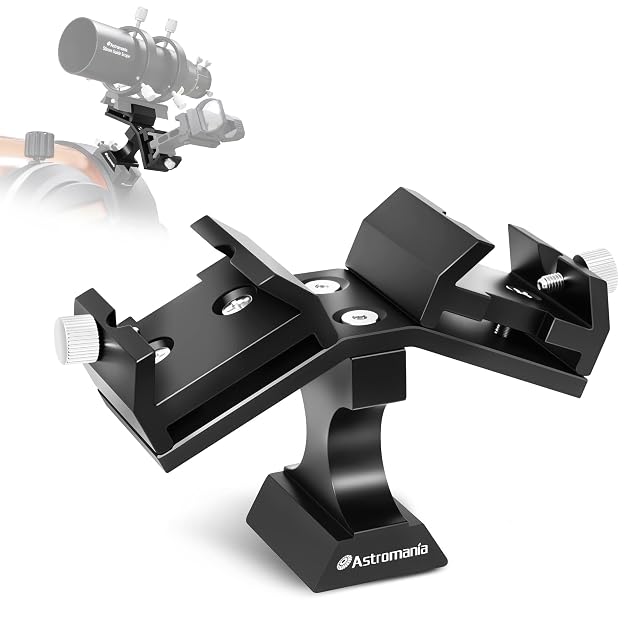
Astromania products are described by what they screw into or clamp onto. The dual finder bracket names its base pattern; the filter wheel gives its thread on each side and its build height; the reducer publishes its own focal length and clear aperture.
The figures are the product
On this shelf a build height is not a detail — it is the whole specification, because a filter wheel that does not leave enough focus travel cannot be used at all. Astromania listings generally give it, and the pages here quote it as published.
One discrepancy, reported not fixed
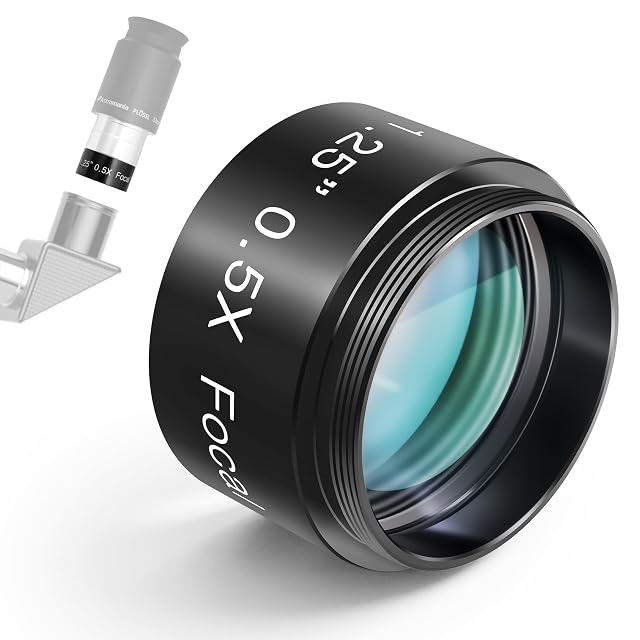
The 0.5x reducer prints its filter thread as 28.5 × 0.75 mm where the convention on this site’s shelves is M28.5 × 0.6. The page for it reports both and flags the gap rather than assuming which is right.
Reading an Astromania page here
Compare the thread and the length before the price. Parts that look identical on a shelf differ by the millimetre of optical path they add.
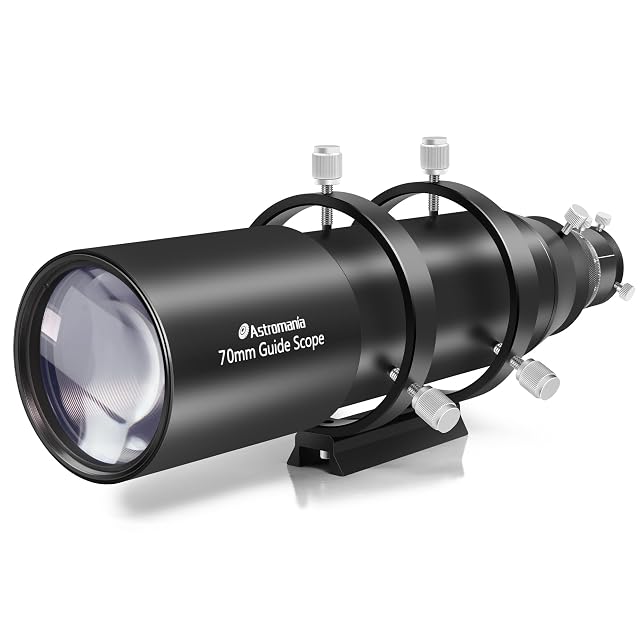
70 mm aperture · 400 mm focal length · 90 mm focus range
A 70/400 guide scope with a helical focuser offering 90 mm of range including 10 mm of micro-focus, supplied with tube rings, a Synta plate and an adjustable counterweight.
Best for: Guiding a longer main telescope, where a short guide scope would not resolve the correction
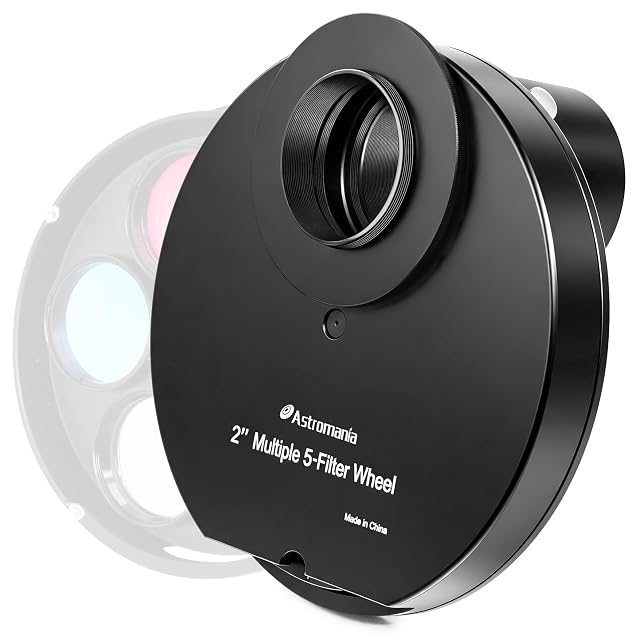
A manual filter wheel holding five 2 in filters in an aluminium body, with a 2 in adapter on the telescope side and T-2 and M48 threads on the camera side.
Slot count and filter size
Five, numbered 1 to 5 · 2 in (5.1 cm) standard filters · T-2 and M48, as the maker states them
Optical path length
The focuser must travel about 20 mm further inward than normal, as the maker states it
Manual or motorised operation
A filter wheel — the only one in this group · Supplied with a 2 in adapter for the focuser
Light sealing
Aluminium, described by the maker as suitable for heavy cameras
Power
Not published by the maker.
Software support
Not published by the maker.
Amazon reference
B0140UA9F6 (same reference on 6 Amazon marketplaces)
EAN
6970019290355
Publishes the 20 mm of inward focus it consumes, which is the figure that decides whether it works at all
Two accessory threads — T-2 and M48 — cover most imaging trains
Twenty millimetres of inward focus is more than some refractors have to give
Best for: A Newtonian or Dobsonian imaging train where back focus is short and filters change often
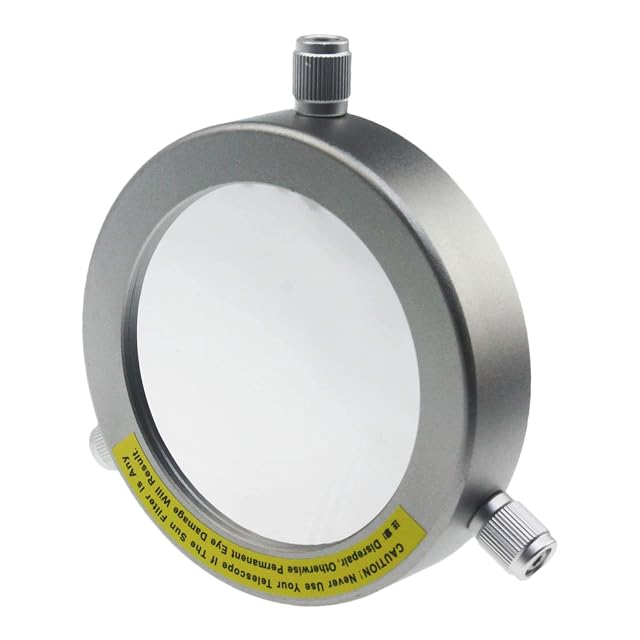
A full-aperture solar filter with a Baader AstroSolar film in an anodised aluminium cell, clamped to the front of the tube by three padded screws.
Cell fit and outside diameter
100 mm, as the maker states it · 75 mm, as the maker states it · 70 mm to 92 mm, as the maker states them
Film or glass construction
Full-aperture filter — it fits over the front of the telescope · Baader AstroSolar, named by the maker · Anodised aluminium with three clamping screws and protective plastic caps
Cited standard
99.9 % of incoming sunlight, as the maker states it · ISO 12312-2:2015 — a document whose own title covers filters for direct observation of the Sun by the unaided eye
Mounting security
Not published by the maker.
Image colour
Not published by the maker.
Supplied storage
Not published by the maker.
Amazon reference
B07439W4R8 (same reference on 6 Amazon marketplaces)
EAN
6970019299129
Three published diameters — 100 mm outer, 75 mm inner, 70 to 92 mm tube range — rather than one vague size
An aluminium cell holds the film flat, which matters more than the film’s brand
A tube at the very edge of the 70–92 mm range sits less securely than one in the middle
Best for: Fitting the front of a telescope whose tube outside diameter has been measured first
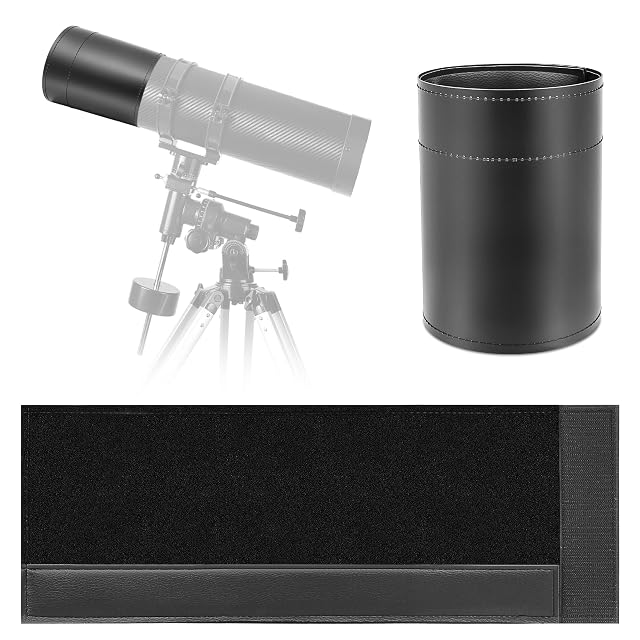
A flexible black ABS dew shield with a velvet lining and a foam contact strip, for tube outside diameters of 148 to 167 mm.
Tube fit
148 to 167 mm, as the maker publishes them
Outside diameter
Not published by the maker.
Shield length
200 mm, as the maker publishes it · 580 mm, as the maker publishes it
Construction
Flexible wrap-around dew shield · Black ABS, lined with a black velvet-like fabric · Non-slip foam rubber against the tube · Hook-and-loop, adjustable within the range
Heater width
Not published by the maker.
Power draw
Not published by the maker.
Controller support
Not published by the maker.
Cable
Not published by the maker.
Connector
Not published by the maker.
Amazon reference
B01LZPCQBV (same reference on 6 Amazon marketplaces)
EAN
6970019295695
Four published dimensions where most dew shields give one vague size
A velvet lining does two jobs: it absorbs moisture and it kills stray light
The diameter to measure is the tube outside, not the aperture — an easy mistake
Best for: A 150 mm reflector or a Schmidt-Cassegrain whose front diameter has been measured
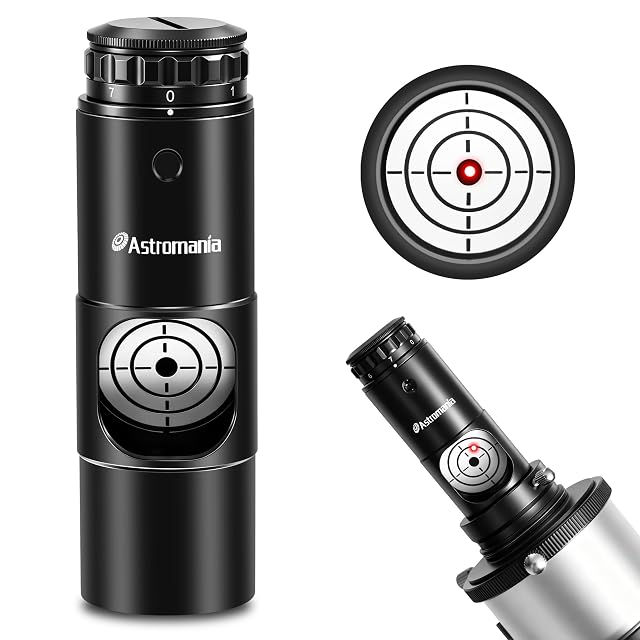
A metal-bodied laser collimator with seven brightness steps, a published wavelength band and output figure, and three sealed adjustment ports for trueing the tool itself.
Method
Laser collimator
Self-collimation ability
Three ports at 120°, initially sealed behind a screw cap at the rear
Barrel fit
Standard 1.25 in
Play
Not published by the maker.
Brightness control
635–655 nm, as the maker publishes it · Less than 5 mW, as the maker states it · Seven
Target visibility
Not published by the maker.
Build
CR2032 lithium; the maker states it is not supplied
Suitable telescopes
Not published by the maker.
Amazon reference
B01D8HMBCQ (same reference on 5 Amazon marketplaces)
EAN
6970019295022
Wavelength and output power are both published, which is rare on this shelf
Three adjustment ports at 120° let the tool be trued rather than trusted
The battery is not supplied and CR2032 cells are easy to be without on the night
Best for: A Newtonian owner who wants a laser they can check and correct themselves
Any figure written into the body of this page was true on the day it was written. The amount shown next to each instrument is requested from the retailer as the page loads, and it is that amount, not the text, that stands.