Skip to content

Skyoptikst

A Newtonian and a reducer-corrector

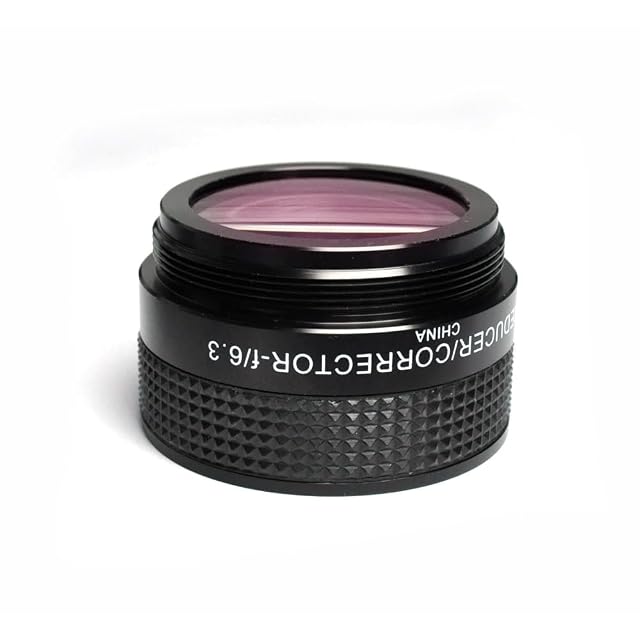
The reducer is the interesting one

A four-element reducer-corrector converts an f/10 Schmidt-Cassegrain to f/6.3, which widens the field and shortens the exposure needed for a given brightness. Four elements correct the field as well as reducing it — a two-element reducer does not.

What the listing withholds

The distance required between the reducer and the sensor. A reducer has almost no tolerance on that figure, and its absence is the single most important thing the page has to report.

The telescope

A 150 mm Newtonian at f/5, published with both figures.

Reading a Skyoptikst page here

For anything in the imaging train, the spacing figure decides whether it works. Its absence is a finding, not an omission to be filled in.

Skyoptikst in this catalogue

  • Skyoptikst D150F750JP

    150 mm mirror · 750 mm focal length · optics only

    A 150/750 Newtonian mirror set — primary and secondary — sold on its own, with published surface accuracy and reflectivity figures rather than as a complete telescope.

    Best for: Somebody rebuilding or building a Newtonian around a known mirror set

    ≈ £99 / €99

Everything Skyoptikst puts on these shelves

  • Skyoptikst f/6.3 reducer-corrector with SCT thread

    Skyoptikst f/6.3 reducer-corrector for SCT

    A four-element fully multi-coated reducer-corrector that threads onto the rear cell of a Schmidt-Cassegrain and converts f/10 to f/6.3.

    Reduction factor
    f/10 to f/6.3, as the maker states it
    Required back focus
    The listing gives none
    Image circle
    Not published by the maker.
    Corrector function
    Reducer and field corrector with optics — four elements
    Thread standards
    Schmidt-Cassegrain rear thread
    Vignetting
    Not published by the maker.
    Housing
    Fully multi-coated, per the maker · Aluminium alloy; all optical glass elements per the maker
    Amazon reference
    B0CN9CVSBP (same reference on 6 Amazon marketplaces)
    EAN
    0741754671657
    • Four elements correct the field as well as reducing, which a two-element reducer does not
    • The conversion is published as a pair of focal ratios rather than as a bare factor
    • The required distance to the sensor is not published, and a reducer has no tolerance on it

    Best for: A Schmidt-Cassegrain used for imaging, where f/10 makes exposures impractically long

    ≈ $95 / £93 / €109
    Check price on Amazon

Any figure written into the body of this page was true on the day it was written. The amount shown next to each instrument is requested from the retailer as the page loads, and it is that amount, not the text, that stands.