One axis against the turning sky — once it is aligned · review
Bresser Polaris 102/460 EQ3 review
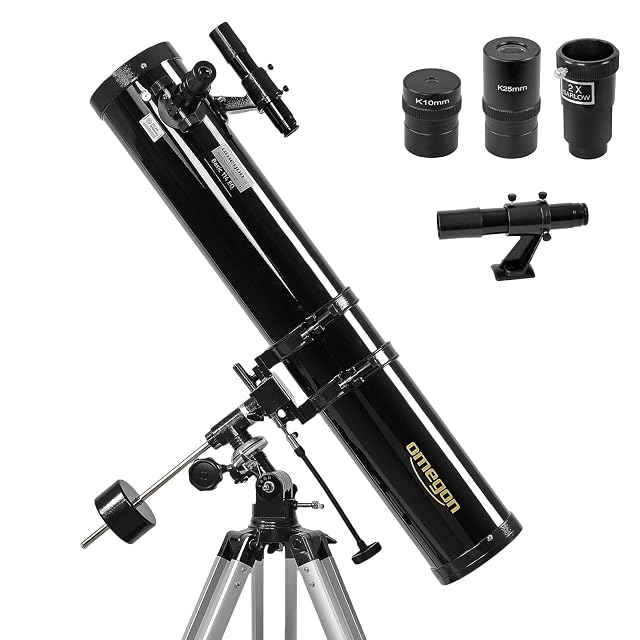
A 102/460 telescope on an EQ-3 equatorial mount, supplied with an objective solar filter for white-light observation, a 2 in focuser with a 1.25 in reducer and a smartphone adapter.
The bottom line A fast, wide instrument on a capable mount, supplied with a solar filter whose use is governed by the maker’s own instructions.
The optical geometry
One hundred and two millimetres of aperture at four hundred and sixty of focal length is f/4.5 — very fast, which means a wide, bright low-power field and a heavy demand on eyepieces at the short end. The 20 mm supplied eyepiece is where this instrument shows its strength.
The focuser is the feature
Two inches, with a 1.25 in reducing sleeve. The larger barrel passes a wider field stop, and on a 460 mm focal length that produces a field measured in degrees rather than fractions of one. It is an unusual fitting to find at this price.
The solar filter, and what this page will not say
An objective solar filter is included for white-light observation, and Bresser’s listing describes it as allowing the Sun to be observed. What governs its use is the manufacturer’s own instructions supplied with it — inspection before each use, fitting, and storage. This site reports what the maker states and does not make its own claim about the safety of observing the Sun.
The figures the maker publishes
Ninety by ninety by a hundred and forty centimetres, and 8.1 kg. Those decide whether it lives assembled in a corner or is carried out in pieces, and they are printed plainly.
Availability
German, French, Italian and Spanish Amazon stores ran from 249 € to 379 € on the day of the survey.
British Amazon store lists it in local currency, which the euro range above sets aside.
American Amazon store gave no result whatever, so the buy button there opens a search rather than an empty page.
Figures as Keepa reported them on the day this page was last updated. Stock and pricing shift without warning.
Prices quoted in this text were read on 17 September 2026. The live price is at the top of the page.
What it publishes, and what it withholds
Strengths
A 2 in focuser at this price opens the wide-field eyepiece range
Dimensions and weight are both published
An objective solar filter is supplied rather than sold separately
Compromises
The maker quotes up to 345x, which a 102 mm at 460 mm cannot usefully deliver
f/4.5 is very fast and demands more of eyepieces than the supplied 4 mm can give
Solar use depends entirely on the filter’s condition and on following the maker’s instructions
Specifications
Payload rating
Not published by the maker.
Periodic error
Not published by the maker.
Drive
Not published by the maker.
Control
Not published by the maker.
Polar alignment provision
Not published by the maker.
Counterweight supply
Not published by the maker.
Tripod
EQ-3 equatorial
Heaviest single piece
90 × 90 × 140 cm, 8.1 kg, as the maker publishes them
Supplied optics
102 mm (from the title) · 460 mm (from the title) · f/4.5, the quotient of the two figures above · 2 in with a 1.25 in reducing sleeve · Objective filter supplied for white-light use; the maker’s instructions govern its use · 4 mm and 20 mm eyepieces, LED finder, 3x Barlow, smartphone adapter, aluminium tripod, accessory tray
Amazon reference
B07P731HRR (same reference on 5 Amazon marketplaces)
EAN
4007922058849
What observers ask about this one
What does the site say about the solar filter?
That Bresser supplies an objective filter for white-light observation and describes it in its own listing, and that the instructions supplied with the product govern how it is inspected, fitted and used. This page does not make a claim about the safety of any solar observation.
Why a 2 in focuser?
It passes a larger field stop, which is what allows a genuinely wide low-power field on a short telescope. With the 1.25 in reducer fitted, the usual eyepieces still work.
114 mm mirror · 1000 mm focal length · EQ-3 mount · 1.25 in focuser
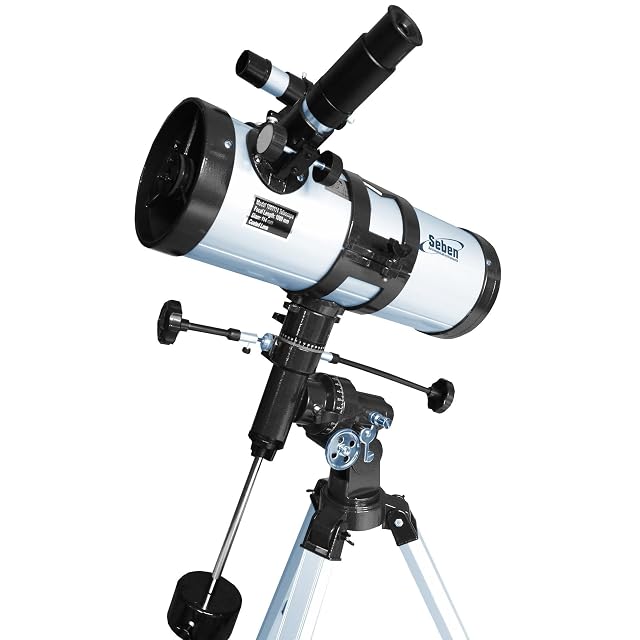
A 114/1000 Newtonian on an EQ-3 equatorial mount with a rack-and-pinion 1.25 in focuser, sold with an accessory pack and described by the maker as motor-upgradable.
Best for: A first equatorial set with room to add a drive motor later
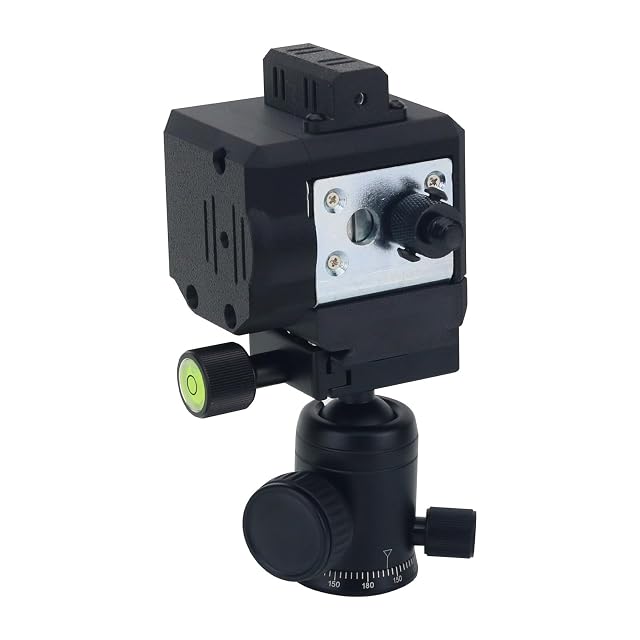
A small equatorial tracking head built on an open-source design and an ESP32-S dual-core controller, offering sidereal, lunar and custom rates from a USB-C power bank.
Best for: Wide-field camera tracking by somebody comfortable assembling their own chain of adapters