Skip to content

Celestron StarSense Explorer DX 130 (22461) vs Skyoptikst D150F750JP

A finished telescope, or the mirrors to build one?

These sit on the same shelf and are not the same kind of purchase. One arrives as a telescope with a mount, a tripod, eyepieces and an app that steers the observer to a target; the other is a primary and a secondary mirror, with the tube, focuser and mount to be found elsewhere.

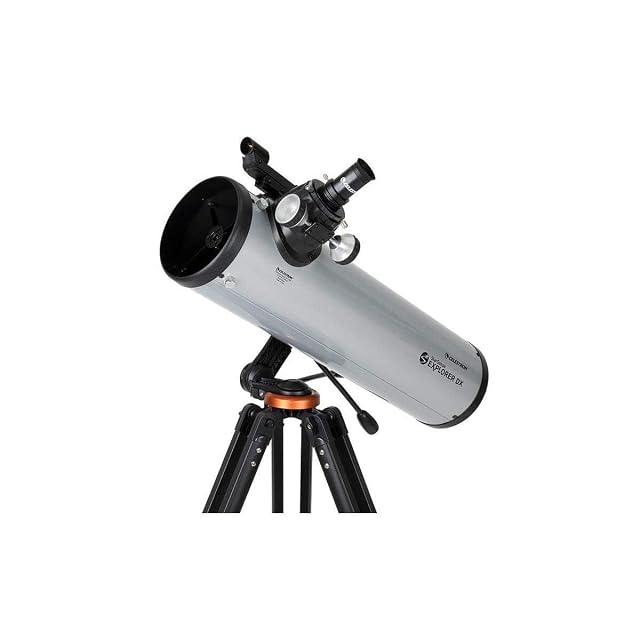
Celestron StarSense Explorer DX 130 with a smartphone in its dock

Celestron StarSense Explorer DX 130 (22461)

Wins 3 of 8

Check price

≈ $500 / £399 / €436

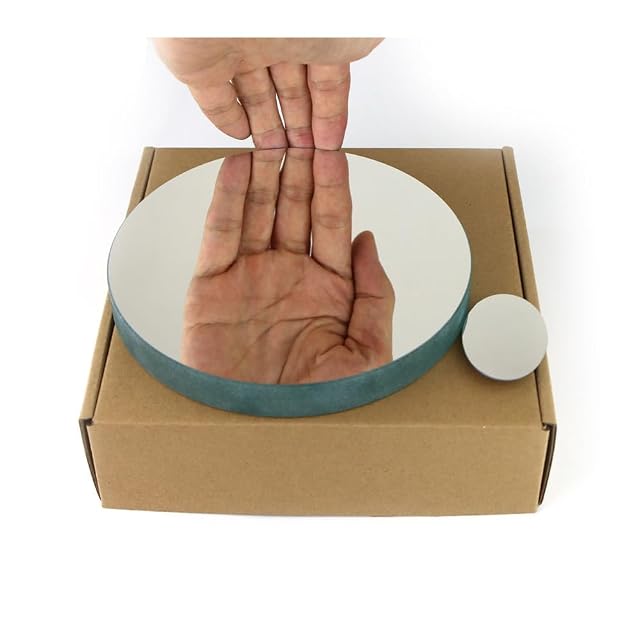
Skyoptikst 150 mm parabolic primary mirror with its secondary

Skyoptikst D150F750JP

Wins 4 of 8

Check price

≈ £99 / €99

Line by line

Compared on StarSense Explorer DX 130 (22461) D150F750JP
Aperture 130 mm (from the title and bullets) 150 mm (maker’s bullet)
Focal length The listing does not carry it 750 mm (maker’s bullet)
Optical design Newtonian reflector, high-reflectivity coating per the maker Not published by the maker.
Mirror coating Not published by the maker. 1/10 λ surface accuracy and 92 per cent over 400–950 nm, as the maker states them; enhanced aluminium with a protective layer
Secondary obstruction Not published by the maker. Major axis 50 mm, minor axis 35 mm
Collimation access Not published by the maker. Not published by the maker.
Mount supplied Manual alt-azimuth with dual-axis slow motion and a sliding rod Not published by the maker.
Supplied accessories StarSense dock and app, 25 mm and 10 mm eyepieces, erect-image diagonal, red dot finder, full-height tripod Mirror set for a Newtonian: primary and secondary, not a complete telescope

A tick means one listing published something the other did not, or published a better figure. It does not mean the product is better, and the column is not a score out of anything: a maker who says less loses lines here without losing a comparison. The two verdicts below are where the page is settled.

Which one, for whom

Buy the Celestron StarSense Explorer DX 130 (22461)

A telescope, finished. Everything needed for the first night is in the box, and the phone dock answers the question that stops most beginners — where is it. What the listing never gives is a focal length, so no eyepiece magnification can be worked out from it.

Buy the Skyoptikst D150F750JP

Two mirrors, and the best-published optics on this shelf. One-tenth wave of surface accuracy, ninety-two per cent reflectivity across a named band, and both axes of the secondary — figures that no complete telescope here publishes. It is not a telescope: the tube, the focuser, the mount and the tripod are all still to be found.

What observers ask about these two

What does 1/10 λ surface accuracy mean?

It describes how closely the mirror matches its intended shape, measured in fractions of a wavelength of light. Smaller fractions mean a more accurate surface; it is a figure almost never published on a complete telescope.

Can the mirror set be used as it is?

No. A Newtonian needs a tube of the right length, a focuser, a spider to hold the secondary, a cell for the primary and a mount. The mirrors are the optics only.

Why does the obstruction size matter?

The secondary blocks part of the incoming light and slightly reduces contrast. Publishing both axes lets that fraction be worked out, which is why serious mirror listings give it and complete-telescope listings usually do not.

The full reviews

Any figure written into the body of this page was true on the day it was written. The amount shown next to each instrument is requested from the retailer as the page loads, and it is that amount, not the text, that stands.