Skip to content

SVBONY SV205 vs Bresser WLAN eyepiece camera (15068)

Replace the eyepiece, or clamp around it?

These two attach to a telescope in opposite ways, and everything else follows. One slides into the focuser in place of an eyepiece and needs a computer on a cable; the other grips an existing eyepiece and talks to a phone. Neither is cooled, and neither claims to be.

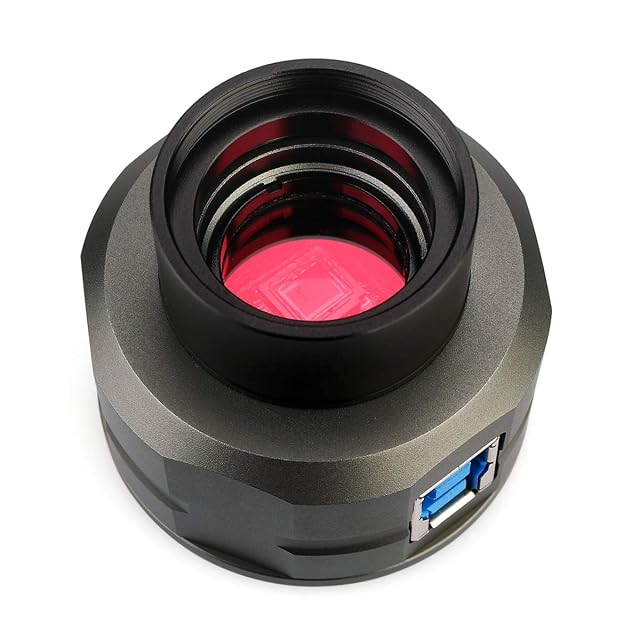
SVBONY SV205 electronic eyepiece camera with 1.25 in aluminium barrel

SVBONY SV205

Wins 4 of 9

Check price

≈ £84 / €100

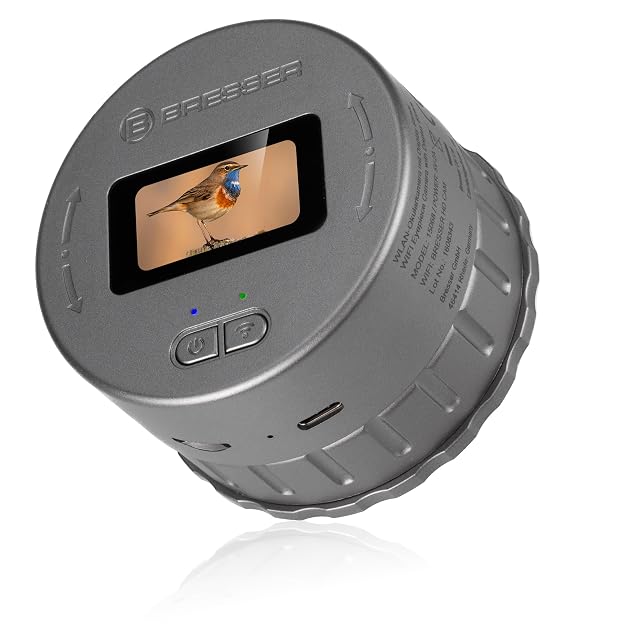
Bresser WLAN eyepiece camera with its 1.47 inch display

Bresser WLAN eyepiece camera (15068)

Wins 3 of 9

Check price

≈ £89 / €99

Line by line

Compared on SV205 WLAN eyepiece camera (15068)
Camera type Replaces the eyepiece — it fits into a 1.25 in focuser Clamps over the eyepiece — it does not replace it
Sensor IMX415 colour, 8 MP per the maker 4 MP CMOS
Pixel size Not published by the maker. Full HD video, 1920 × 1080 photographs
Frame rate 3264 × 2448 at up to 15 frames per second, as the maker states it Not published by the maker.
Interface USB 3.0, with Windows, Android and Linux listed by the maker Not published by the maker.
Cooling Not published by the maker. Not published by the maker.
Filter thread 1.25 in aluminium adapter tube with a 1.25 in filter thread Not published by the maker.
Eyepiece fitting Not published by the maker. 30 to 65 mm, as the maker states them
Software support Not published by the maker. MicroSD to 128 GB with a 32 GB card supplied, Android and iOS with basic editing

A tick means one listing published something the other did not, or published a better figure. It does not mean the product is better, and the column is not a score out of anything: a maker who says less loses lines here without losing a comparison. The two verdicts below are where the page is settled.

Which one, for whom

Buy the SVBONY SV205

The one that goes into the light path. Replacing the eyepiece removes a set of glass surfaces and puts the sensor at the focal plane, which is how planetary imaging is normally done. It publishes a named sensor and a frame rate — the two figures the shelf is compared on — and it needs a computer at the telescope.

Buy the Bresser WLAN eyepiece camera (15068)

The one that needs nothing else. It clamps around an eyepiece that is already there, records to its own card, and shows the result on a screen. That is a slower optical path with more glass in it, and it is the only one of the two that works without a laptop on a damp table.

What observers ask about these two

Why does frame rate matter for planets?

Because planetary imaging works by recording hundreds of frames and keeping the sharpest. The atmosphere steadies for fractions of a second at a time, and a faster camera catches more of those moments.

Does clamping over an eyepiece lose quality?

It adds the eyepiece’s glass to the path and usually some vignetting, and alignment has to be maintained mechanically. It is convenient rather than optimal.

Do either of these need cooling?

For planets, no — exposures are short and sensor noise has little time to build. Cooling matters for long deep-sky exposures, which is not what either of these is for.

The full reviews

Any figure written into the body of this page was true on the day it was written. The amount shown next to each instrument is requested from the retailer as the page loads, and it is that amount, not the text, that stands.