Skip to content

Omegon Pro UHC 1.25 in vs SVBONY UHC 1.25 in (EUF9131A)

Two UHC filters, no passband on either. What is left?

Both carry the same three letters, which describe a market convention rather than a standard, and neither publishes a wavelength or a transmission percentage. What remains to compare is the glass: how it is polished, and how it is coated.

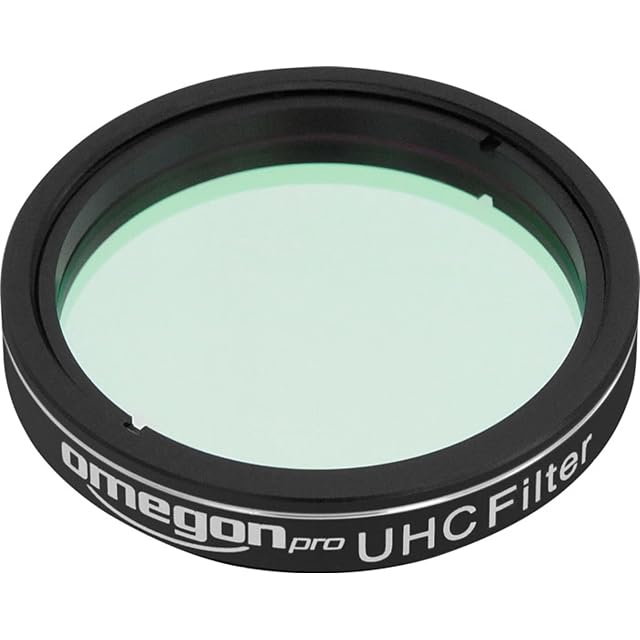
Omegon Pro UHC 1.25 inch nebula filter

Omegon Pro UHC 1.25 in

Wins 0 of 6

Check price

≈ £57 / €63

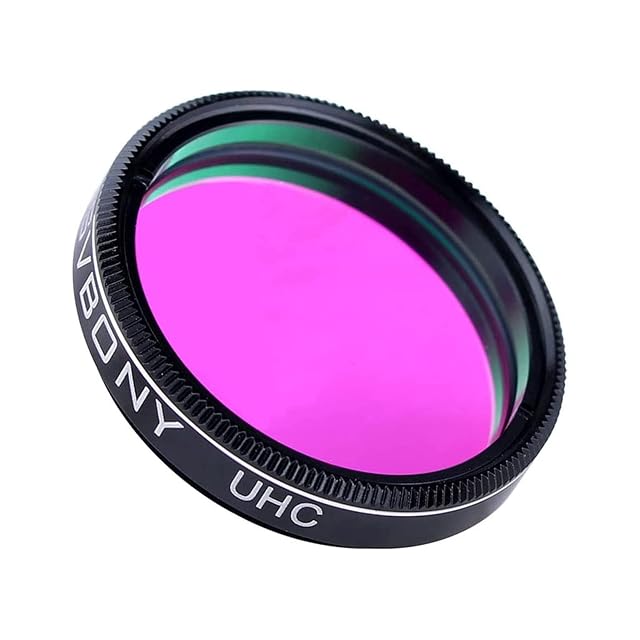
SVBONY 1.25 inch UHC nebula filter in its case

SVBONY UHC 1.25 in (EUF9131A)

Wins 2 of 6

Check price

≈ $28 / £24 / €31

Line by line

Compared on Pro UHC 1.25 in UHC 1.25 in (EUF9131A)
Bandpass and type The listing gives none: no wavelengths and no transmission percentage appear The listing gives none: no wavelengths and no transmission percentage appear
Line transmission Not published by the maker. Not published by the maker.
Blocking outside the band Not published by the maker. Not published by the maker.
Thread size 1.25 in 1.25 in, screwing into an eyepiece barrel
Glass flatness Not published by the maker. Precision polished on both sides for parallelism, per the maker
Coatings Not published by the maker. Double-sided multi-layer, with a broadband layer on the rear per the maker

A tick means one listing published something the other did not, or published a better figure. It does not mean the product is better, and the column is not a score out of anything: a maker who says less loses lines here without losing a comparison. The two verdicts below are where the page is settled.

Which one, for whom

Buy the Omegon Pro UHC 1.25 in

Sold on its effect and nothing else. The listing describes the contrast improvement and gives no wavelength, no percentage, no substrate and no coating. On a shelf where the three letters guarantee nothing, that leaves a buyer with the brand alone.

Buy the SVBONY UHC 1.25 in (EUF9131A)

The one that at least describes its glass. Parallel-polished faces matter because a filter sits in a converging beam and a wedge in it degrades the image; a named coating says something about reflections. Neither of those is the passband, which is what a narrowband filter should be sold on and what neither of these gives.

What observers ask about these two

Are all UHC filters the same?

No. UHC is a convention, not a specification, and two filters carrying the label can pass quite different bands. That is why this site compares what is published rather than the label.

What would a complete specification look like?

A transmission curve, or at minimum a percentage at each named line and a statement of blocking outside the band. No filter on this shelf publishes all three.

Does a UHC filter help in a city?

On emission nebulae, yes — it passes the lines they emit and blocks much of the rest. On galaxies and star clusters, which emit across the spectrum, it dims the object as much as the sky.

The full reviews

  • SVBONY UHC 1.25 in (EUF9131A)

    UHC · 1.25 in · double-sided multi-layer coating · no passband published

    A 1.25 in UHC filter with a precision-polished substrate and double-sided multi-layer coating, sold for raising nebula contrast — with no wavelengths published.

    Best for: A first nebula filter for a suburban sky, bought on price rather than on specification

    ≈ $28 / £24 / €31

Any figure written into the body of this page was true on the day it was written. The amount shown next to each instrument is requested from the retailer as the page loads, and it is that amount, not the text, that stands.