Skip to content

Celestron X-Cel LX 12 mm (93424) vs Omegon Plössl 25 mm

Six elements at 60 degrees, or a Plössl at 50?

These two are not interchangeable: 12 mm and 25 mm give different magnifications in the same telescope, and the choice of one over the other starts there. What the comparison is really about is what the extra elements buy — a wider apparent field, and a twist-up eyecup instead of a fixed rubber one.

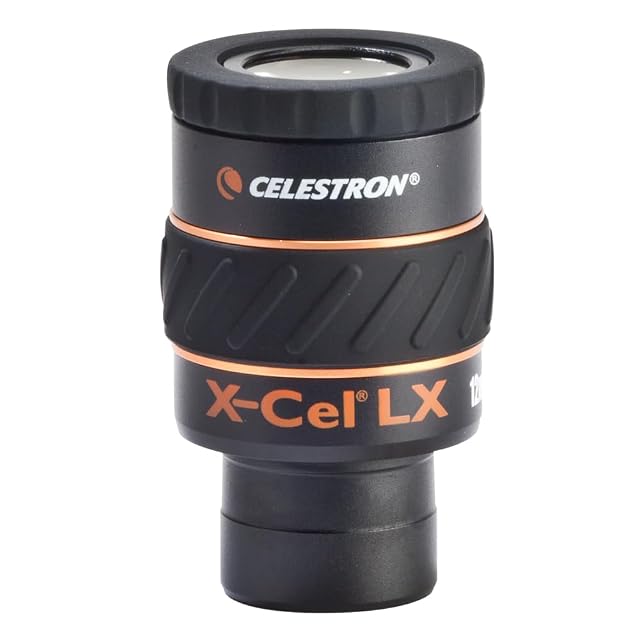
Celestron X-Cel LX 12 mm eyepiece with knurled rubber grip

Celestron X-Cel LX 12 mm (93424)

Wins 3 of 7

Check price

≈ $93 / £88 / €106

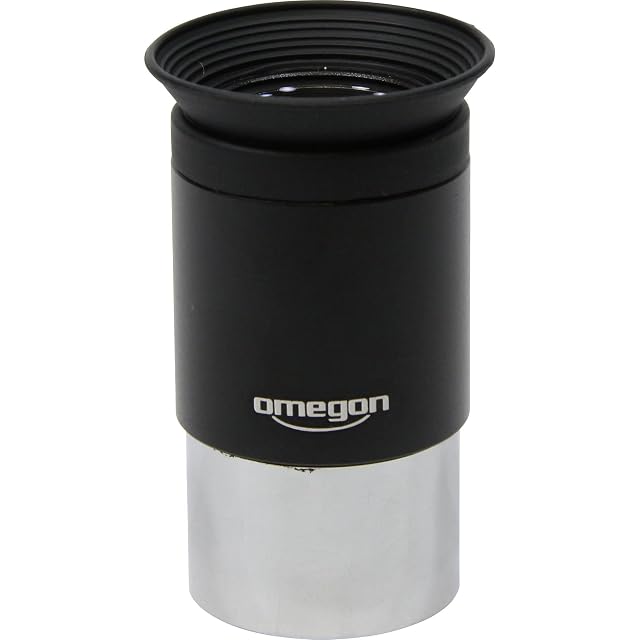
Omegon 25 mm Plössl eyepiece with rubber eyecup

Omegon Plössl 25 mm

Wins 1 of 7

Check price

≈ £32 / €34

Line by line

Compared on X-Cel LX 12 mm (93424) Plössl 25 mm
Focal length 12 mm 25 mm
Apparent field 60 degrees, as the maker publishes it 50 degrees, as the maker publishes it
Eye relief Twist-up rubber eyecup Rubber, against side light
Barrel size 1.25 in, threaded for filters 1.25 in with a filter thread
Optical design Six elements, fully multi-coated Plössl, four elements
Coatings Not published by the maker. Coated lenses, as the maker words it
Weight Not published by the maker. Not published by the maker.

A tick means one listing published something the other did not, or published a better figure. It does not mean the product is better, and the column is not a score out of anything: a maker who says less loses lines here without losing a comparison. The two verdicts below are where the page is settled.

Which one, for whom

Buy the Celestron X-Cel LX 12 mm (93424)

The wider view. Sixty degrees against fifty is a visibly larger window at the eyepiece, and a twist-up eyecup is the mechanism that makes an eyepiece usable with and without spectacles. Six elements is also more glass for light to cross, and the listing does not say how the surfaces beyond the first are treated.

Buy the Omegon Plössl 25 mm

The one whose design is a known quantity. A Plössl is four elements in two pairs, it has been made for decades, and its behaviour at the edge of the field is predictable. At 25 mm it is the low-power eyepiece most observers reach for first, and its coating is at least described.

What observers ask about these two

Does a bigger apparent field show more sky?

It shows a wider window at the same magnification. True field is apparent field divided by magnification, so at equal focal length the 60-degree eyepiece frames more sky than the 50-degree one.

Why compare eyepieces of different focal lengths?

Because the focal length is a choice about magnification, not about quality. What is being compared here is the design — how many elements, how wide a field, what eyecup — which applies at any focal length.

Is more elements better?

Not by itself. More elements allow a wider corrected field, and each added surface is one more place to lose light and add reflections. It is the coating on those surfaces that decides which effect wins, and one of these two does not publish it.

The full reviews

Any figure written into the body of this page was true on the day it was written. The amount shown next to each instrument is requested from the retailer as the page loads, and it is that amount, not the text, that stands.