Skip to content

Explore Scientific UHC 1.25 in (0310215) vs Omegon Pro UHC 1.25 in

Two filters called UHC — what is actually in them?

UHC is a market convention and not a published standard, so the name guarantees nothing. What separates these two is whether the listing says which wavelengths pass. One names four lines; the other names none, which on this shelf is the whole comparison.

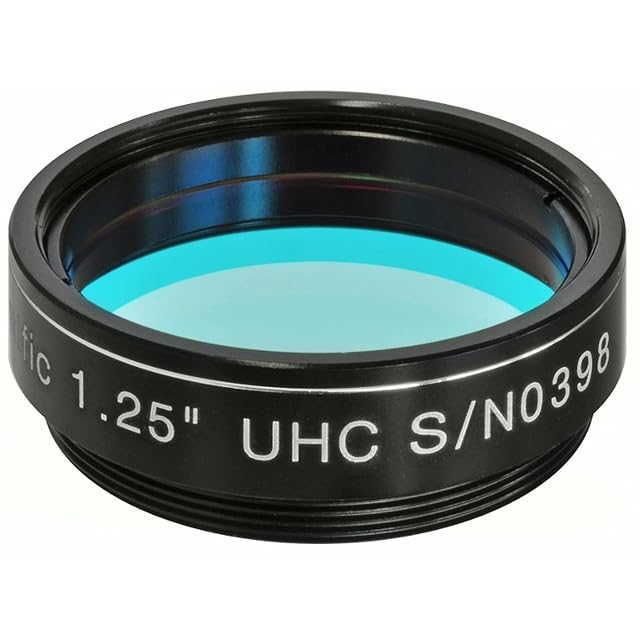
Explore Scientific 1.25 inch UHC nebula filter

Explore Scientific UHC 1.25 in (0310215)

Wins 2 of 6

Check price

≈ £58 / €58

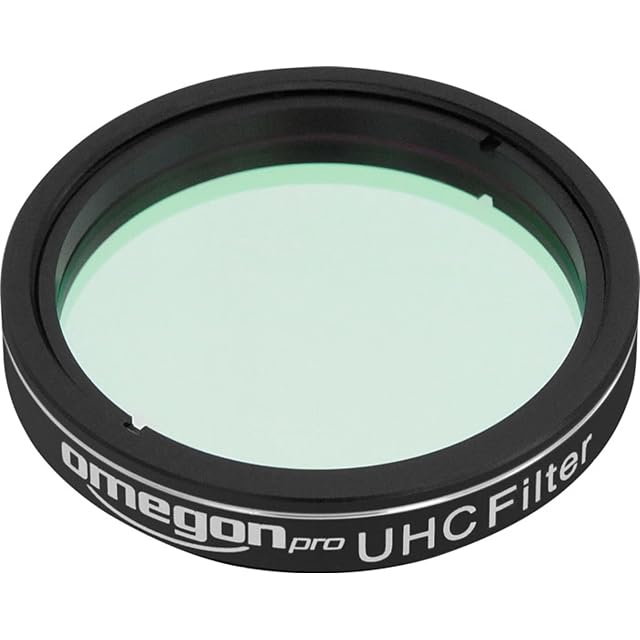
Omegon Pro UHC 1.25 inch nebula filter

Omegon Pro UHC 1.25 in

Wins 0 of 6

Check price

≈ £57 / €63

Line by line

Compared on UHC 1.25 in (0310215) Pro UHC 1.25 in
Bandpass and type Hydrogen at 486 nm and 656 nm; oxygen at 496 nm and 501 nm, as the maker publishes them The listing gives none: no wavelengths and no transmission percentage appear
Line transmission The listing gives none at any of the four lines Not published by the maker.
Blocking outside the band All other colours, per the maker — including almost all artificial light Not published by the maker.
Thread size 1.25 in thread 1.25 in
Glass flatness Not published by the maker. Not published by the maker.
Coatings Not published by the maker. Not published by the maker.

A tick means one listing published something the other did not, or published a better figure. It does not mean the product is better, and the column is not a score out of anything: a maker who says less loses lines here without losing a comparison. The two verdicts below are where the page is settled.

Which one, for whom

Buy the Explore Scientific UHC 1.25 in (0310215)

The one that can be checked. Naming 486, 496, 501 and 656 nm says what the filter is designed to let through, and those four lines are where most emission nebulae actually emit. What is still missing is how much passes at each — a filter is a curve, and four wavelengths without percentages are four points on it.

Buy the Omegon Pro UHC 1.25 in

The one sold on its effect rather than its design. The listing describes the contrast improvement and publishes no wavelength and no percentage. On a shelf where two filters with the same three letters can behave quite differently, that leaves nothing to compare against the other.

What observers ask about these two

What does UHC actually mean?

Ultra High Contrast, used across the market to mean a filter that passes the main nebula emission lines and blocks the rest. There is no standard behind it, so two UHC filters need not have the same passband.

Why are 496 and 501 nm important?

They are the doubly ionised oxygen lines, and they are where planetary nebulae and many emission nebulae are brightest visually. A filter that passes them and little else is what makes those objects stand out from a bright sky.

Does a filter make anything brighter?

No. It removes light, including some of the object’s. What improves is contrast: the background falls further than the object does, so the object stands out more.

The full reviews

Any figure written into the body of this page was true on the day it was written. The amount shown next to each instrument is requested from the retailer as the page loads, and it is that amount, not the text, that stands.