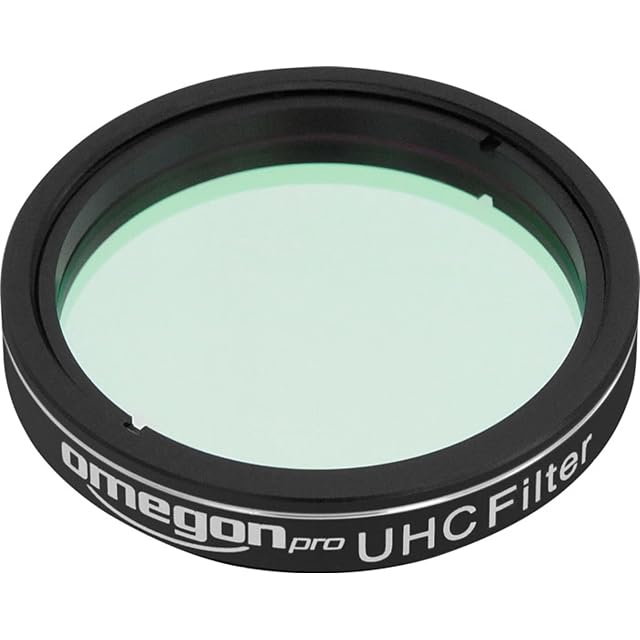
The bottom line The one filter here that answers the question the designation leaves open — halfway.
Four wavelengths, published
486 and 656 nanometres for hydrogen; 496 and 501 for oxygen. Those four lines are where emission nebulae actually radiate, and a filter that passes them while blocking the rest is doing exactly what a nebula filter is for.
Why naming them changes the purchase
“UHC” is a market convention. Two filters sold under it can pass windows of very different width. A filter that publishes its lines can be compared with another that does the same — and with the physics, which does not vary between manufacturers.
The half that is still missing
Transmission at each line, as a percentage. The window is named and its depth is not, and the difference between passing a line at ninety-five per cent and at seventy is visible at the eyepiece.
What to expect at the eyepiece
The background darkens; the nebula stands out against it. Stars dim, and the field takes on the characteristic colour of a narrow band. Nothing gets brighter, and on galaxies — which radiate across the spectrum — nothing changes at all.
Availability
German, French, Italian and Spanish Amazon stores ran from 58 € to 65 € on the day of the survey.
British Amazon store lists it in local currency, which the euro range above sets aside.
American Amazon catalogue holds a record for it that nobody is selling.
Figures as Keepa reported them on the day this page was last updated. Stock and pricing shift without warning.
Prices quoted in this text were read on 17 September 2026. The live price is at the top of the page.
What it publishes, and what it withholds
Strengths
The only nebula filter on this shelf to publish the wavelengths it passes
Four named lines covers both the hydrogen and the doubly-ionised oxygen emissions
Naming the lines makes it comparable with any other filter that does the same
Compromises
The transmission at each line is not published, and that is the other half of the figure
No mention of behaviour at fast focal ratios, where the band shifts
The listing is four lines long
Specifications
Bandpass and type
UHC — a market convention, not a published standard · Hydrogen at 486 nm and 656 nm; oxygen at 496 nm and 501 nm, as the maker publishes them
Line transmission
The listing gives none at any of the four lines
Blocking outside the band
All other colours, per the maker — including almost all artificial light
Thread size
1.25 in thread
Glass flatness
Not published by the maker.
Coatings
Not published by the maker.
Amazon reference
B00ZXHX8UE (same reference on 6 Amazon marketplaces)
EAN
4007922000077
What observers ask about this one
Why do those four wavelengths matter?
They are where emission nebulae radiate: 486 nm and 656 nm are hydrogen lines, and 496 nm and 501 nm are the doubly-ionised oxygen pair. A filter passing those and blocking the rest removes far more sky glow than nebula light.
What is still missing?
Transmission at each line. A filter that passes a line at 95 % behaves very differently from one that passes it at 70 %. The wavelengths are published; the percentages are not.
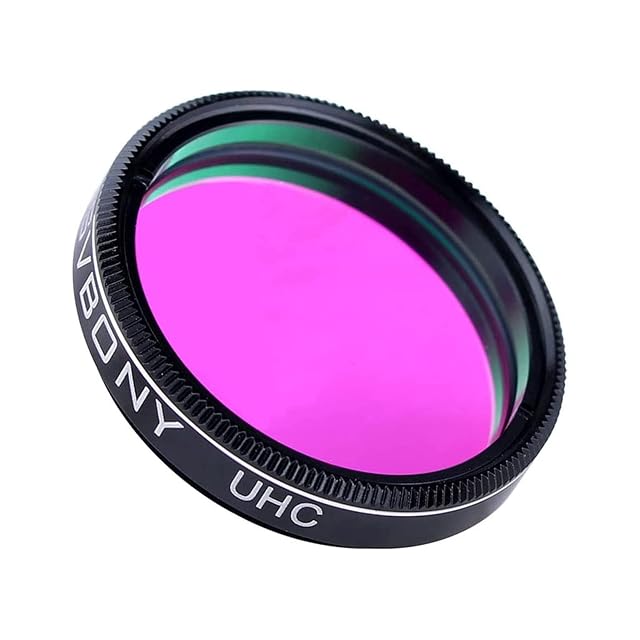
UHC · 1.25 in · double-sided multi-layer coating · no passband published
A 1.25 in UHC filter with a precision-polished substrate and double-sided multi-layer coating, sold for raising nebula contrast — with no wavelengths published.
Best for: A first nebula filter for a suburban sky, bought on price rather than on specification
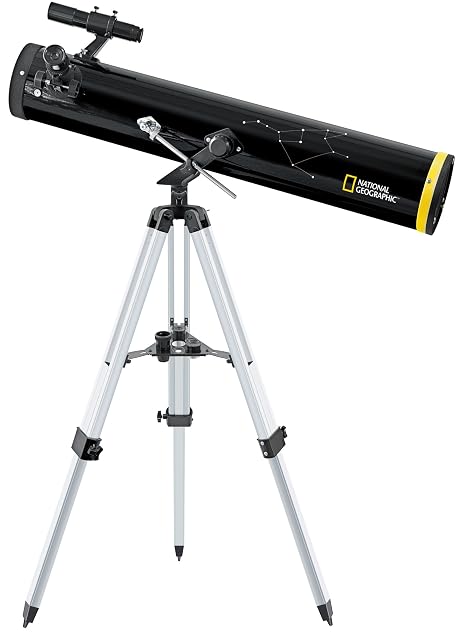
114 mm mirror · 900 mm focal length · alt-azimuth mount
A 114/900 Newtonian on a simple alt-azimuth mount, supplied with three eyepieces, a 6x30 finder and a 1.5x erecting lens, recommended by the maker from age eight.
Best for: A family telescope where nobody wants to learn polar alignment