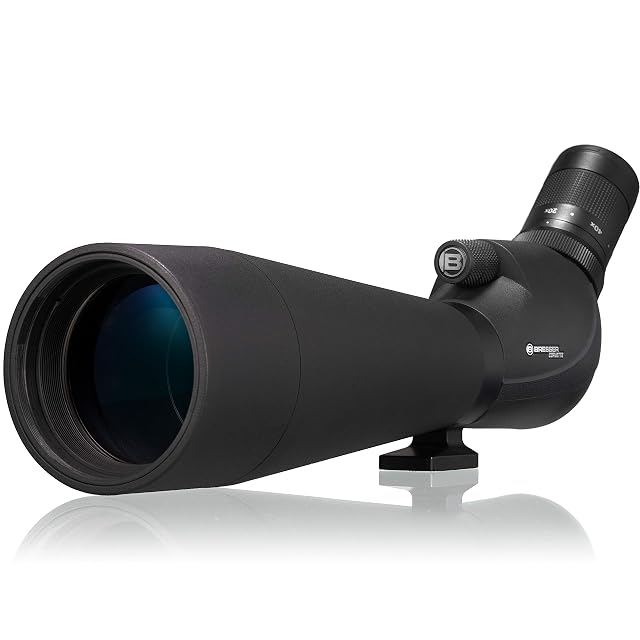
The bottom line Premium glass and premium price, described entirely in adjectives — the least measurable scope in this group.
What is claimed
ED glass reducing colour fringes. A 20 to 60 zoom range. An 80 mm objective for light. A fine centre focus for moving subjects. A body built for regular use in wetlands. Five claims, none of them attached to a figure.
What a buyer at this price usually wants
Field of view at each end of the zoom, weight, close focus, and a sealing rating. Those four decide whether a scope is comfortable to carry to a hide and useful once there, and none is published.
The arithmetic that can still be done
Eighty divided by twenty is four millimetres of exit pupil; divided by sixty it is 1.3 mm. That much follows from the name, and it says that the wide end is where the objective’s size shows.
For astronomy
Usable at the low end, on bright targets. The zoom eyepiece does not come out, so nothing from the astronomical eyepiece and filter range can be fitted — which is the boundary this whole family shares except for one scope on this shelf.
Availability
German, French, Italian and Spanish Amazon stores ran from 988 € to 1067 € on the day of the survey.
American and British Amazon stores gave no result whatever, so the buy button there opens a search rather than an empty page.
Figures as Keepa reported them on the day this page was last updated. Stock and pricing shift without warning.
Prices quoted in this text were read on 17 September 2026. The live price is at the top of the page.
What it publishes, and what it withholds
Strengths
ED glass from an established optics maker, aimed squarely at birdwatchers
A continuous zoom avoids the stepped feel of cheaper mechanisms
Fine centre focus is the right mechanism for a high-magnification instrument
Compromises
Five bullets and not a single number beyond the magnification and objective
No field of view, weight, close focus or sealing rating anywhere
It sits at the top of this shelf on price with the least published detail
Specifications
Aperture
80 mm
Zoom range
20x to 60x, continuous
Exit pupil
4 mm at 20x falling to 1.3 mm at 60x
True field of view
The listing does not carry it
Body shape
Not published by the maker.
Glass type
ED, described by the maker as reducing colour fringing
Coatings
Not published by the maker.
Close focus
Not published by the maker.
Focusing
Fine centre focus, per the maker
Sealing
Described as robust for field use; no rating is given
Weight
The listing does not carry it
Eyepiece fitting
Not published by the maker.
Supplied accessories
Not published by the maker.
Amazon reference
B0GQ2YJTZ7 (same reference on 4 Amazon marketplaces)
EAN
0000080415251
What observers ask about this one
Is ED glass worth the premium?
On a zoom scope pushed to 60x, it addresses the aberration that is most visible — colour fringing on high-contrast edges. Whether this particular implementation succeeds cannot be judged from a listing that publishes no measurements.
Can it be used for astronomy?
At the wide end, yes, on the Moon and bright objects. Its zoom eyepiece is not removable, so the astronomical eyepiece range is closed to it — the same limit as most of this shelf.
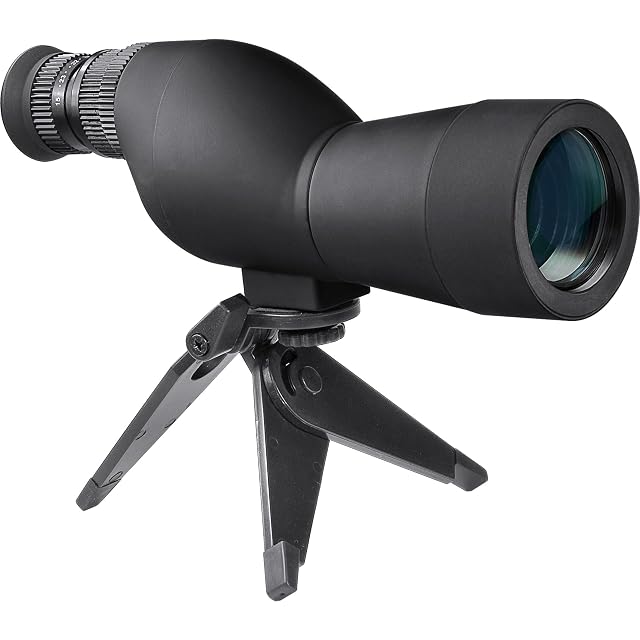
A waterproof 20–60x80 spotting scope with fully multi-coated optics, a 340° rotating body and a supplied tabletop tripod — published with its field of view, close focus, size and weight.
Best for: A buyer who wants to compare figures rather than adjectives before choosing
20–60x · 80 mm ED · 1.25 in eyepiece mount · magnesium body
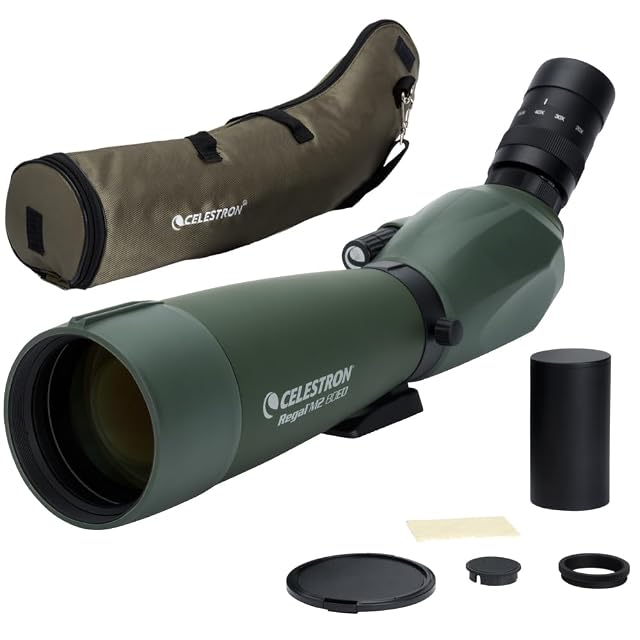
An ED-glass 20–60x80 angled spotting scope in a magnesium alloy body, with XLT coatings, dual focus, a rotating tripod collar, a 1.25 in astronomical eyepiece mount and a T-adapter ring.
Best for: The observer who wants one instrument for birds by day and the Moon and planets by night