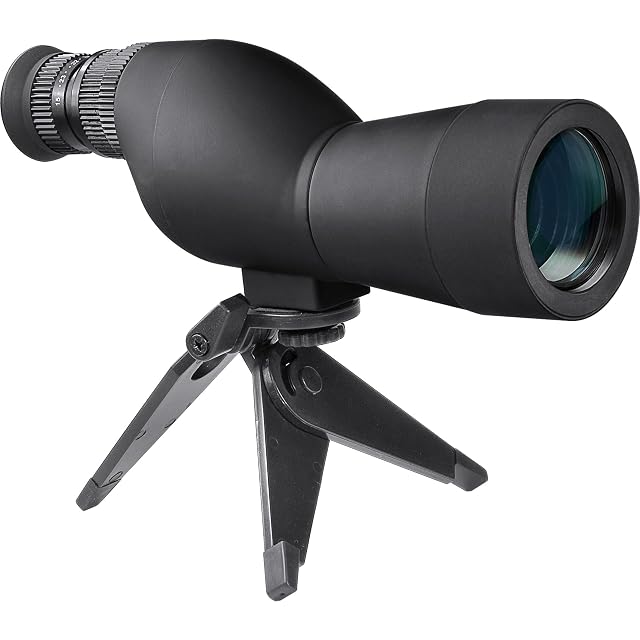
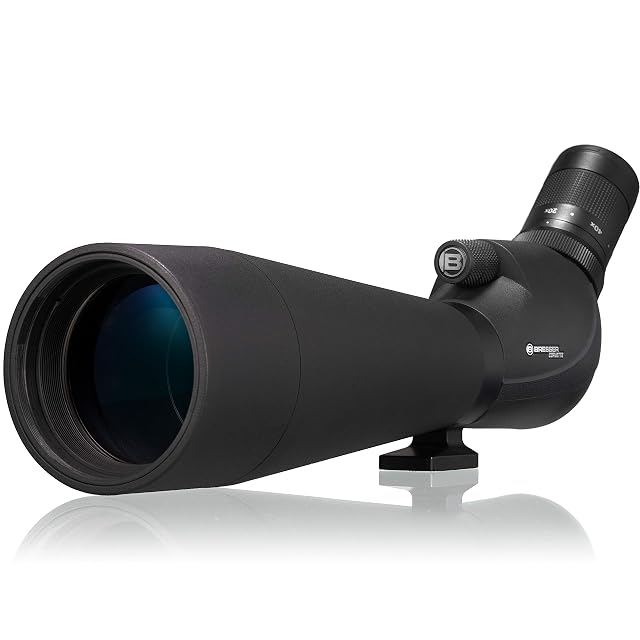
A 20–60x80 zoom spotting scope with anti-reflection coating, a retractable dew shield and a photographic tripod thread, sold as an entry-level nature observation instrument.
The bottom line A sensibly featured entry scope described in prose rather than specification — the dew shield is the reason to consider it.
The one feature worth the page
A retractable dew shield. It shades the objective from side lighting, and it keeps the front element from radiating straight to the sky, which is what causes dew. Most spotting scopes at this price have none, and on a damp evening it is the difference between an hour of observing and twenty minutes.
The description, and what it lacks
The maker’s bullets run to prose — imagining a poorly lit forest, promising an image that impresses — and one of them is cut off in the middle of a word. Between them they establish the magnification range, the objective, the coating in the vaguest possible terms, the dew shield and a photographic thread. Nothing else.
Using the zoom well
Find at twenty, then increase. At the top of the range the exit pupil is 1.3 mm and the image is dim; the wide end is where an 80 mm objective earns its size.
The thread without a size
A photographic thread is named. Whether it is the 1/4-20 or the 3/8-16 of ISO 1222 is not stated — and on a scope of this weight that is worth checking before buying a head for it.
Availability
German, French, Italian and Spanish Amazon stores ran from 159 € to 170 € on the day of the survey.
American Amazon catalogue holds a record for it that nobody is selling.
British Amazon store gave no result whatever, so the buy button there opens a search rather than an empty page.
Figures as Keepa reported them on the day this page was last updated. Stock and pricing shift without warning.
Prices quoted in this text were read on 17 September 2026. The live price is at the top of the page.
What it publishes, and what it withholds
Strengths
A retractable dew shield is genuinely useful and often omitted at this price
A photo thread means any tripod will take it
A zoom eyepiece removes eyepiece swapping in the field entirely
Compromises
The coating is described only as anti-reflection, the weakest possible statement
The bullets are truncated marketing prose and one of them breaks off mid-sentence
No field of view, weight, close focus or tripod thread size appears
Specifications
Aperture
80 mm
Zoom range
20x to 60x with the zoom eyepiece
Exit pupil
4 mm at 20x falling to 1.3 mm at 60x
True field of view
Not published by the maker.
Body shape
Not published by the maker.
Glass type
Not published by the maker.
Coatings
Anti-reflection coating, per the maker; no label or figure is given
Close focus
Not published by the maker.
Focusing
Not published by the maker.
Sealing
Not published by the maker.
Weight
Not published by the maker.
Eyepiece fitting
Built-in zoom; no eyepiece change is possible
Supplied accessories
Photographic thread, named by the maker without a size
Amazon reference
B0CLHZ6NZZ (same reference on 5 Amazon marketplaces)
EAN
4049467739968
What observers ask about this one
What does the dew shield do at night?
Two things. It shades the objective from side lighting, which raises contrast, and it slows the formation of dew on the front element by keeping it away from the open sky. On an autumn evening that second effect decides how long a session lasts.
What is missing from the coating claim?
A label. “Coated”, “fully coated”, “multi-coated” and “fully multi-coated” each count something specific. “Anti-reflection coating” counts nothing, and cannot be compared with another maker’s claim.
A waterproof 20–60x80 spotting scope with fully multi-coated optics, a 340° rotating body and a supplied tabletop tripod — published with its field of view, close focus, size and weight.
Best for: A buyer who wants to compare figures rather than adjectives before choosing
20–60x · 80 mm ED · 1.25 in eyepiece mount · magnesium body
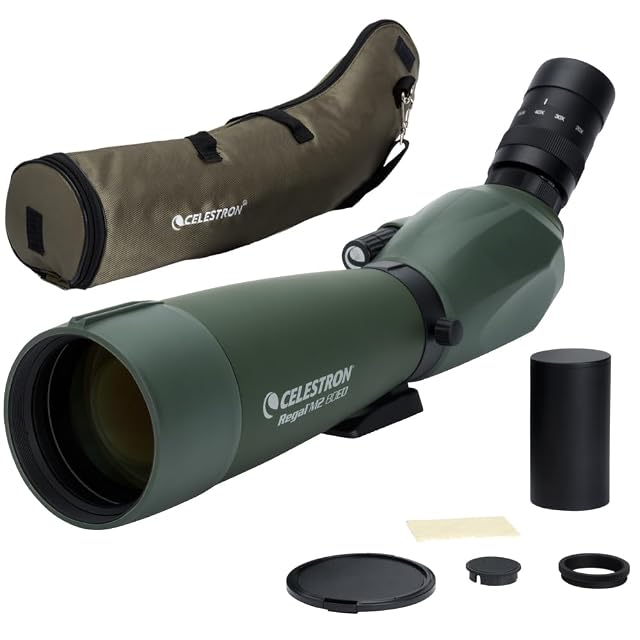
An ED-glass 20–60x80 angled spotting scope in a magnesium alloy body, with XLT coatings, dual focus, a rotating tripod collar, a 1.25 in astronomical eyepiece mount and a T-adapter ring.
Best for: The observer who wants one instrument for birds by day and the Moon and planets by night