Skip to content

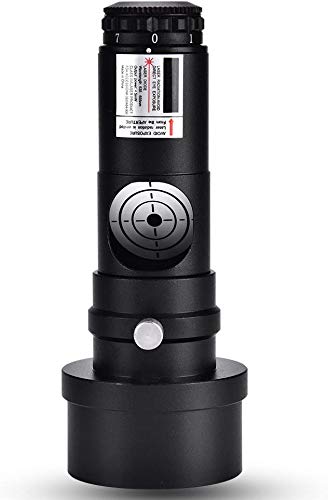
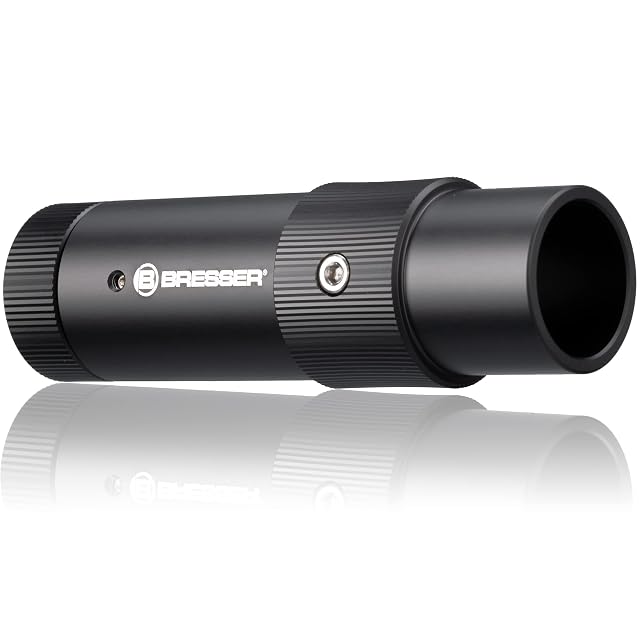
Bresser Newtonian laser collimator (4910200)

A 1.25 in laser collimator in an adjustable aluminium housing, with a roughened surface for reading the return beam, published at 212 g.

Bresser laser collimator in black anodised aluminium

Bresser Newtonian laser collimator (4910200)

A 1.25 in laser collimator in an adjustable aluminium housing, with a roughened surface for reading the return beam, published at 212 g.

Method
Laser collimator
Self-collimation ability
Adjustable anodised aluminium
Barrel fit
31.7 mm (1.25 in)
Play
Not published by the maker.
Brightness control
Not published by the maker.
Target visibility
Roughened, so the reflected spot can be seen
Build
212 g, as the maker publishes it · Not mentioned in the listing
Suitable telescopes
Newtonian, Schmidt-Newtonian and Maksutov-Newtonian, as the maker lists them
Amazon reference
B00ADENLT0 (same reference on 5 Amazon marketplaces)
EAN
4007922002767
  • An adjustable housing means the tool itself can be trued, which is the precondition for trusting it
  • The three suitable telescope types are named rather than left as “reflectors”
  • No wavelength or output power figure is published

Best for: Collimating a Newtonian in the dark without a second person or a second tool

≈ £75 / €75
Check price on Amazon
Specifications

Method
Laser collimator
Self-collimation ability
Adjustable anodised aluminium
Barrel fit
31.7 mm (1.25 in)
Play
Not published by the maker.
Brightness control
Not published by the maker.
Target visibility
Roughened, so the reflected spot can be seen
Build
212 g, as the maker publishes it · Not mentioned in the listing
Suitable telescopes
Newtonian, Schmidt-Newtonian and Maksutov-Newtonian, as the maker lists them
Amazon reference
B00ADENLT0 (same reference on 5 Amazon marketplaces)
EAN
4007922002767

What a laser collimator does

It sends a beam down the tube along the focuser axis. Where that beam lands on the primary, and where its reflection returns, tells you whether the two mirrors are aligned. Done in the dark, alone, in a couple of minutes — which is the whole argument for a laser over an optical eyepiece.

The adjustable housing is the important part

A laser whose own beam is not square to its barrel aligns a telescope confidently wrong. The only defence is being able to check and correct the tool, and Bresser’s housing is described as adjustable. Rotating it in the focuser and watching the dot is the test.

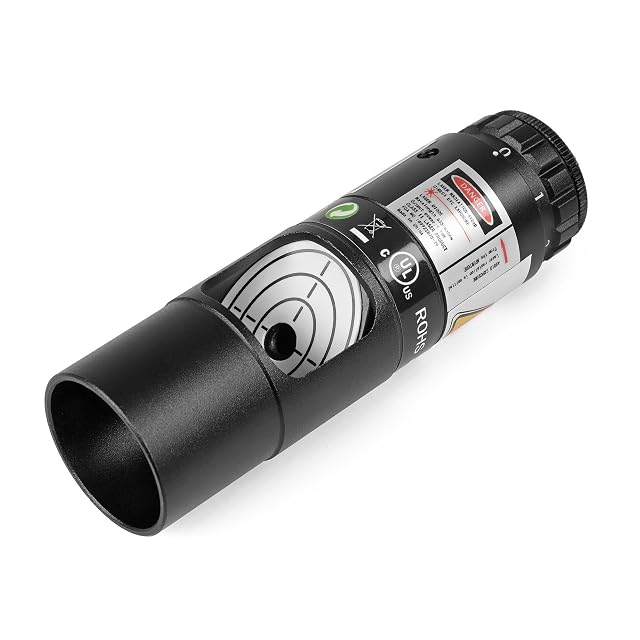
The roughened face

The return beam has to land somewhere visible. A polished surface reflects it away; a roughened one scatters enough for the eye to read it. It is a small manufacturing decision that decides whether the tool works at all.

The blanks in the listing

Wavelength, output power and battery type. The Astromania collimator on this shelf publishes all three; this listing publishes none of them.

Availability

German, Italian and Spanish Amazon stores ran from 75 € to 86 € on the day of the survey.

American and British Amazon stores list it in local currency, which the euro range above sets aside.

French Amazon store gave no result whatever, so the buy button there opens a search rather than an empty page.

Figures as Keepa reported them on the day this page was last updated. Stock and pricing shift without warning.

Prices quoted in this text were read on 17 September 2026. The live price is at the top of the page.

What this fits

All collimators